
The Visitation (Carmignano) — History & Facts
The Visitation (Carmignano) was painted by Pontormo (Jacopo Carucci) around 1528–1529 in oil on panel and is housed in the church of San Michele Arcangelo in Carmignano, Tuscany. The work represents the biblical episode of the Visitation, when the Virgin Mary visits her cousin Elizabeth, both of whom are depicted in the central embrace. The painting is a significant example of Florentine Mannerism, marked by elongated forms and vibrant color. The composition centers on four women, arranged in a close, almost sculptural group in the foreground.
Mary, dressed in blue, and Elizabeth, in green and orange, face each other with arms gently intertwined, while two attendant figures stand behind them. The figures are rendered with flowing drapery in vivid pinks, blues, greens, and oranges, set against a subdued architectural background under a clear sky. The faces are solemn and introspective, and the halos indicate their sacred status.
The use of light emphasizes the folds of the garments and the modeling of the faces, while the compressed space and the figures’ intertwined gestures heighten the sense of intimacy. The Visitation (Carmignano) was created for the parish church of San Michele Arcangelo, where it remains today. The painting is recognized as one of Pontormo’s most important religious commissions and is notable for its preservation in its original location. The work has been the subject of restoration and scholarly attention, and it stands as a key example of the artist’s mature style and the expressive qualities of Florentine Mannerism in the late 1520s.
More Artworks by Pontormo (Jacopo Carucci)
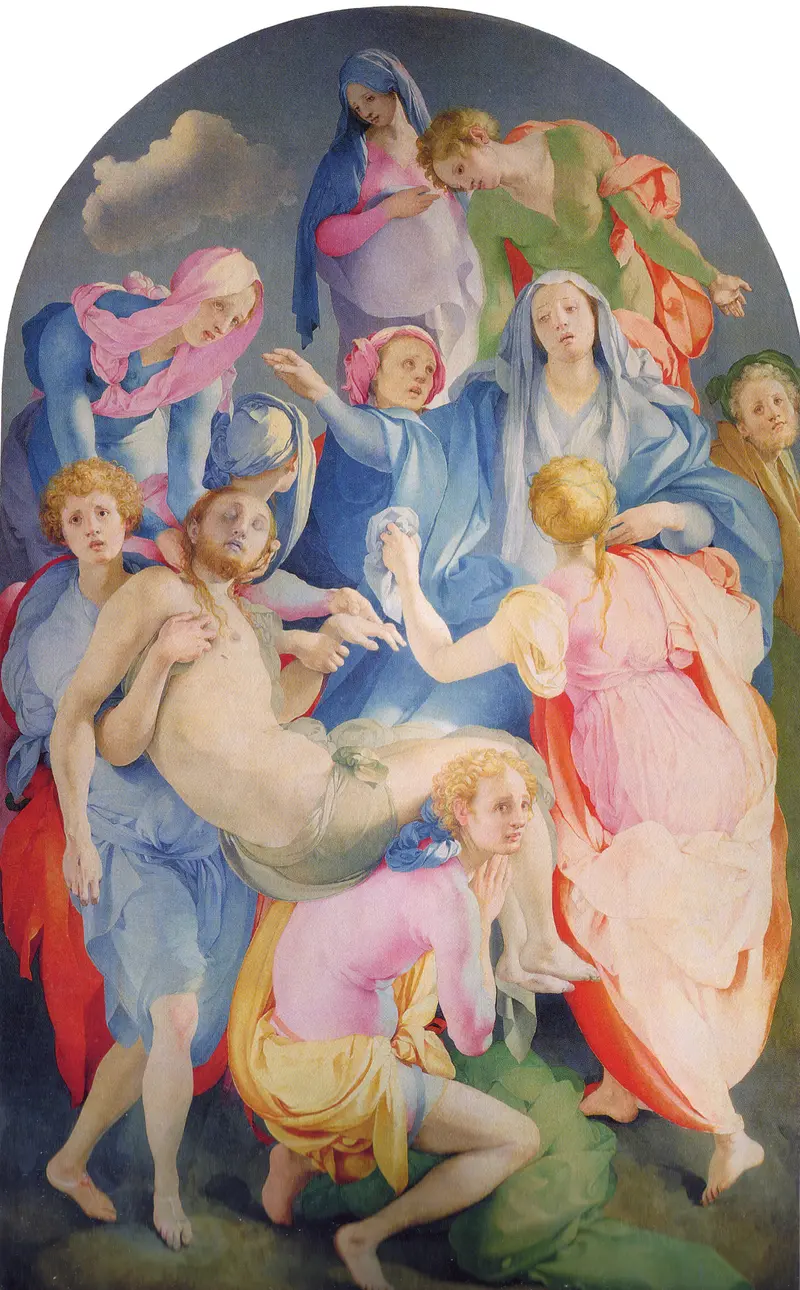
The Deposition from the Cross
Pontormo (Jacopo Carucci)
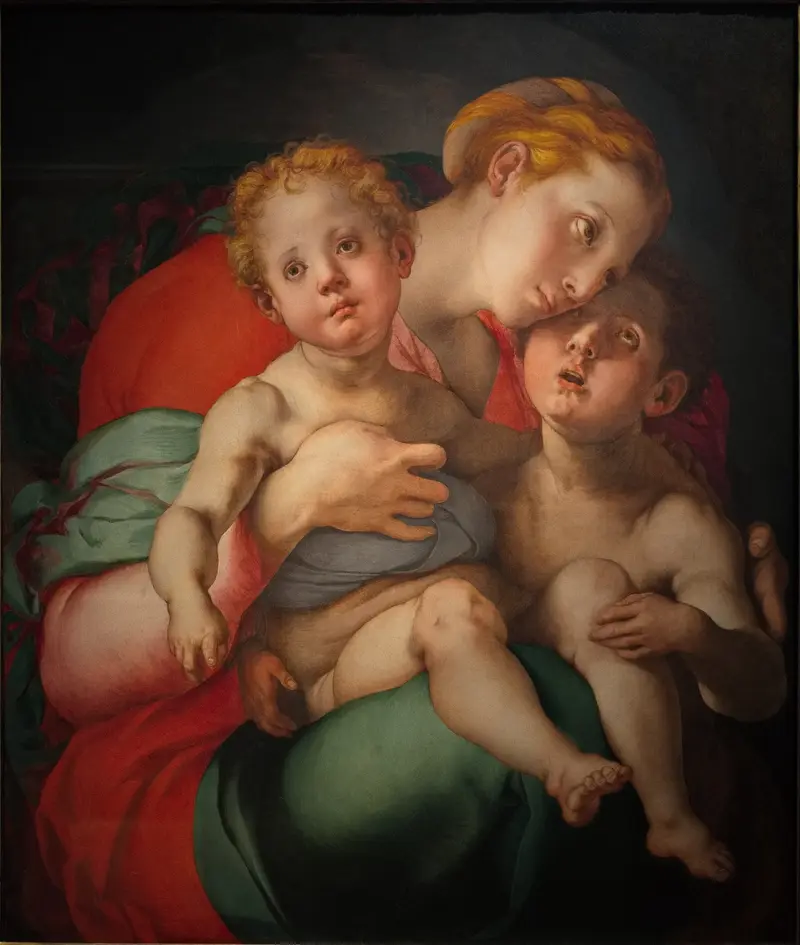
Madonna with Child and the young Saint John
Pontormo (Jacopo Carucci)
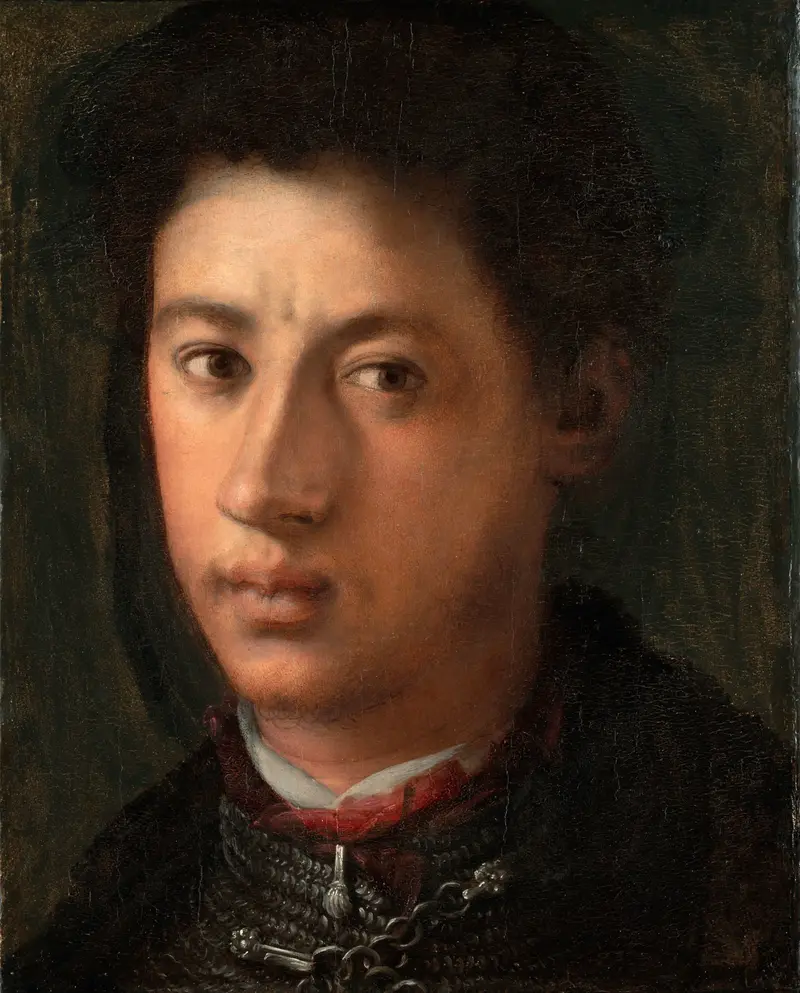
Alessandro de’ Medici
Pontormo (Jacopo Carucci)
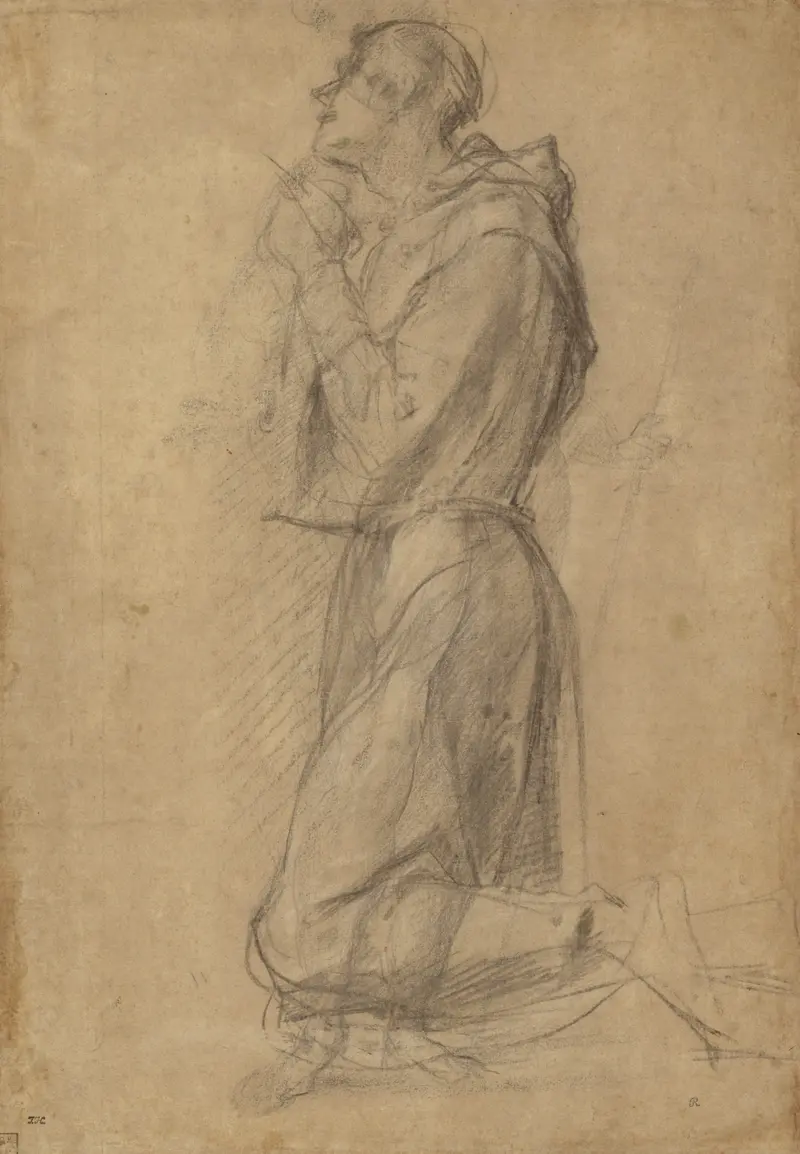
Saint Francis
Pontormo (Jacopo Carucci)
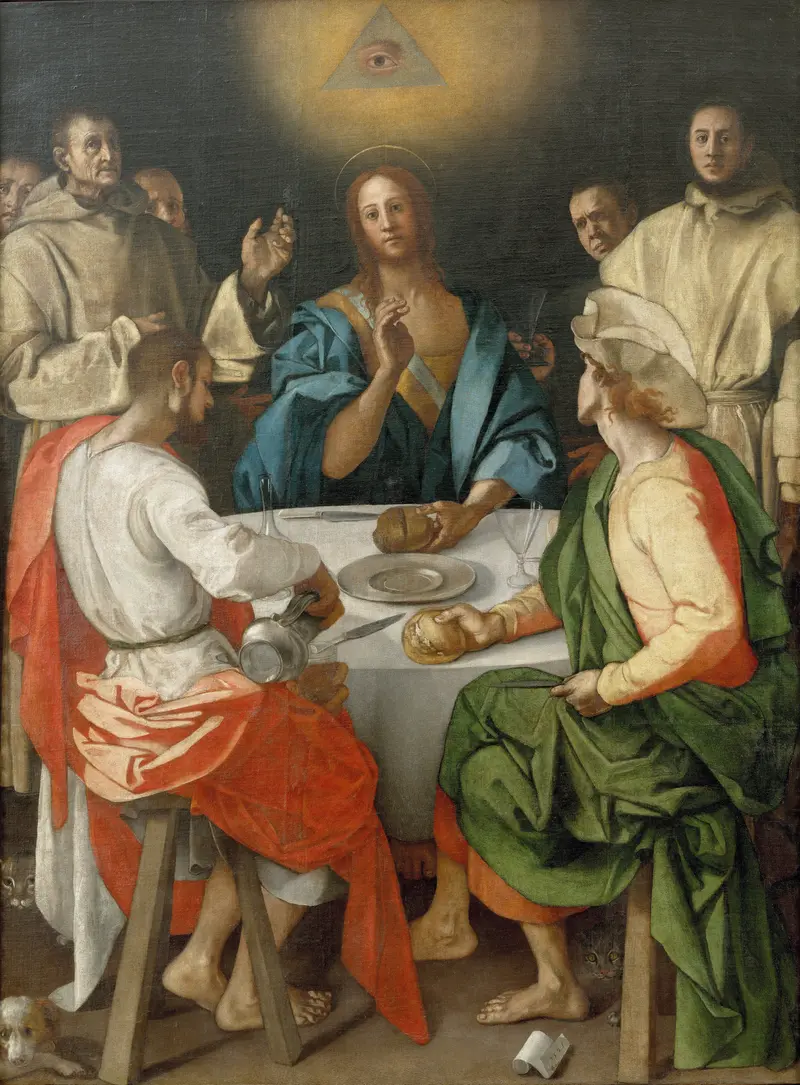
Supper at Emmaus
Pontormo (Jacopo Carucci)
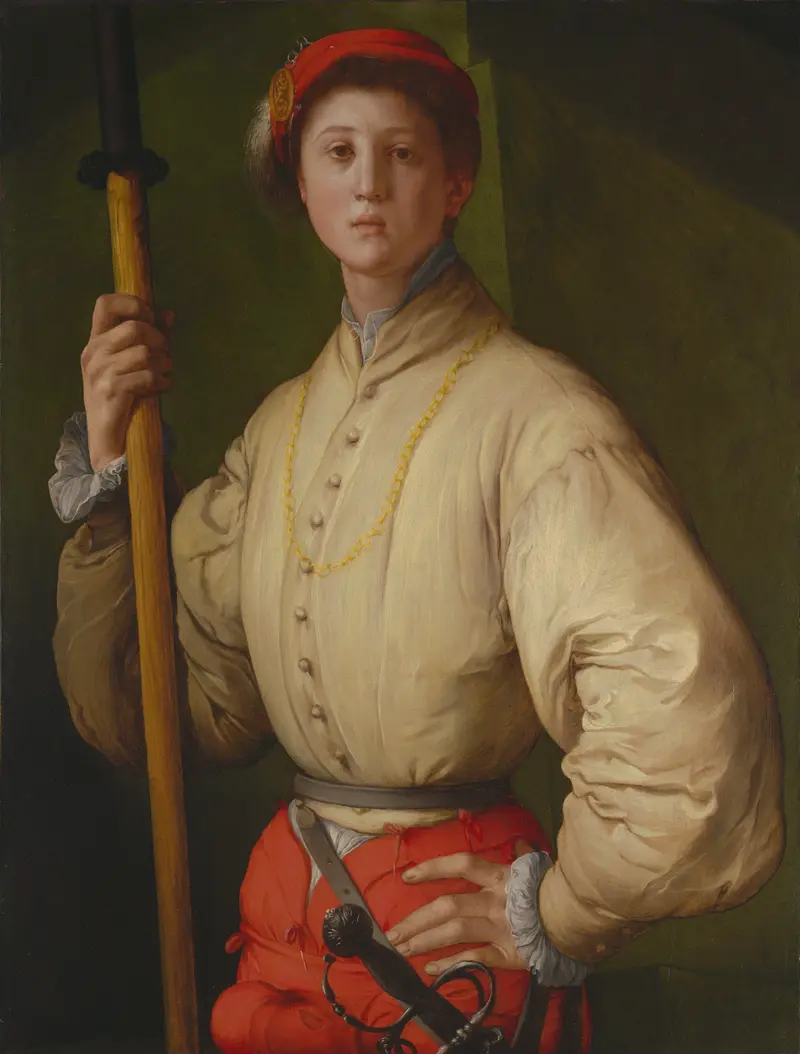
Portrait of a Halberdier
Pontormo (Jacopo Carucci)
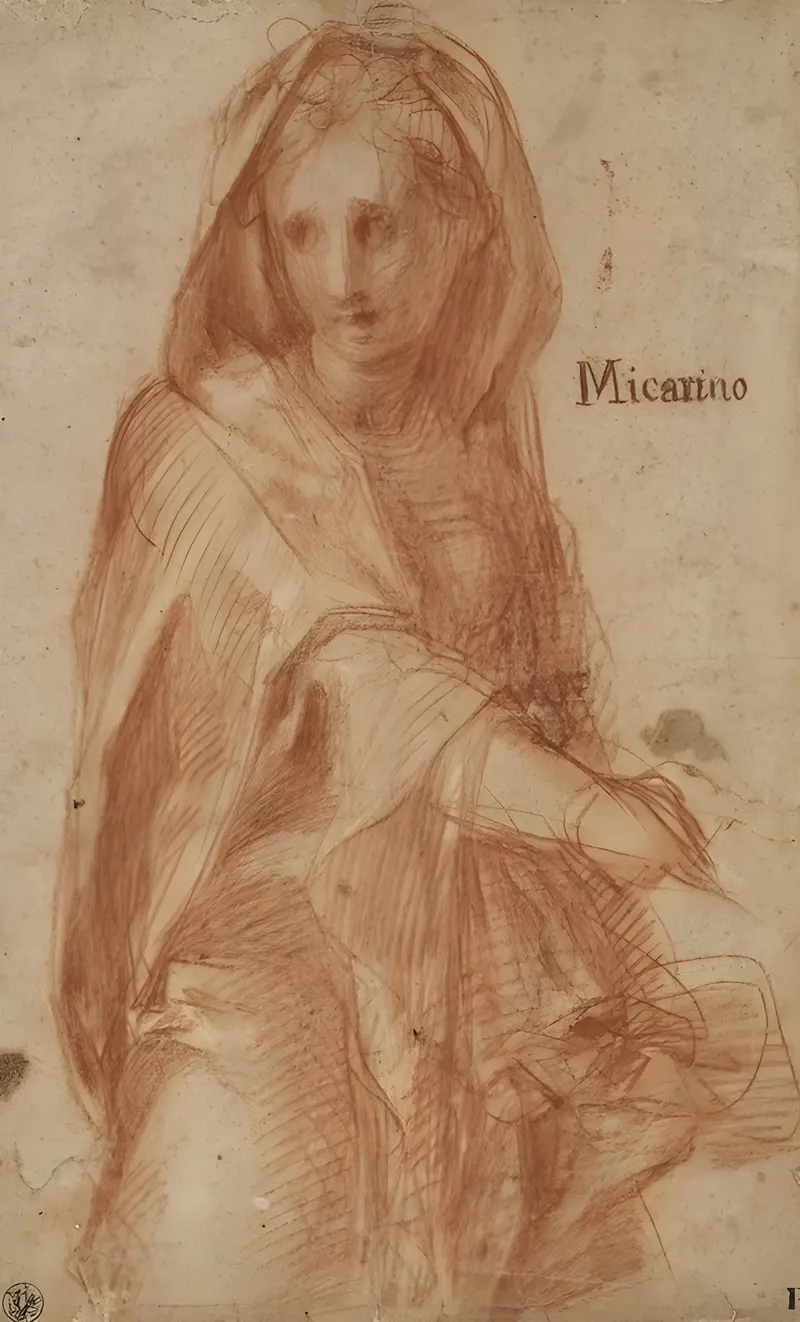
Female figure with covered head (study for a figure in the fresco of the Visitation in Santissima Annunziata)
Pontormo (Jacopo Carucci)
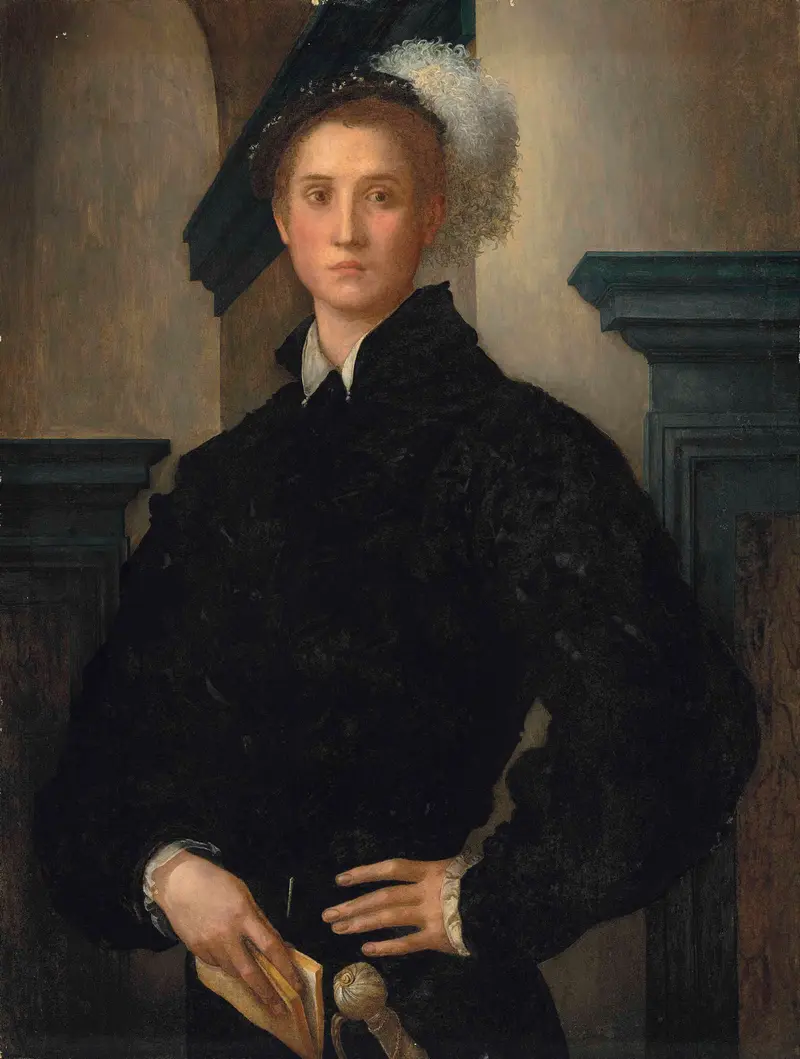
Portrait Of Cosimo I De Medici
Pontormo (Jacopo Carucci)
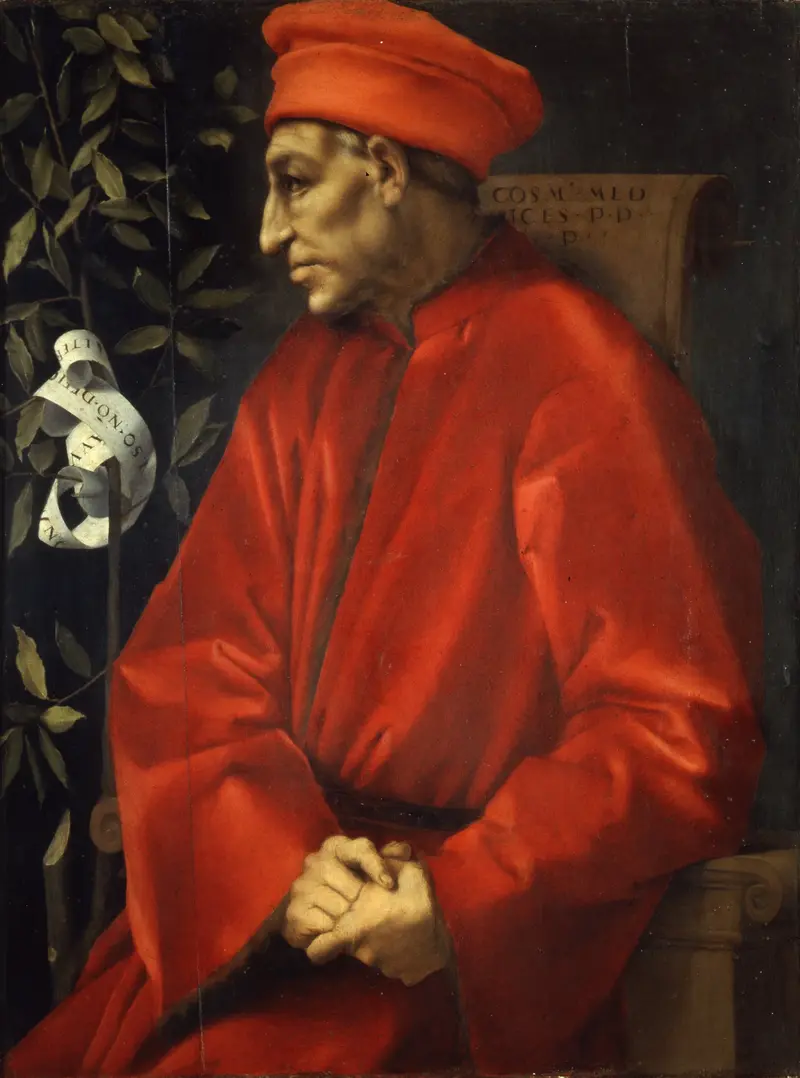
Portrait of Cosimo de’ Medici the Elder
Pontormo (Jacopo Carucci)
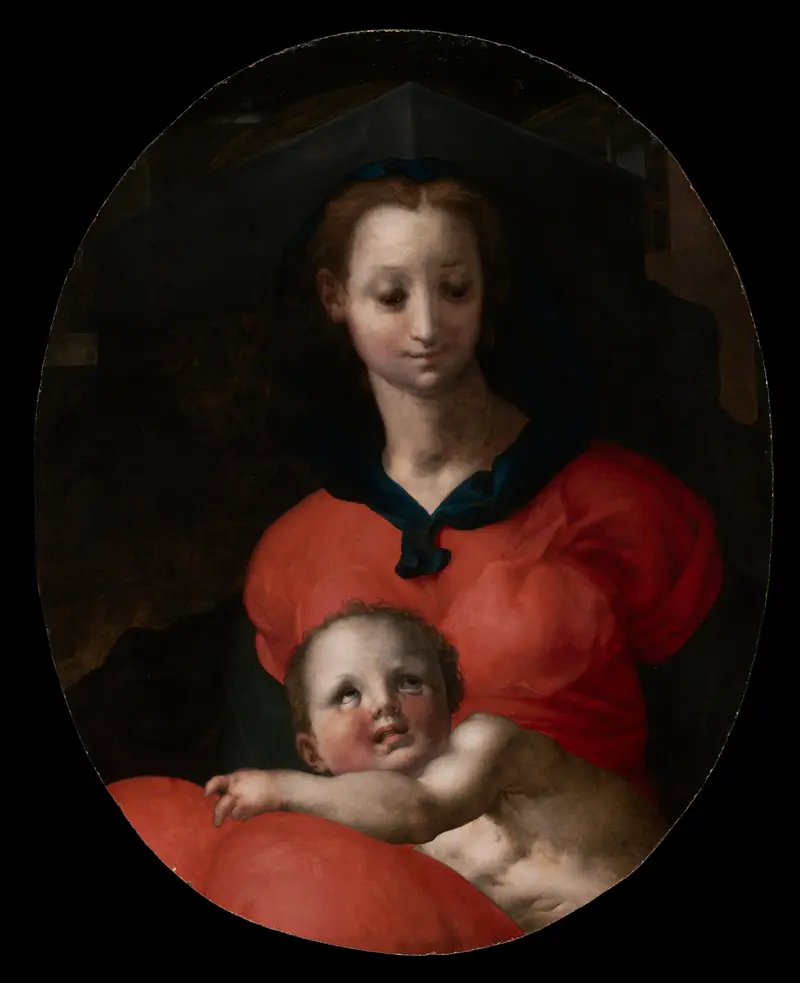
Virgin and Child, known as the Madonna del Libro
Pontormo (Jacopo Carucci)





