The Wave — History & Facts
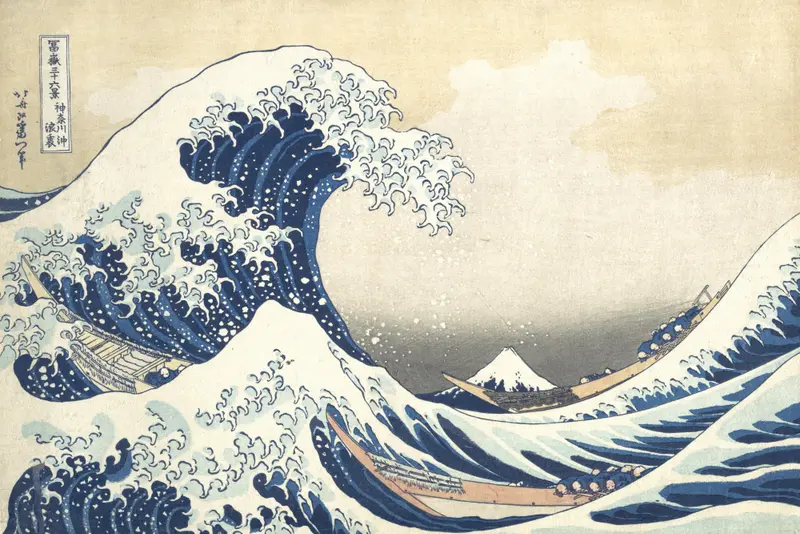
In The Wave, Edvard Munch presents a dramatic seascape filled with swirling blues and whites. The tumultuous waves seem to rise and fall with a life of their own, creating a sense of movement. The sky is painted in deep, moody colors, enhancing the emotional intensity of the scene.
This painting captures the raw power and unpredictability of the ocean. The painting is executed in oil on canvas, allowing for rich textures and vibrant colors. Munch uses bold brushstrokes to convey the energy of the waves, creating a dynamic composition. The dimensions are approximately 100 x 80 cm, making it a sizable work that commands attention.
Viewers can appreciate the intricate details that Munch incorporates into the crashing waves. Edvard Munch, known for his exploration of psychological themes, created The Wave during the late 19th century. This work reflects his fascination with nature and its emotional resonance. Interestingly, Munch often used the sea as a metaphor for human emotions, and in this piece, the waves symbolize turmoil and chaos.
The painting is part of a private collection, highlighting its rarity and significance in Munch's oeuvre.