
Theatre Du Gymnase, Boulevard De Bonne-Nouvelle — History & Facts
Did the painter know this moment would outlive them? A fleeting glimpse of life, captured in the midst of chaotic movement, creates a dialogue between time and memory. Look to the bustling scene at the forefront, where figures clothed in a medley of colors spill onto the street. The artist employs a vibrant palette, with splashes of yellow and red harmonizing against the cooler tones of the buildings. Notice how the light dances across the scene, illuminating the faces of the passersby, their expressions a blend of excitement and urgency.
The composition leads your eye toward the illuminated theatre sign, stark against the dimming backdrop of evening—a beacon of culture amidst life’s tumult. Delve deeper into the contrasts woven throughout this tableau. The juxtaposition of the vibrant activity outside and the darkened interiors hints at stories both told and untold, suggesting a tension between public spectacle and private reflection. The slight blur of figures suggests motion, a chaotic rush that speaks to the urgency of urban life, while the darkened windows of the theatre loom like blank canvases—silent witnesses to the exuberance yet to unfold within.
The scene encapsulates the heartbeat of a city, where every fleeting moment is both a chaos and a celebration. Eugène Galien-Laloue painted this scene during a time when Paris was burgeoning with artistic fervor, yet also grappling with the modernity of the early 20th century. His works often reflect the vibrancy and liveliness of urban life, and in this period, he was honing his skills in capturing everyday moments infused with emotion. The cultural landscape was shifting, and his art served as a bridge to the pulse of a city teetering on the edge of modernity.
More Artworks by Eugène Galien-Laloue
Browse all →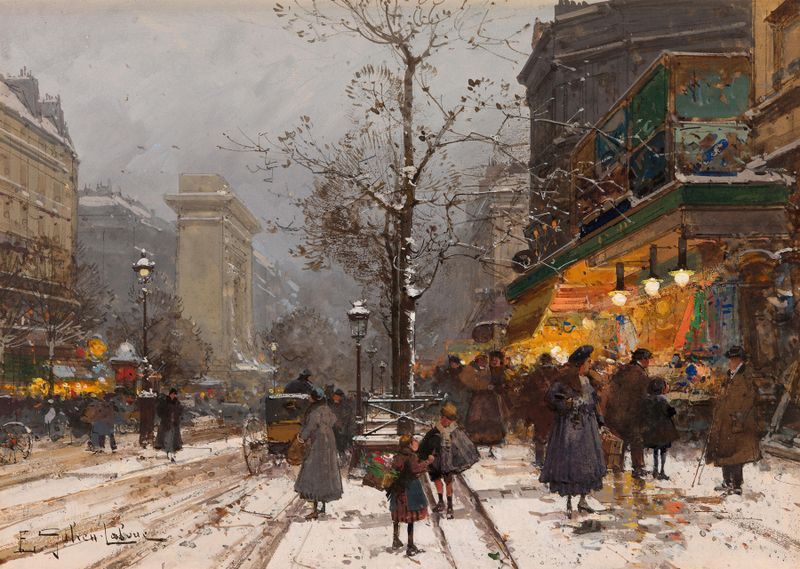
Boulevard Bonne – Nouvelle sous la neige
Eugène Galien-Laloue
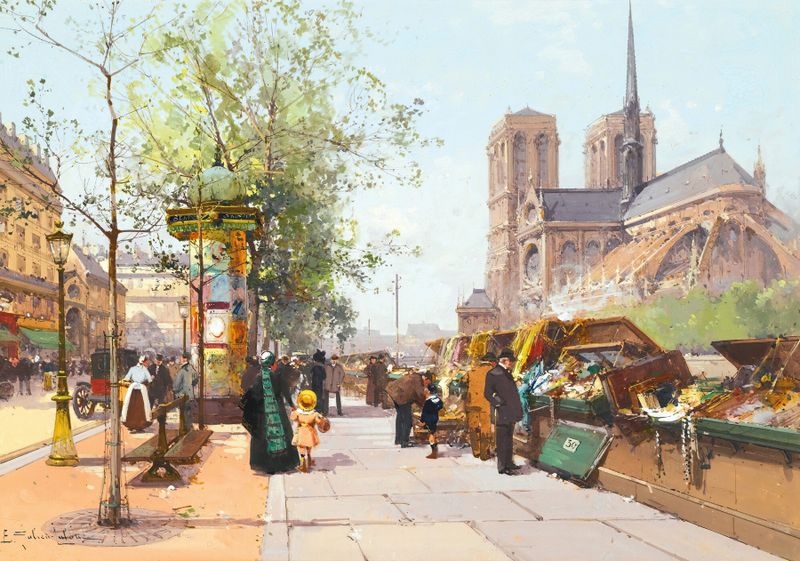
Notre Dame De Paris
Eugène Galien-Laloue
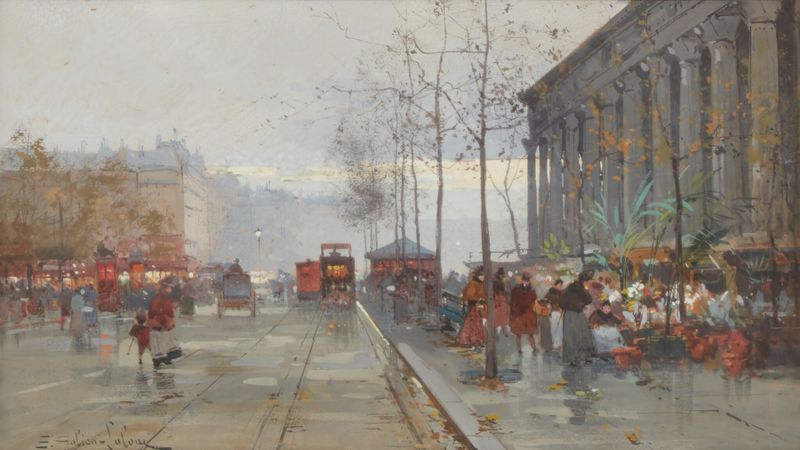
Le Marché aux fleurs de la Madeleine
Eugène Galien-Laloue
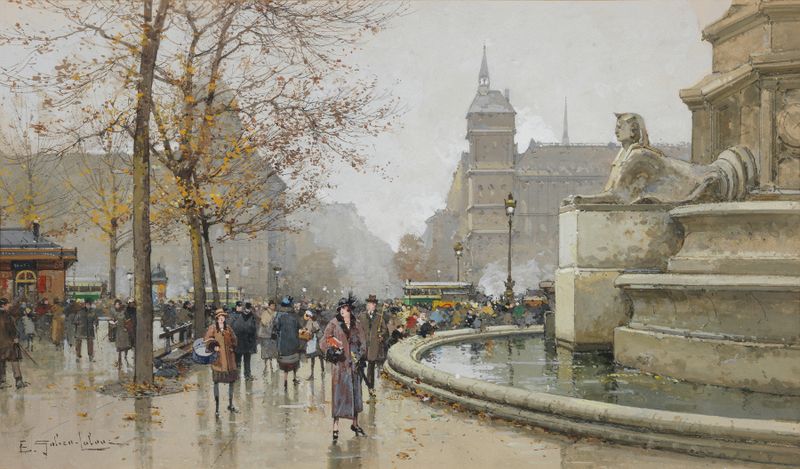
La fontaine du Palmier, place du Châtelet
Eugène Galien-Laloue
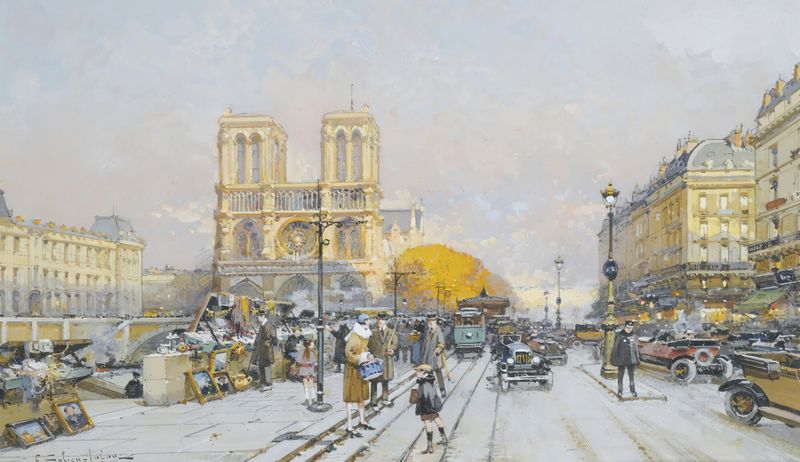
Notre Dame
Eugène Galien-Laloue
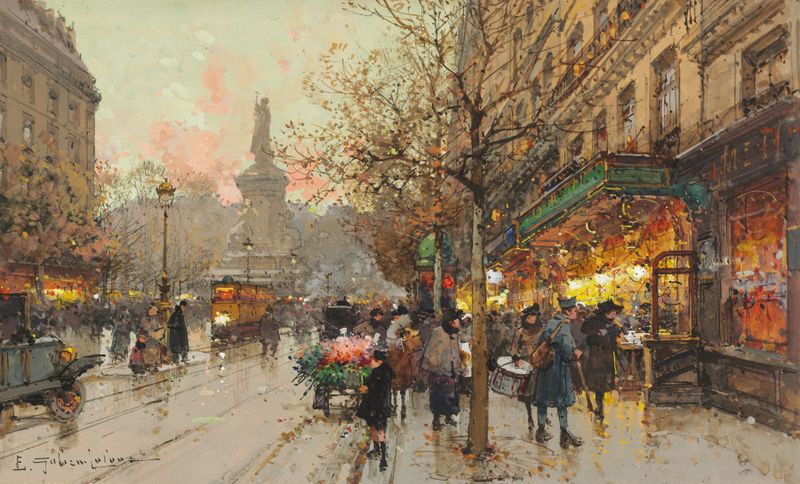
Place De La République
Eugène Galien-Laloue
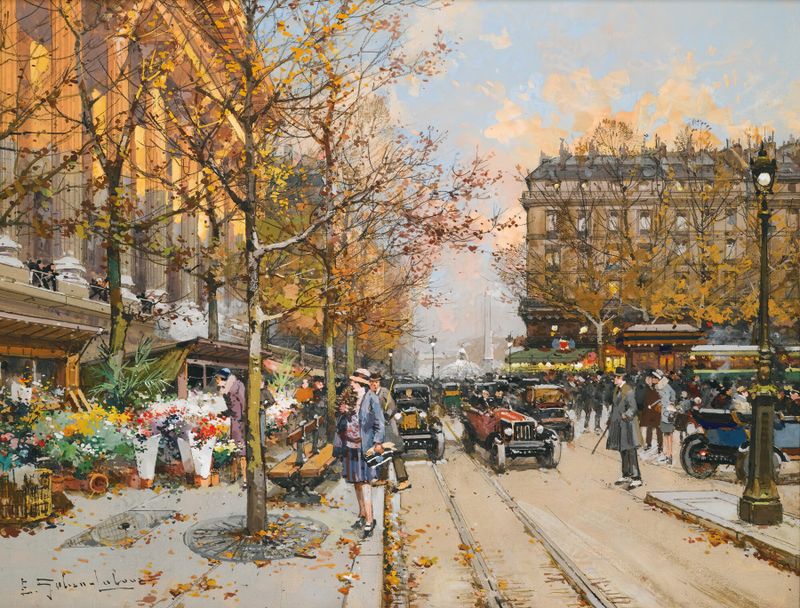
Place De La Madeleine
Eugène Galien-Laloue
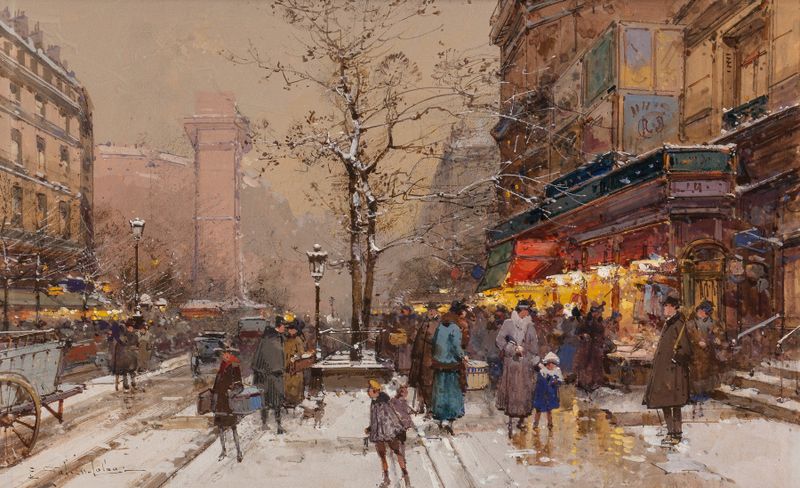
Porte Saint-Denis
Eugène Galien-Laloue
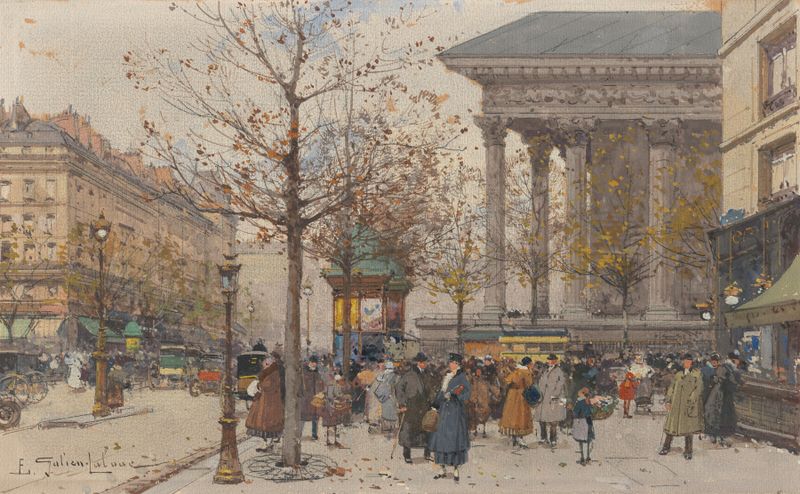
Vue animée de la Madeleine
Eugène Galien-Laloue
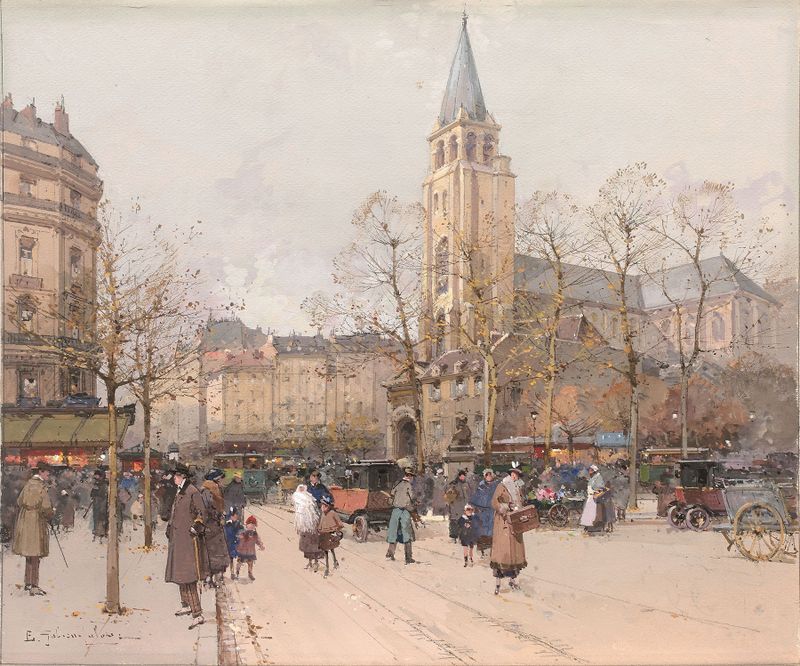
Vue des boulevards à Saint-Germain-des-Prés
Eugène Galien-Laloue





