Theology — History & Facts
When Raphael began work on Theology in 1508, he was only twenty-five and newly arrived in Rome, yet entrusted with the decoration of Pope Julius II’s private library. This ambitious fresco, also known as The Disputa, forms part of the celebrated Stanza della Segnatura cycle in the Vatican, a commission that marked a turning point not only in Raphael’s career but in the course of Renaissance art itself. The fresco’s subject—debate over the mystery of the Eucharist—was chosen to reflect the room’s function as the Pope’s study and tribunal.
Its immediate impact was such that Vasari later wrote, “the room was filled with astonishment at the sight of so much beauty and invention.” At the heart of Theology is a dramatic gathering of theologians, saints, and Church Fathers, all animated in discussion beneath a radiant vision of Christ in glory. The moment Raphael selects is not a single historical event, but the eternal debate over the nature of the Eucharist: below, earthly scholars—among them Thomas Aquinas and Dante—lean forward, gesture, and consult texts; above, Christ is flanked by the Virgin and John the Baptist, with God the Father presiding at the very top. The golden monstrance on the altar anchors the composition, symbolizing the real presence of Christ in the sacrament.
The clouds and celestial figures, rendered with a clarity and order absent from earlier treatments—such as Fra Angelico’s more mystical assemblies—embody Raphael’s balance of the human and divine. Unlike many of Raphael’s panel paintings, Theology has never left its original setting in the Vatican. Commissioned by Julius II, it was painted directly onto the wall of the Stanza della Segnatura, ensuring its preservation even as Rome was sacked and tastes changed. The fresco’s success established Raphael as the preeminent painter in Rome, leading to further Vatican commissions and influencing generations of artists.
Today, visitors to the Vatican Museums still encounter Theology in situ, where it continues to preside over the room for which it was conceived, a testament to Raphael’s vision and the intellectual ambitions of the High Renaissance.
Sources: Wikidata Q3983944 · Image source (Wikimedia Commons)
More Artworks by Raphael
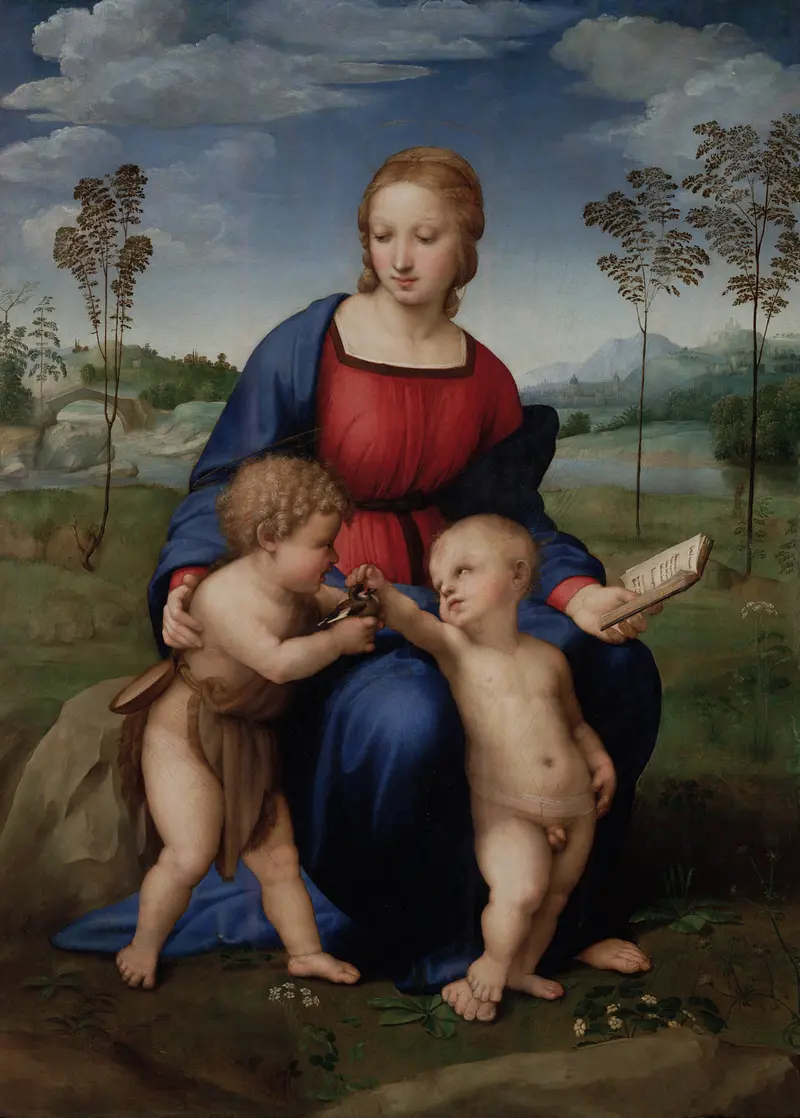
Madonna of the Goldfinch
Raphael

Madonna with the Fish
Raphael
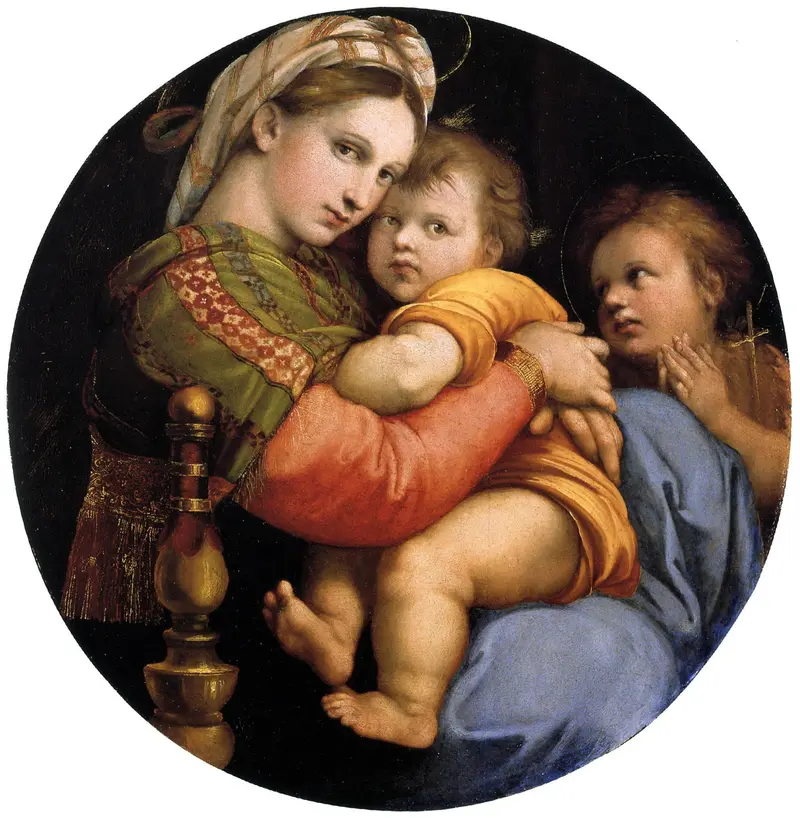
Madonna and Child (Madonna della Seggiola)
Raphael
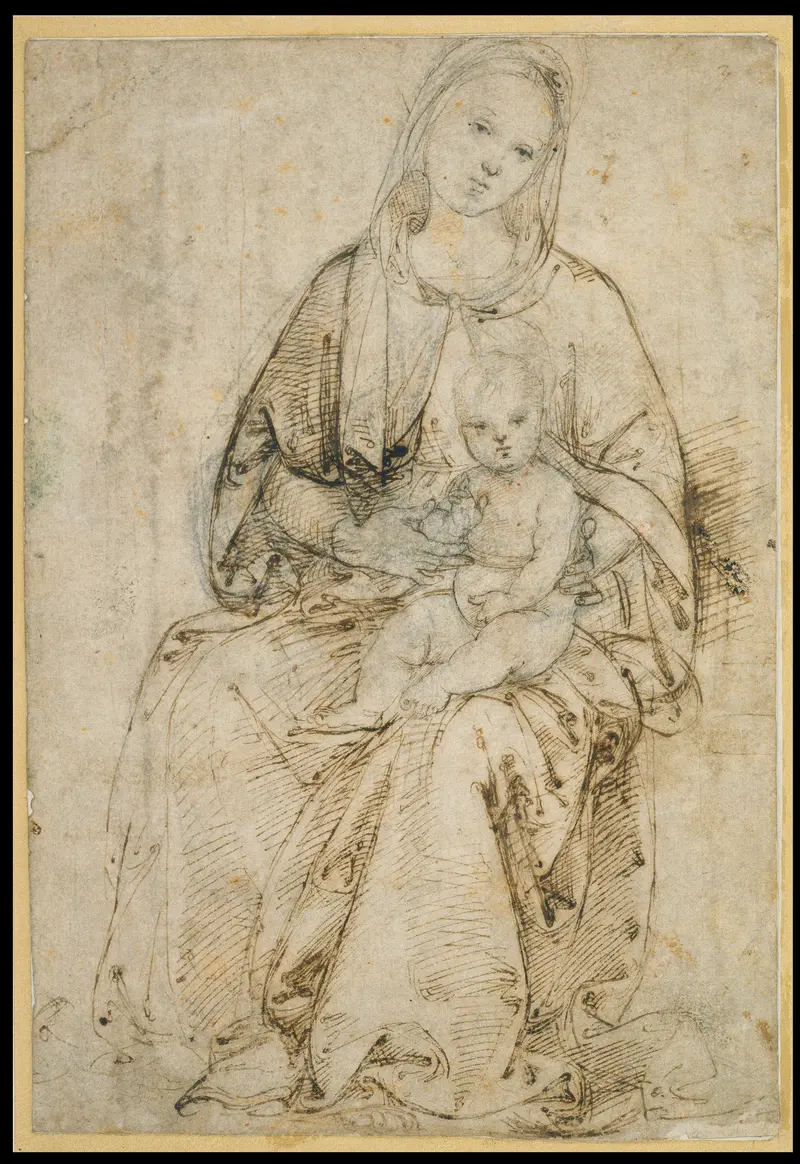
Seated Madonna and Child
Raphael
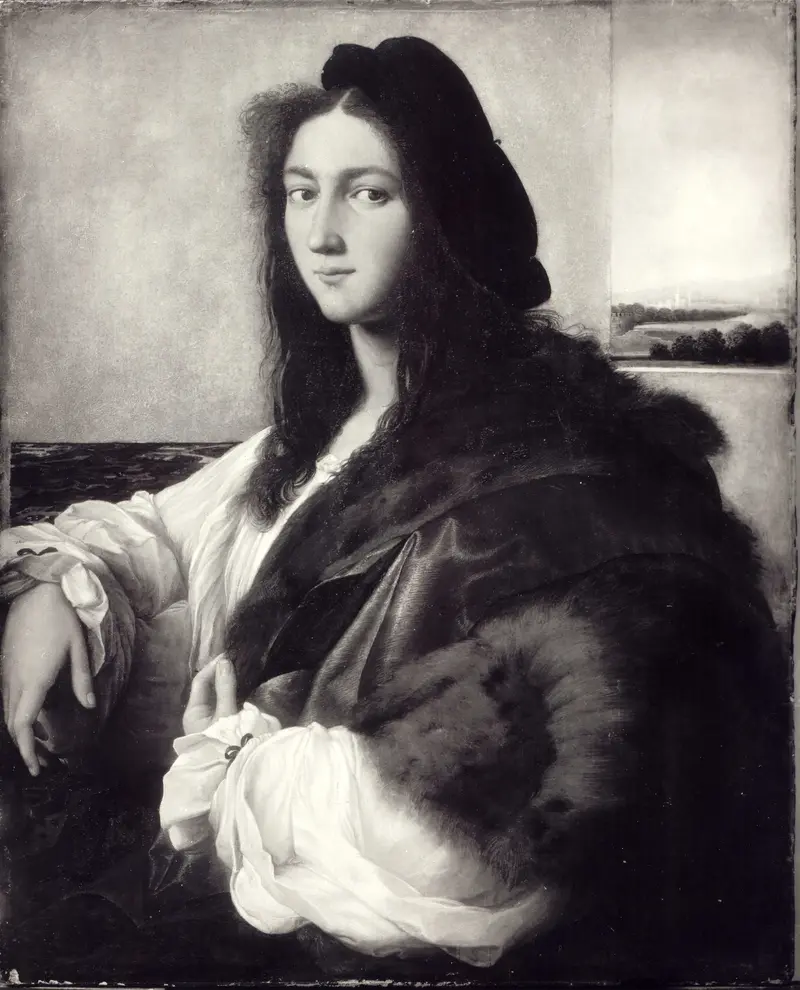
Portrait of a Young Man
Raphael
The Marriage of the Virgin
Raphael
The Triumph of Galatea (copy after Raphael)
Raphael
Poetry
Raphael
Sistine Madonna
Raphael
Madonna and Child Enthroned with Saints
Raphael