
Three Dutch Men o' War — History & Facts
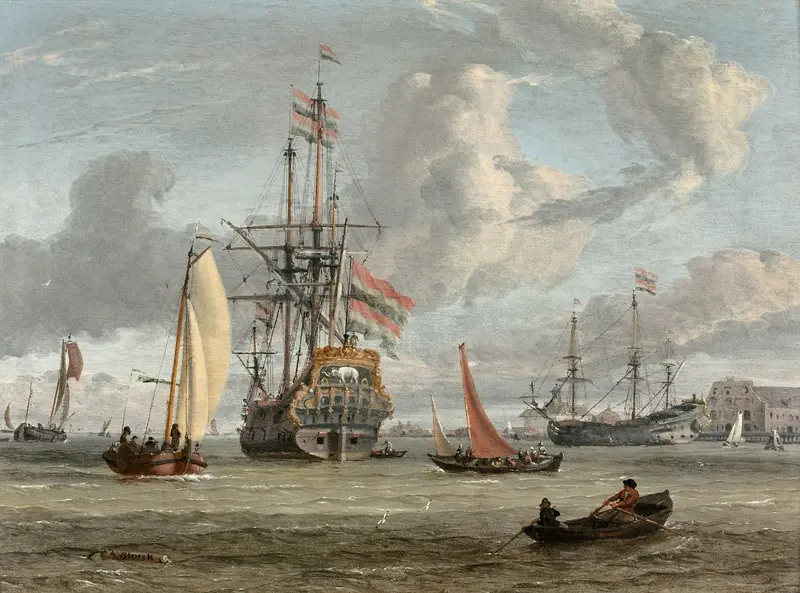
What first catches the eye in Three Dutch Men o' War by Abraham Storck is the proud display of Dutch flags, snapping in the wind atop the towering masts. The ships themselves, rendered with meticulous attention to rigging and ornament, seem to surge forward, their sails full and their hulls bristling with detail. Storck places the viewer at water level, so the ships loom above, their scale and grandeur emphasized by the low horizon and the vast, cloud-laden sky.
The interplay of light and shadow across the sails draws the gaze from vessel to vessel, while the red pennant at the center injects a note of drama and command. Every detail, from the crowded decks to the distant silhouettes on the horizon, is a testament to the painter’s fascination with the theatre of maritime power. This painting belongs to the world of the late Dutch Golden Age, when seascapes were both a celebration of national pride and a record of maritime might. Between 1664 and 1708, Dutch artists like Storck found eager patrons among merchants, admirals, and city officials who wanted to commemorate the Republic’s dominance at sea.
Such works were not mere decoration—they were statements of identity and aspiration, painted at a time when the Dutch fleet was a force to be reckoned with. While little is recorded about the specific journey of this painting before its place in the Art UK collection, its very survival invites us to imagine the ambitions and anxieties of a seafaring nation. Look again, and see not just ships, but the hopes of an era riding the wind.
More Artworks by Abraham Storck

The Muscovite legation visiting Amsterdam, 29 August 1697
Abraham Storck
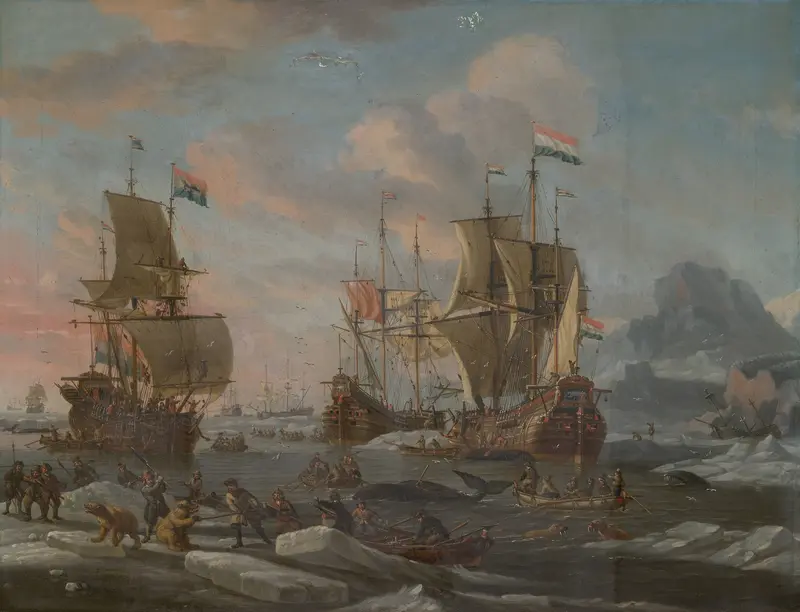
The Dutch Whaling Fleet
Abraham Storck
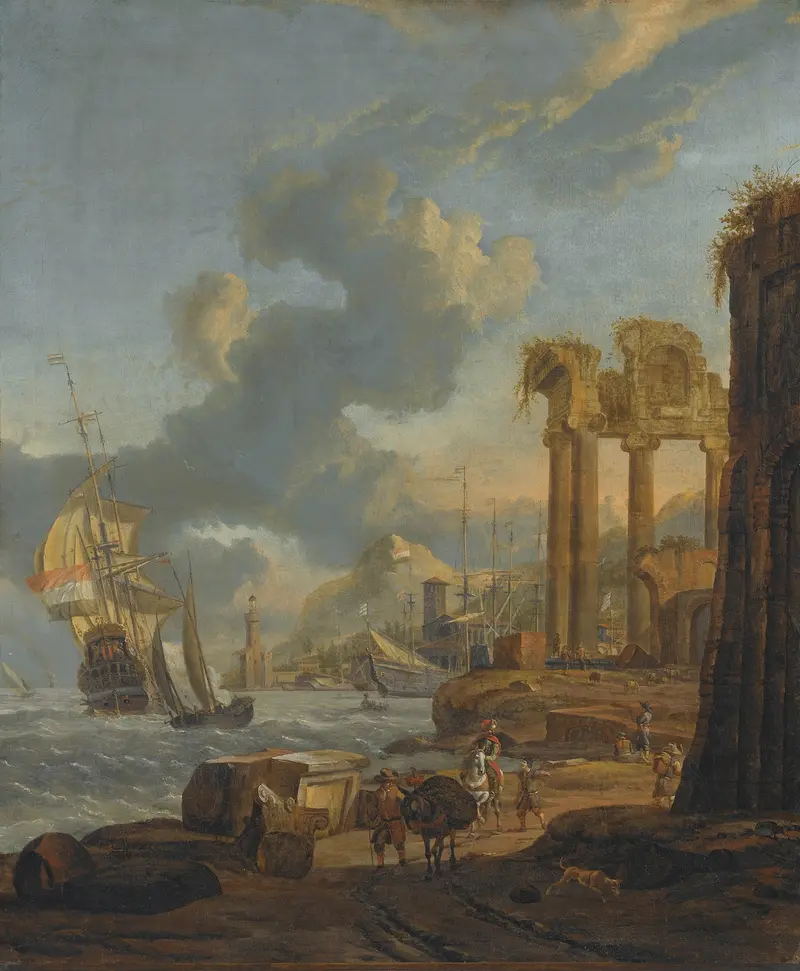
A Mediterranean Harbour Scene With Travellers On The Shore, A Dutch Man-Of-War On The Left
Abraham Storck
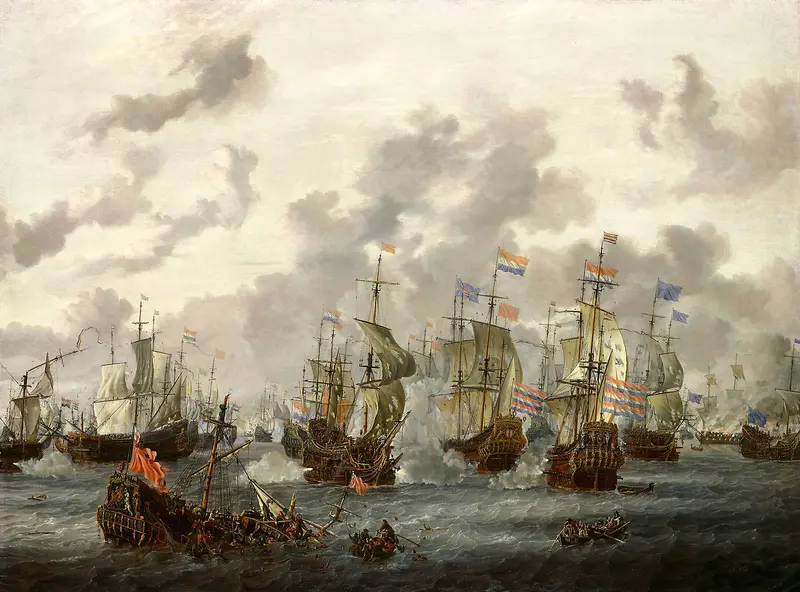
The Four Days’ Battle
Abraham Storck
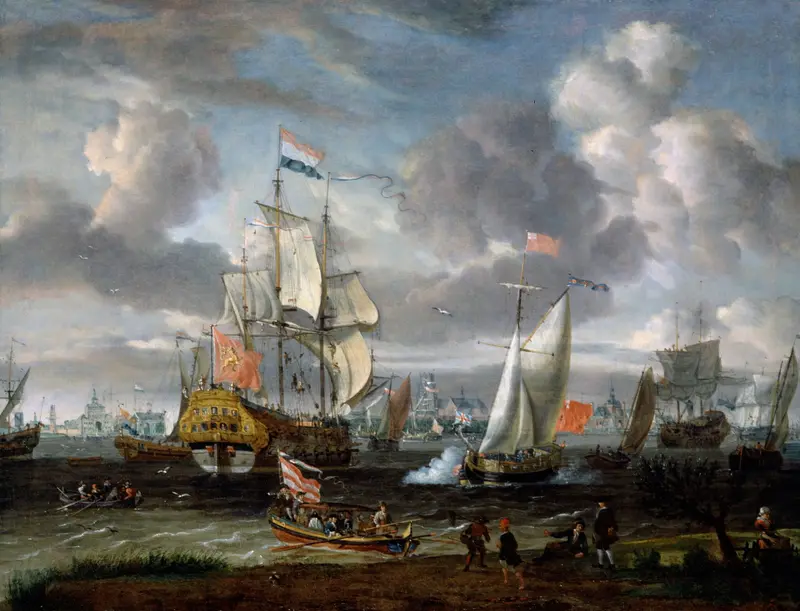
An English Yacht saluting a Dutch Man-of-War in the port of Rotterdam
Abraham Storck
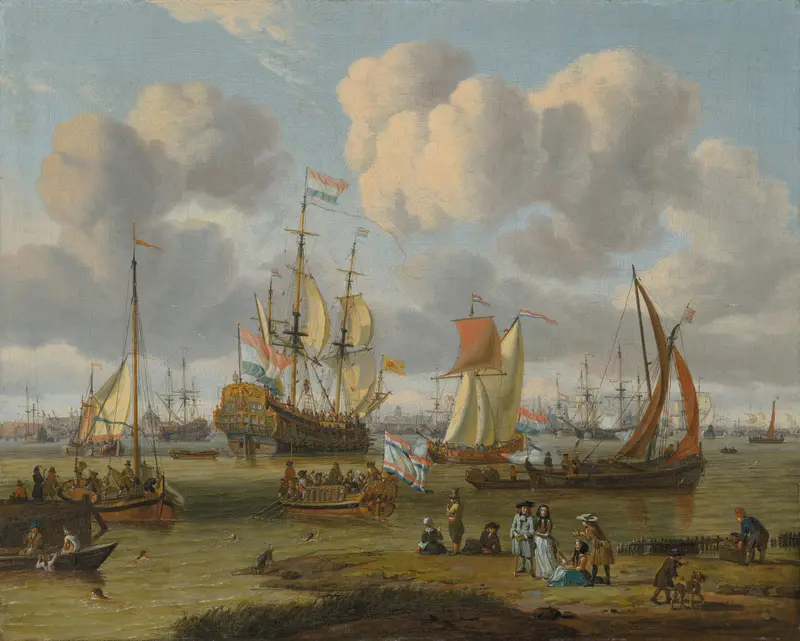
Shipping off Amsterdam with figures on a quay
Abraham Storck
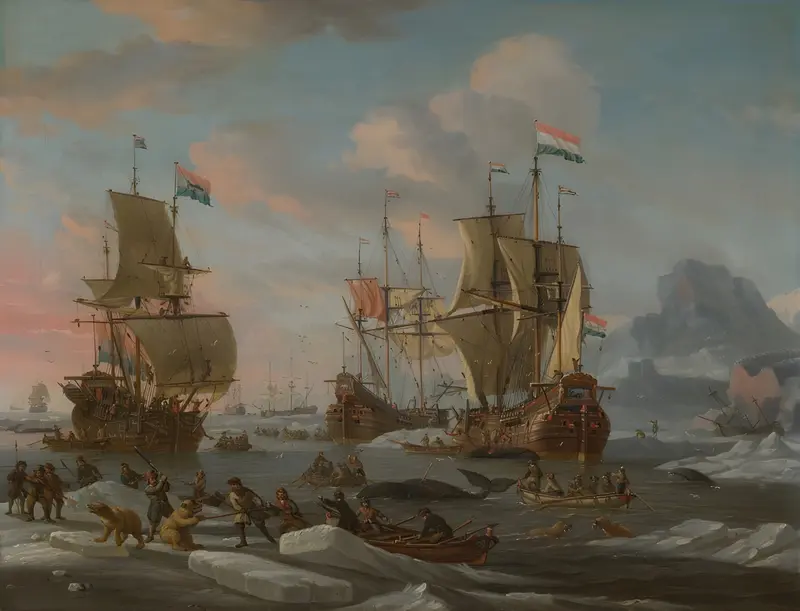
The Dutch Whaling Fleet
Abraham Storck
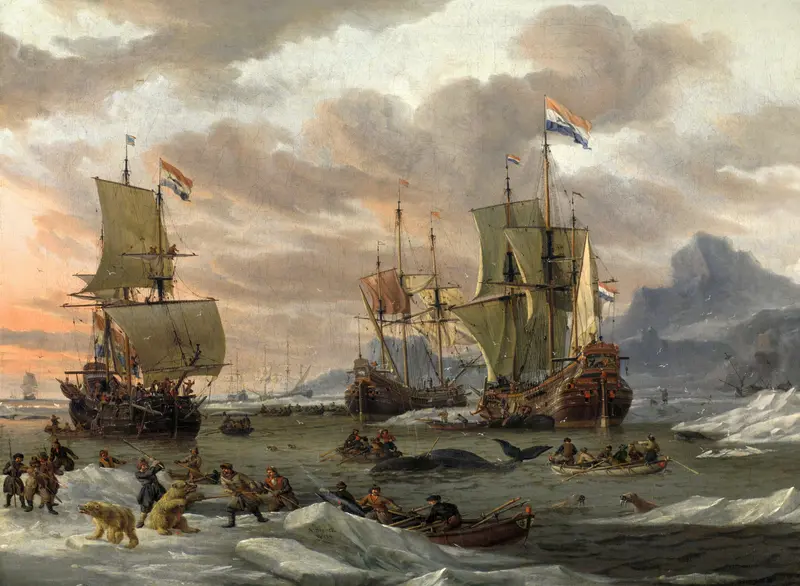
Whaling Grounds in the Arctic Ocean
Abraham Storck
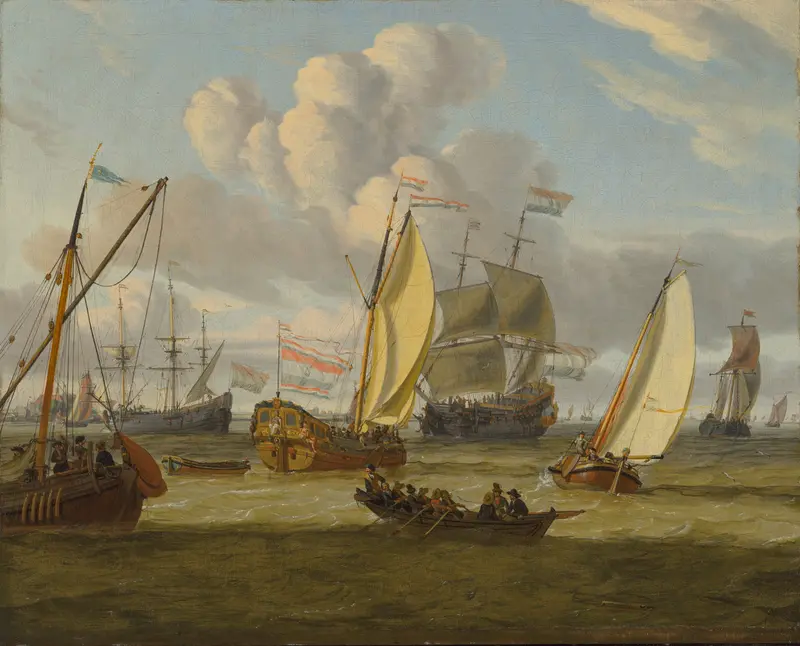
Shipping in an estuary
Abraham Storck
Grand navire de la couronne du Danemark près d’un littoral
Abraham Storck





