
Three Fishermen Along the Banks of a River at the Edge of a Forest — History & Facts
Can paint confess what words never could? In the subtle interplay of light and shadow, a silent dialogue unfolds on the canvas, capturing the essence of beauty in a fleeting moment. Look to the left at the gentle curve of the river, where crystalline waters reflect the dappled sunlight filtering through the forest canopy. The figures of the fishermen, rendered with delicate brushstrokes, are anchored in a tranquil yet vibrant landscape that draws the viewer's gaze. Notice the rich greens and browns that weave together to create a harmonious backdrop, while the softer hues of the sky infuse the scene with warmth, inviting an atmosphere of calm contemplation. As your eyes wander, consider the contrasts presented—a rugged, natural world teeming with life juxtaposed against the stillness of the fishermen's task.
The fishermen, each engaged in their own rhythm, embody both solitude and companionship, hinting at the intricate relationships woven into the fabric of daily life. The quietude of the river scene speaks to a deeper connection with nature, suggesting that beauty thrives in both the simplicity of labor and the complexity of human existence. In 1868, while painting Three Fishermen Along the Banks of a River at the Edge of a Forest, Adolphe Appian was immersed in the burgeoning movement of landscape painting, influenced by the Barbizon School in France. During this period, he sought to capture the fleeting effects of light and natural beauty, reflecting a growing appreciation for the rawness of the outdoors amidst an evolving artistic landscape.
More Artworks by Adolphe Appian
Browse all →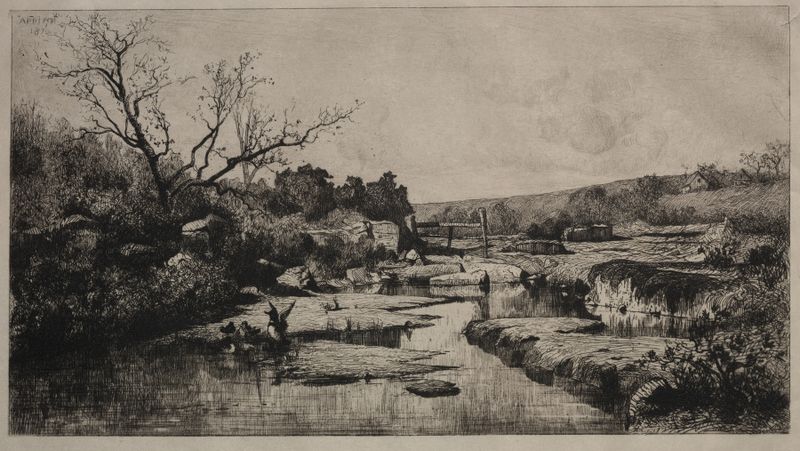
Source of the Albarine
Adolphe Appian
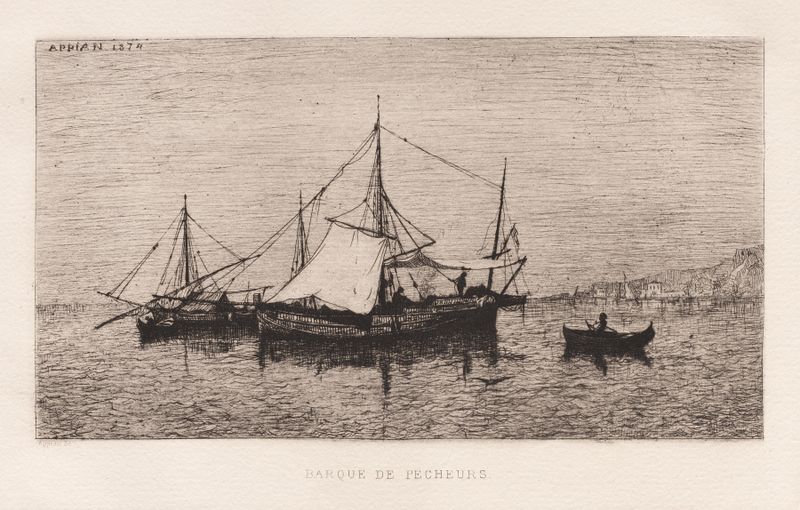
Barque de Pecheurs
Adolphe Appian
Shore of a Stream at Rossillon
Adolphe Appian

A Pond
Adolphe Appian

At Valromay (Ain)
Adolphe Appian

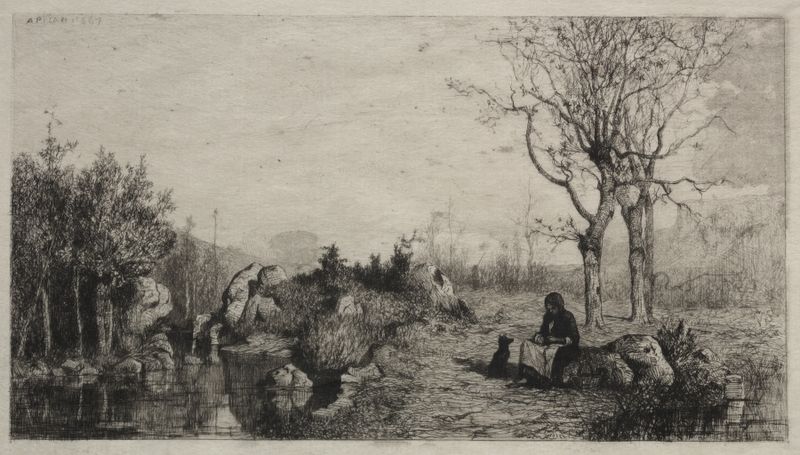
Woman Seated at the Edge of a Pond
Adolphe Appian
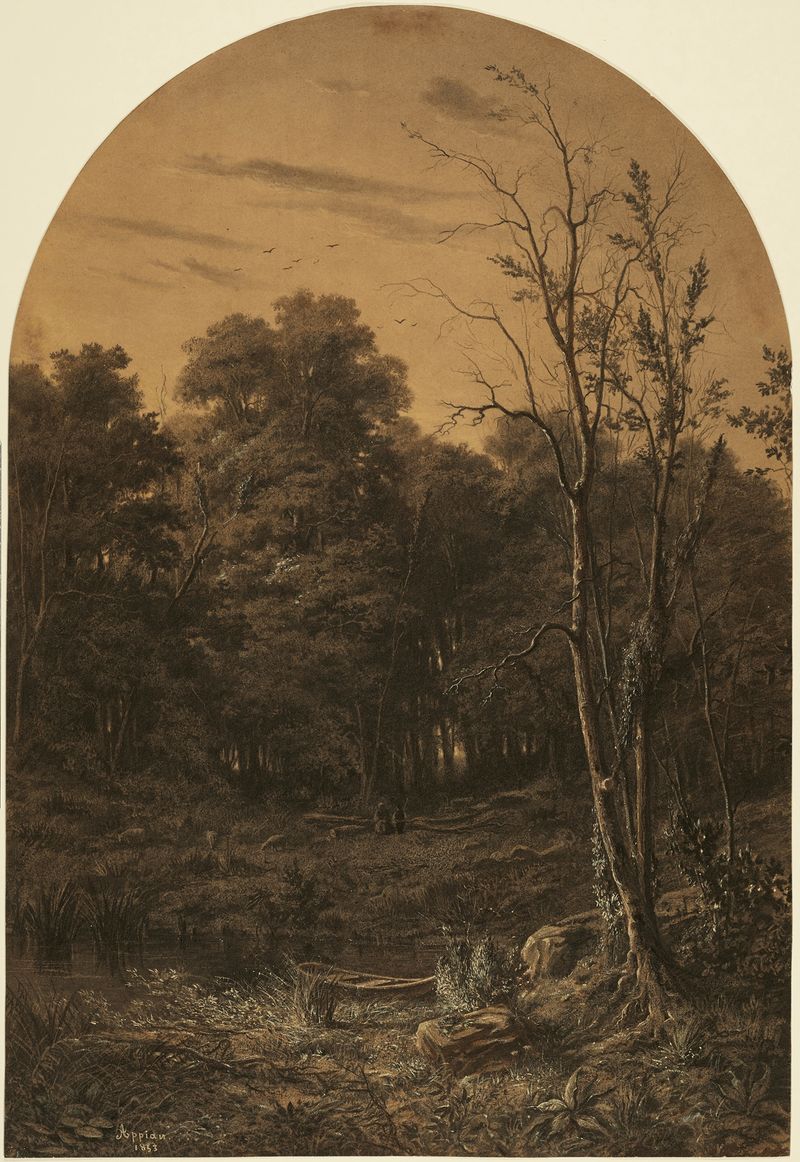
Forest Landscape near a Pond
Adolphe Appian
In the Valromey Valley, near the Rhône River
Adolphe Appian
Bord de mer
Adolphe Appian

Pond at the Edge of the Wood
Adolphe Appian





