
Three Friends of Winter — History & Facts
A child in a patterned kimono balances a bonsai with careful arms, her face turned in gentle concentration. The scene is framed by a screen whose pale bamboo silhouettes echo the living plant she carries, while a low table with a teapot anchors the lower edge. The palette is soft but purposeful: greens and blacks, with a hint of pink in the plum blossoms, set against the wintery gray of the background.
Every detail is chosen for meaning—the bonsai’s twisted trunk, the child’s bare feet, the careful calligraphy below. The composition draws the eye upward from the teapot, along the sweep of the kimono, to the living “three friends” in her arms: pine, plum, and bamboo. Created in 1913, Three Friends of Winter by Helen Hyde belongs to a moment when Western artists were captivated by Japanese aesthetics, and Hyde herself was a pioneering figure in this cross-cultural exchange. Works like this, delicately sized at just over 8 by 4 inches, were often collected as prints or cards, cherished for their blend of narrative and decorative charm.
The inscription at the bottom spells out the symbolism: pine for endurance, plum for grace, bamboo for integrity—virtues celebrated in East Asian art for centuries, here reframed for a new audience. The Smithsonian American Art Museum now preserves this print, a quiet testament to the ways artists found poetry in everyday rituals and ancient emblems. Look again, and notice how the winter scene outside is softened by the warmth within—Hyde’s invitation to find friendship and resilience in the heart of the coldest season.
More Artworks by Helen Hyde

Moonlight on the Viga Canal) - HH (monogram) LCCN0065
Helen Hyde
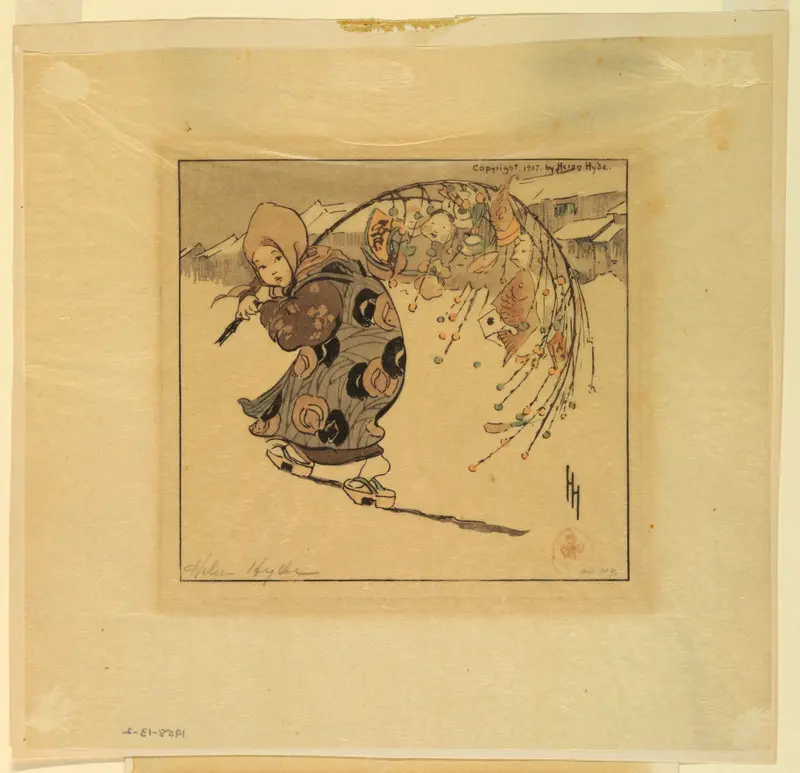
Print, The Good Luck Branch
Helen Hyde
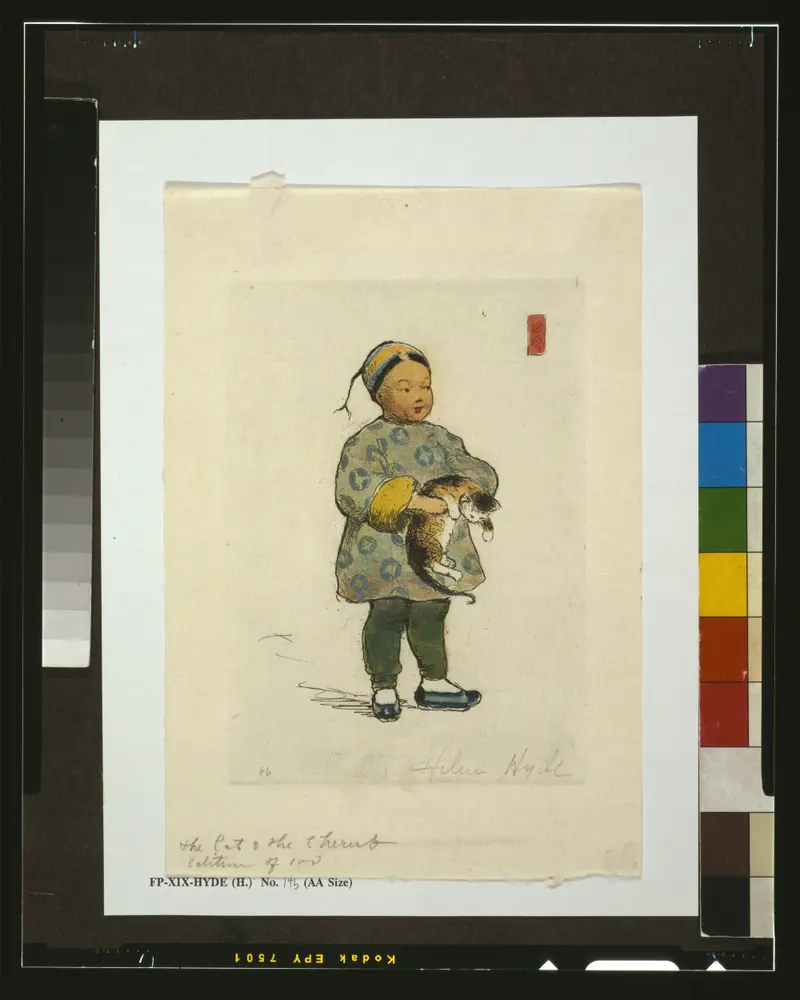
The cat and the cherub LCCN200367
Helen Hyde

Hon(orable Mr) cat - HH (monogram). LCCN200367
Helen Hyde
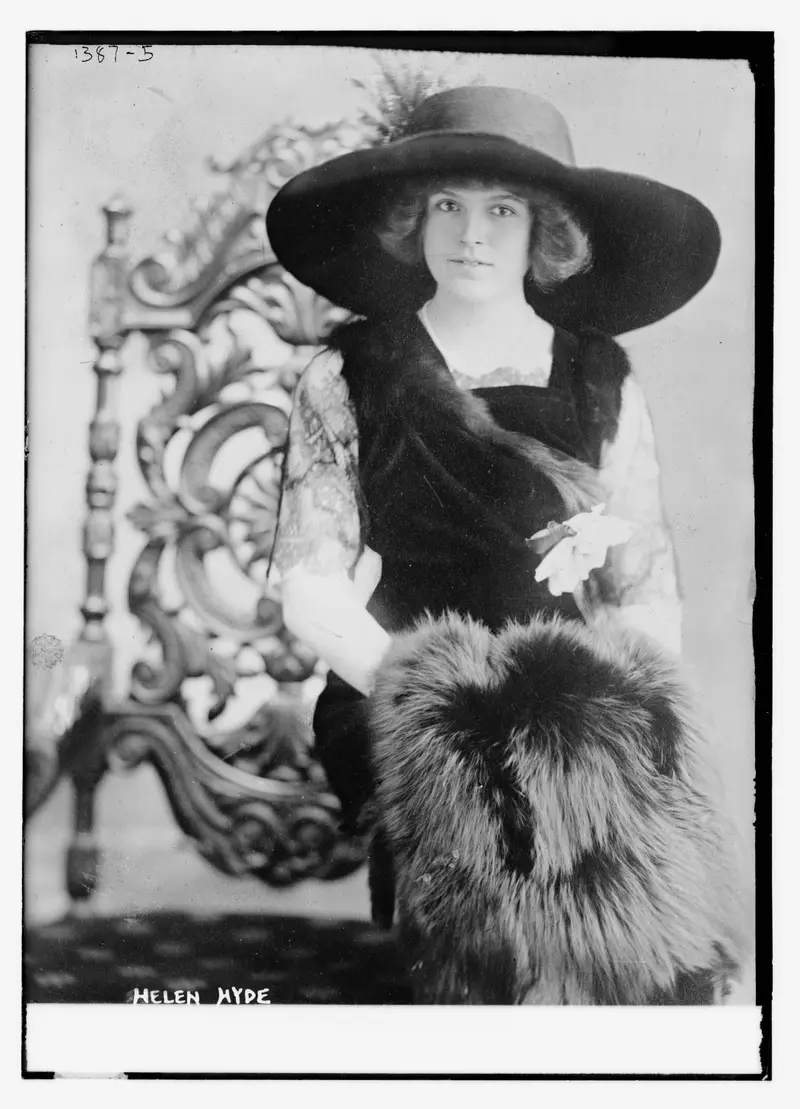
Helen Hyde LCCN201468
Helen Hyde
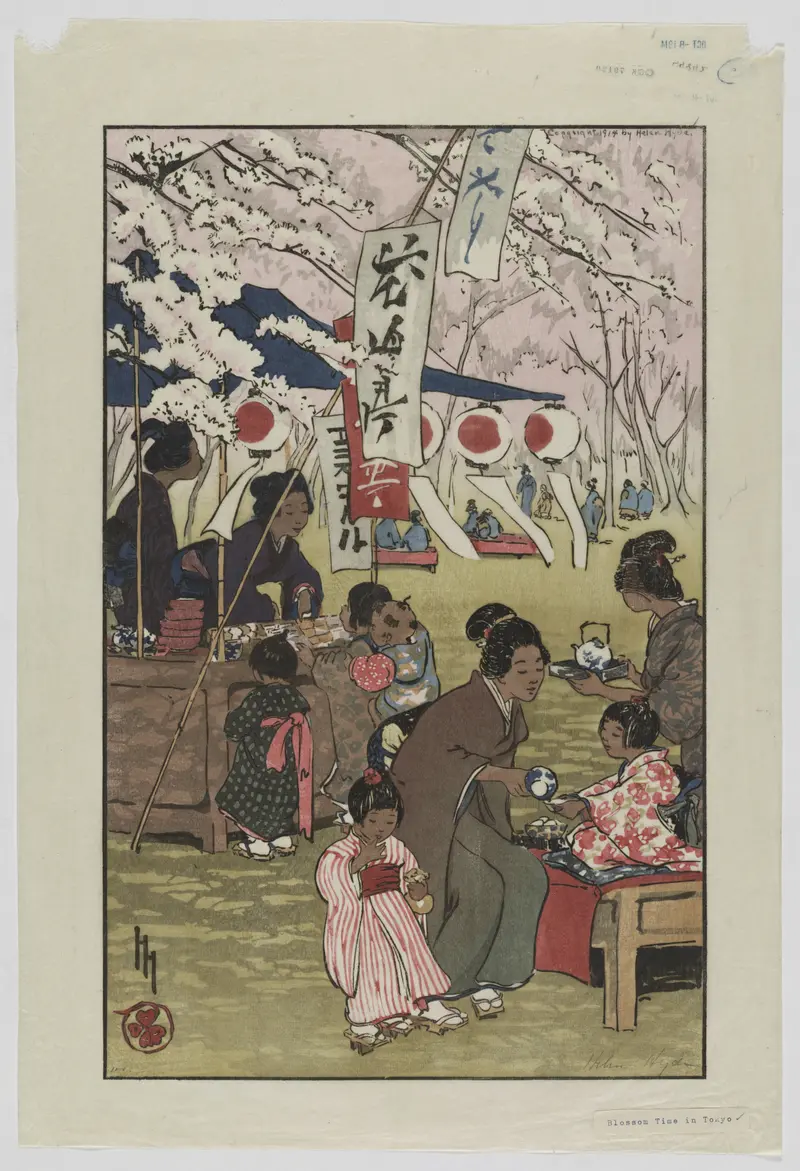
Blossom time in Tokyo) - HH (monogram) LCCN0065
Helen Hyde
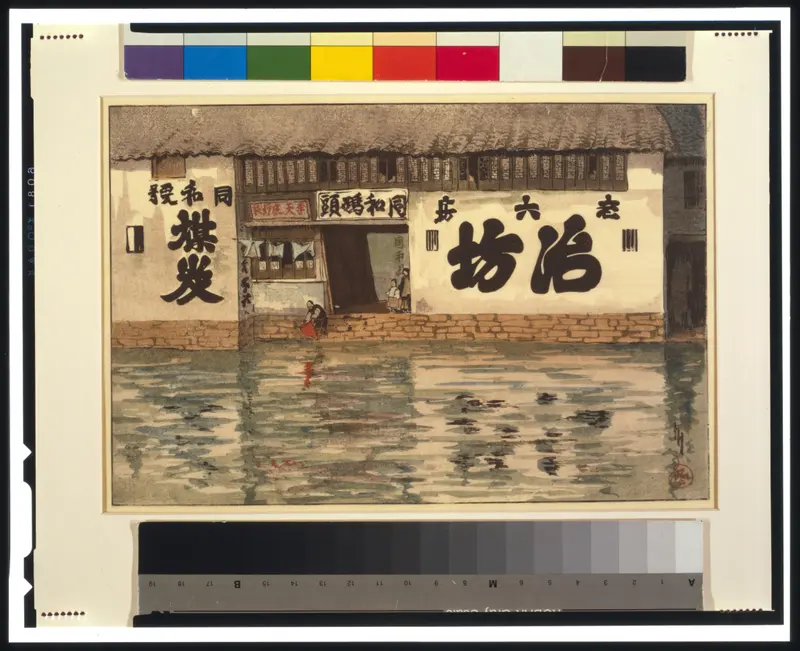
The sauce-pan shop) - HH (monogram) LCCN0065
Helen Hyde

New Year's Day in Tokyo
Helen Hyde
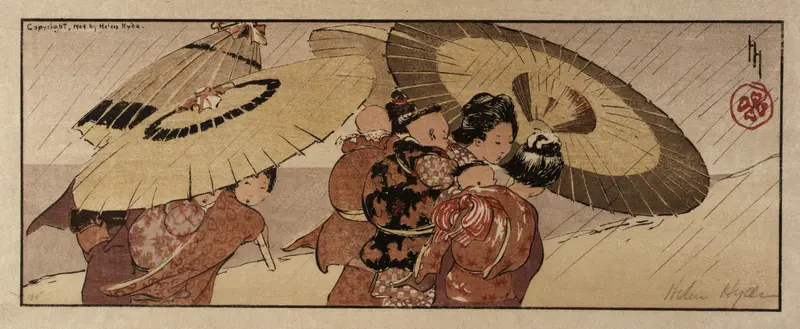
A Summer Shower
Helen Hyde
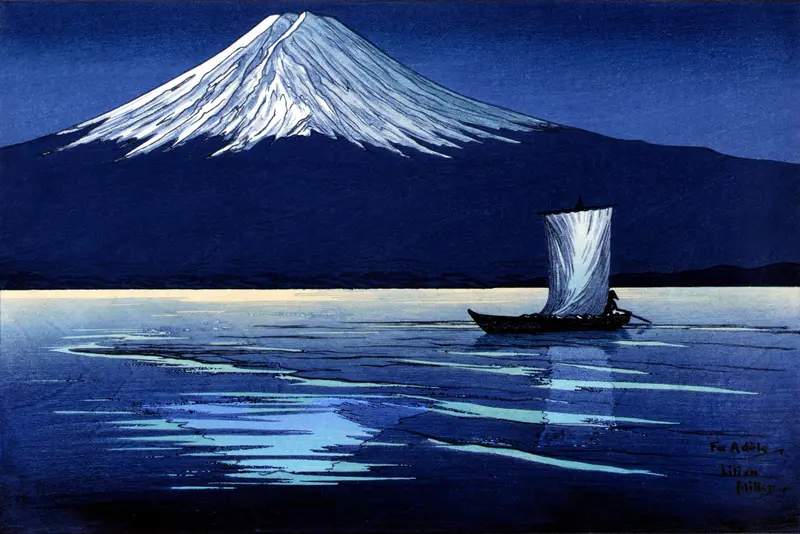
Moonlight on Mt. Fuji
Helen Hyde
More Genre Scene Art

Banquet of the Officers of the St George Civic Guard
Frans Hals

Rembrandt and Saskia in the Scene of the Prodigal Son
Rembrandt van Rijn

Bal du moulin de la Galette
Pierre-Auguste Renoir

Quadrille at the Moulin Rouge
Henri de Toulouse-Lautrec

A Burial at Ornans
Gustave Courbet

When Will You Marry?
Paul Gauguin