
Three Sheep — History & Facts
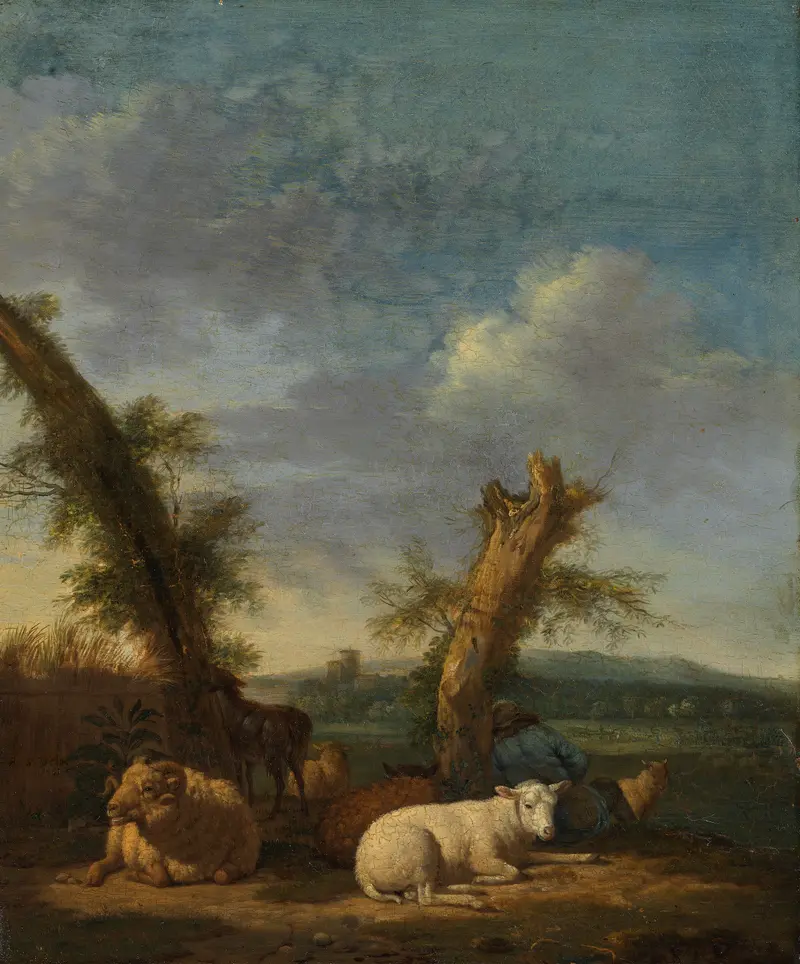
The hush of a Dutch summer afternoon settles over the animals in Three Sheep, as if the world has paused to let them rest. The eye is drawn first to the gentle curve of the standing sheep’s neck, its gaze meeting ours with a quiet directness. Nearby, two companions—one white, one brown—recline in the grass, their bodies forming a soft triangle at the painting’s heart.
Behind them, a cart rumbles slowly along a shaded path, and the figures of men and horses dissolve into the cool green shadows. The sky above, vast and luminous, pushes the horizon low and fills the scene with a sense of spacious calm, while the bare branches of a tree on the right hint at the passage of seasons. Painted in 1659, this work by Adriaen van de Velde belongs to a world that prized such scenes of rural peace. In the Dutch Republic, the 17th century saw a flourishing of landscape and animal painting, as prosperous citizens sought images of the countryside to hang in city homes.
Artists like van de Velde were celebrated for their ability to render not just the likeness of animals, but their character and the soft play of light on wool and hide. Today, Three Sheep resides in the collection of the Nivaagaard Museum, a quiet testament to an age when the rhythms of farm and field were both subject and symbol. The longer you look, the more the silence of the scene reveals itself.
More Artworks by Adriaen van de Velde

Staande stier
Adriaen van de Velde
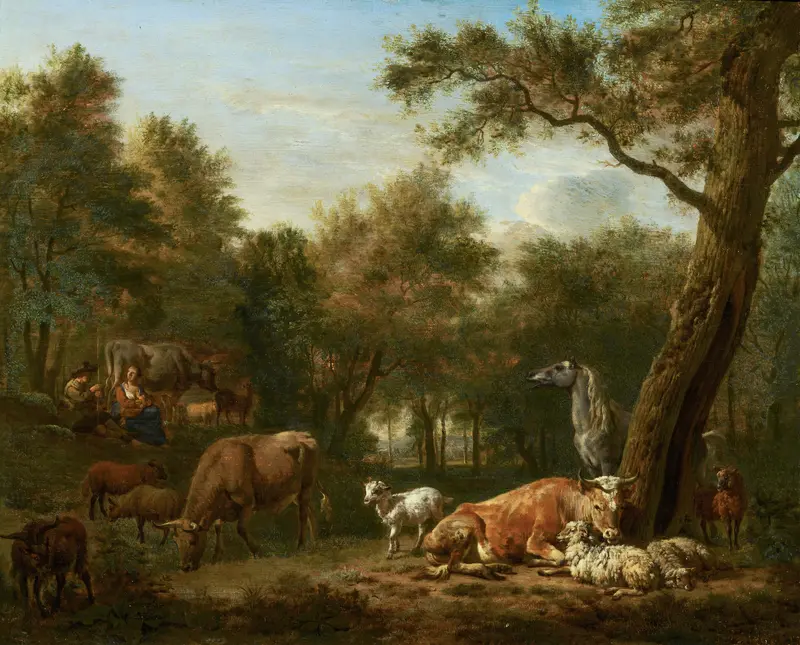
Wooded Landscape with Cattle
Adriaen van de Velde
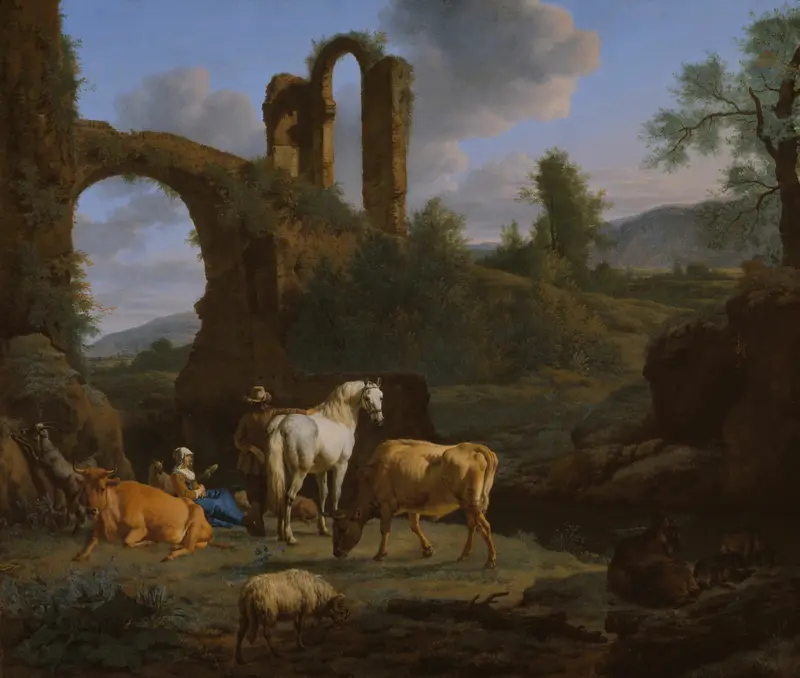
Pastoral Landscape with Ruins
Adriaen van de Velde
Pastoral Landscape with Ruins
Adriaen van de Velde
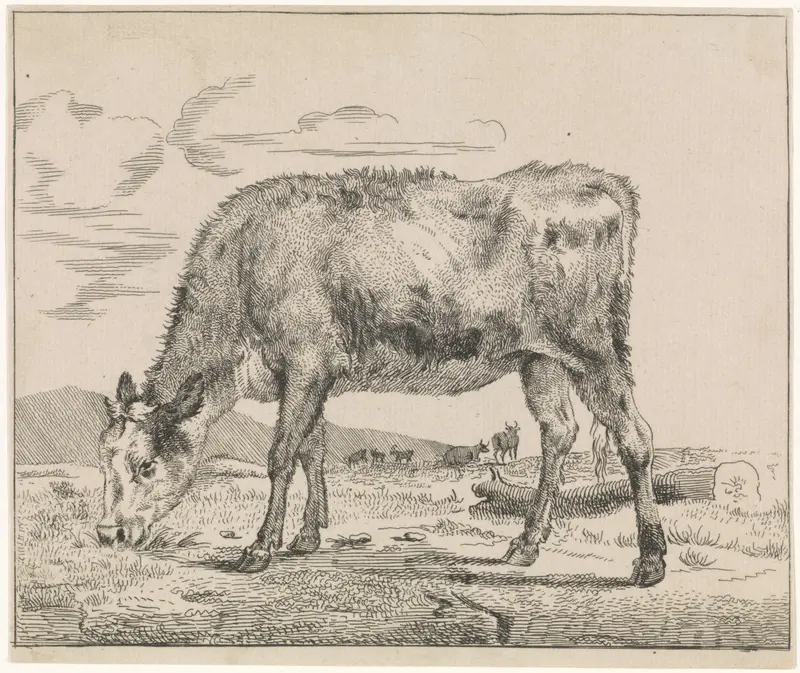
Grazend kalf
Adriaen van de Velde
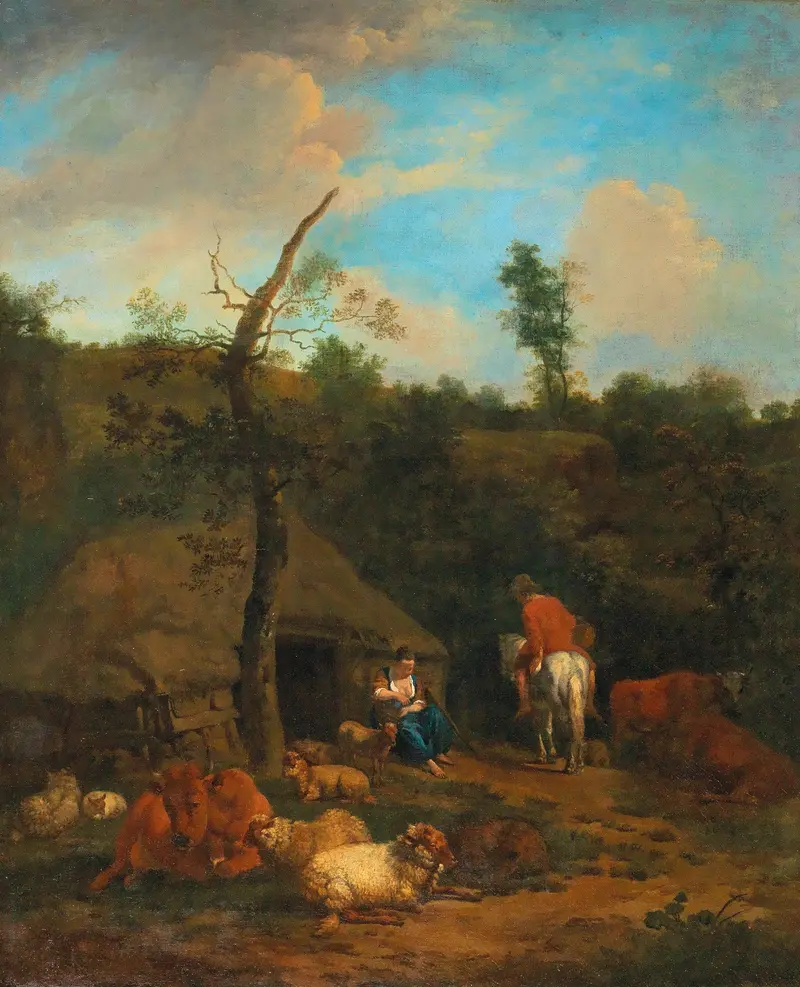
A herdsman and a shepherdess in front of a wooden farmhouse
Adriaen van de Velde
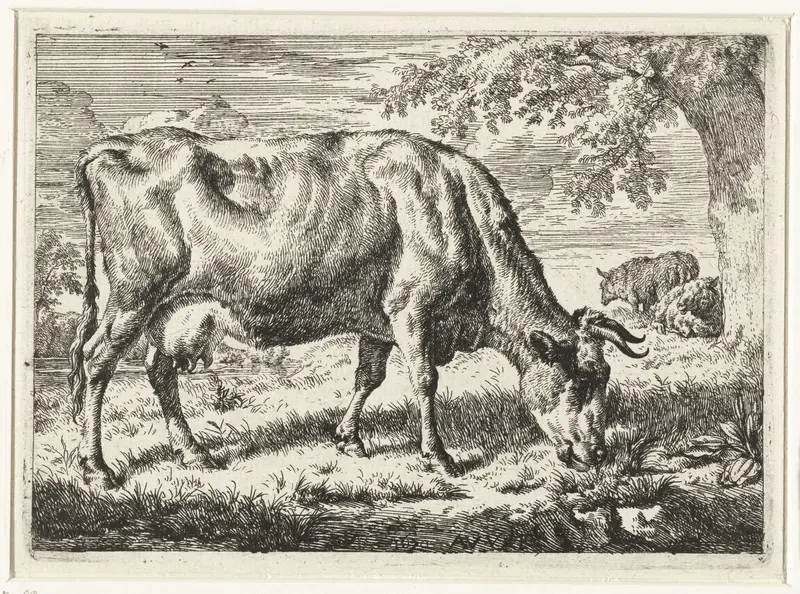
Grazende koe en twee schapen
Adriaen van de Velde
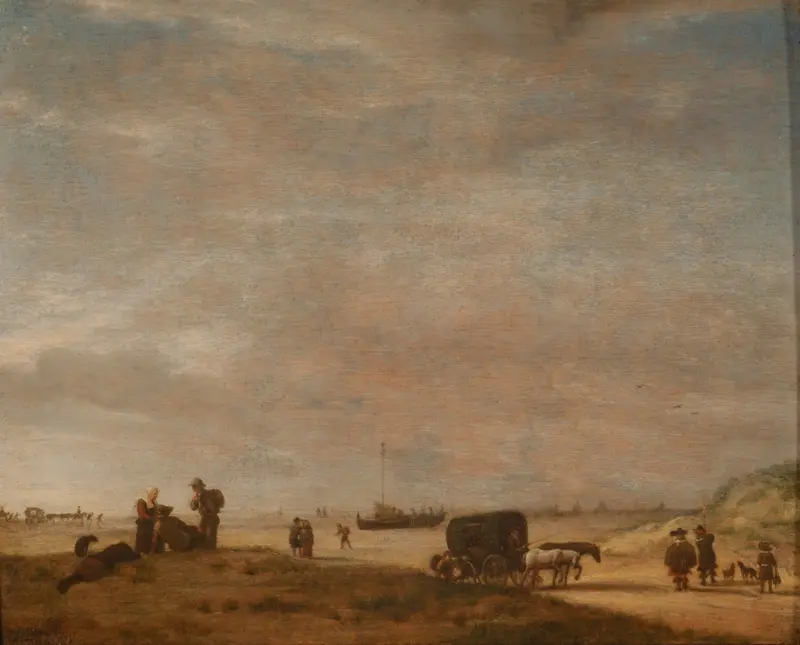
Scheveningen Beach
Adriaen van de Velde
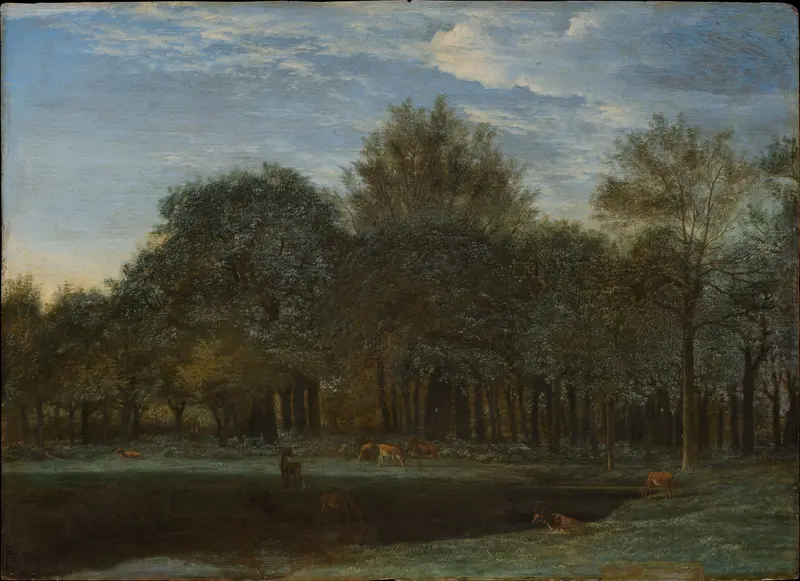
Forest Clearing with Grazing Deer
Adriaen van de Velde
Landscape with Sheep and a Sleeping Shepherd
Adriaen van de Velde





