
Hodogaya on the Tōkaidō: what the print shows
Irregular pine trunks form a vertical screen, Mount Fuji is seen through them in the distance, and travellers, a palanquin and a horse fill the foreground. This sheet, Hodogaya on the Tōkaidō (Japanese 東海道程ヶ谷), is a colour woodblock print by Katsushika Hokusai (1760–1849) in the ukiyo-e tradition, dated ca. 1830–32 and held by the Metropolitan Museum of Art in New York.
- Pines on Shinanozaka Hill: The Minneapolis Institute of Art (Mia) says the print probably shows travellers on Shinanozaka Hill near Hodogaya, famous for the pines flanking the road. The Tokyo Fuji Art Museum adds that the slope’s avenue of pines was said to be splendid and that Hokusai caught the spread of the branches well.
- Three groups of travellers: Mia describes the figures as three groups, each travelling in a different way. On the left are two palanquin bearers and their client, bundled in the litter; one bearer wipes sweat from his brow while the other ties his sandal.
- The fourth station: Hodogaya (程ヶ谷) was the fourth station on the Tōkaidō after Shinagawa, Kawasaki and Kanagawa, about 33 km (8 ri 9 chō) from Edo, and became an official post station in 1601, according to the Hodogaya Ward Office of Yokohama.
- Signed and published: Mia records the signature 前北斎為一筆 (Saki no Hokusai Iitsu hitsu) and names Nishimuraya Yohachi as the publisher. The Met catalogues the sheet as part of the series Thirty-six Views of Mount Fuji (Fugaku sanjūrokkei).
- Accession and credit: The Met’s sheet is a woodblock print in ink and color on paper, 24.8 × 37 cm, credit line Rogers Fund, 1922 (JP1383). The Art Institute of Chicago (1925.3239), Mia (74.1.237) and the Tokyo Fuji Art Museum (6154) each hold another impression, recorded at slightly different sizes.
Sources: Metropolitan Museum of Art, JP1383 (Open Access record) · Minneapolis Institute of Art, 74.1.237 · Tokyo Fuji Art Museum, 6154 · Hodogaya Ward Office, Yokohama: the old Tōkaidō and Hodogaya-juku · Hodogaya Ward Office, Yokohama: the Tōkaidō in ukiyo-e · Art Institute of Chicago, 1925.3239 · Wikidata Q5586 (Katsushika Hokusai, 1760–1849)
Questions and answers about the print
What does Hodogaya on the Tōkaidō show?
It shows travellers on the Tōkaidō road beneath pines, probably on a slope near the station of Hodogaya, with Mount Fuji far off between the trunks. The Hodogaya Ward Office lists the road, palanquins, horses and travellers in the foreground, and the Minneapolis Institute of Art says the figures form three groups, each moving in a different way. The Met catalogues the sheet as one of the Thirty-six Views of Mount Fuji.
Source: Metropolitan Museum of Art, JP1383 (Open Access record) · Minneapolis Institute of Art, 74.1.237 · Hodogaya Ward Office, Yokohama: the Tōkaidō in ukiyo-e
Who are the figures in Hokusai’s Hodogaya print?
The figures are anonymous travellers and the bearers who served them, and no museum record names an individual. The Minneapolis Institute of Art (Mia) describes three groups, with two palanquin bearers and their client on the left: one bearer wipes sweat from his brow while the other ties his sandal. Mia adds that Hokusai seems to have had particular sympathy for these men, who earned their living through backbreaking labour. Wikidata’s list of depicted subjects also names a komusō monk and a packhorse driver.
Source: Minneapolis Institute of Art, 74.1.237 · Wikidata Q18173426
Where is Hodogaya, the station in Hokusai’s print?
Hodogaya is now a ward of the city of Yokohama, in Kanagawa Prefecture, Japan. Yokohama’s Hodogaya Ward Office says it was the fourth station on the Tōkaidō, after Shinagawa, Kawasaki and Kanagawa, about 33 km (8 ri 9 chō) from Edo, and an official post station from 1601. The Tokyo Fuji Art Museum places the Shinano slope, said to have had a fine avenue of pines, near the station, and the Minneapolis Institute of Art thinks the print probably shows the nearby Shinanozaka Hill.
Source: Hodogaya Ward Office, Yokohama: the old Tōkaidō and Hodogaya-juku · Tokyo Fuji Art Museum, 6154 · Minneapolis Institute of Art, 74.1.237
Where is this impression of Hokusai’s Hodogaya print kept?
The Metropolitan Museum of Art in New York holds it under accession number JP1383, with the credit line Rogers Fund, 1922. As of November 2026 the Met’s online record lists no gallery number for it, so check with the museum before planning a visit to see it.
Source: Metropolitan Museum of Art, JP1383 (Open Access record)
How large is Hokusai’s Hodogaya print?
Hodogaya on the Tōkaidō measures 24.8 by 37 cm (9 3/4 by 14 9/16 in.) at the Met, a horizontal sheet. Other museums record their own impressions slightly differently: 25.8 by 37.7 cm at the Art Institute of Chicago, 25.7 by 37.8 cm at the Minneapolis Institute of Art and 25.0 by 36.5 cm at the Tokyo Fuji Art Museum, so the figure depends on which impression is measured.
Source: Metropolitan Museum of Art, JP1383 (Open Access record) · Art Institute of Chicago, 1925.3239 · Minneapolis Institute of Art, 74.1.237 · Tokyo Fuji Art Museum, 6154
Is Hokusai’s Hodogaya print in the public domain?
Yes. Hokusai died in 1849, so his prints are free of copyright everywhere. A faithful photograph or scan of a public-domain work adds no new copyright in the United States or the European Union, so you can download this image and use it in personal or commercial projects. The file offered on this page is a scan of the Met’s impression, JP1383. Public Domain Images for Commercial Use explains how.
Source: Wikidata Q5586 (Katsushika Hokusai, died 1849) · Metropolitan Museum of Art, JP1383 (Open Access record)
More Artworks by Katsushika Hokusai
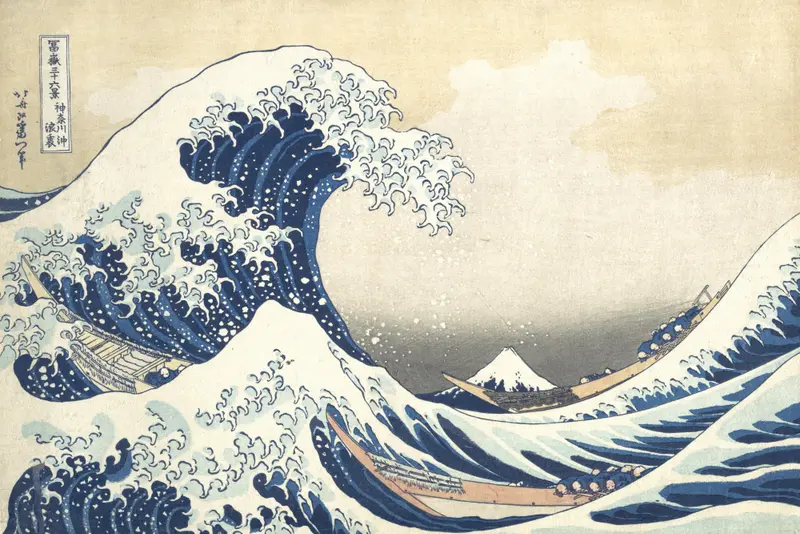
The Great Wave off Kanagawa
Katsushika Hokusai
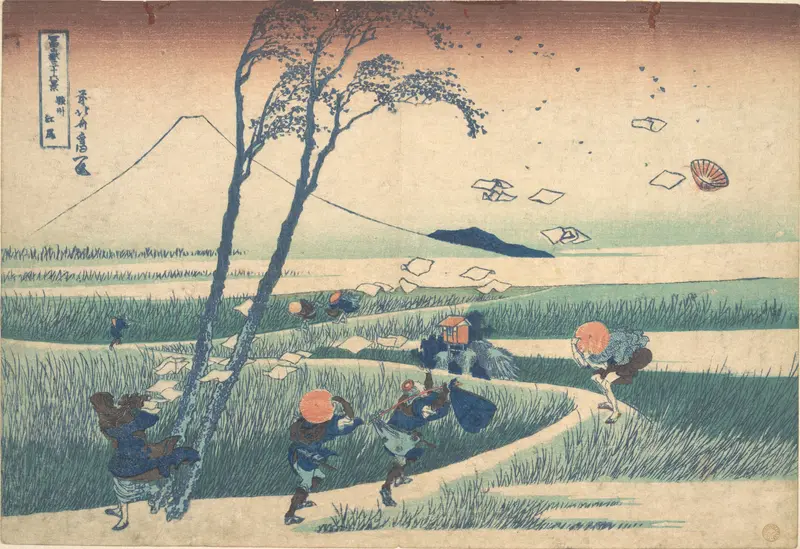
Ejiri in Suruga Province
Katsushika Hokusai
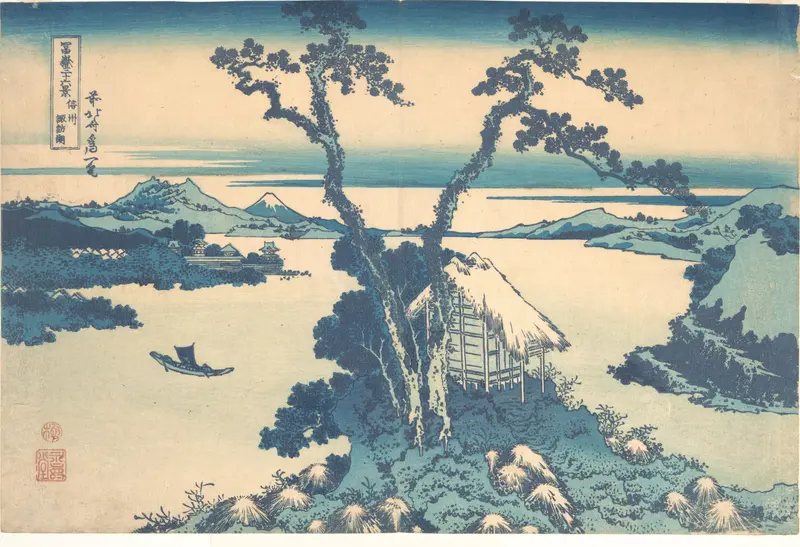
Lake Suwa in Shinano Province
Katsushika Hokusai
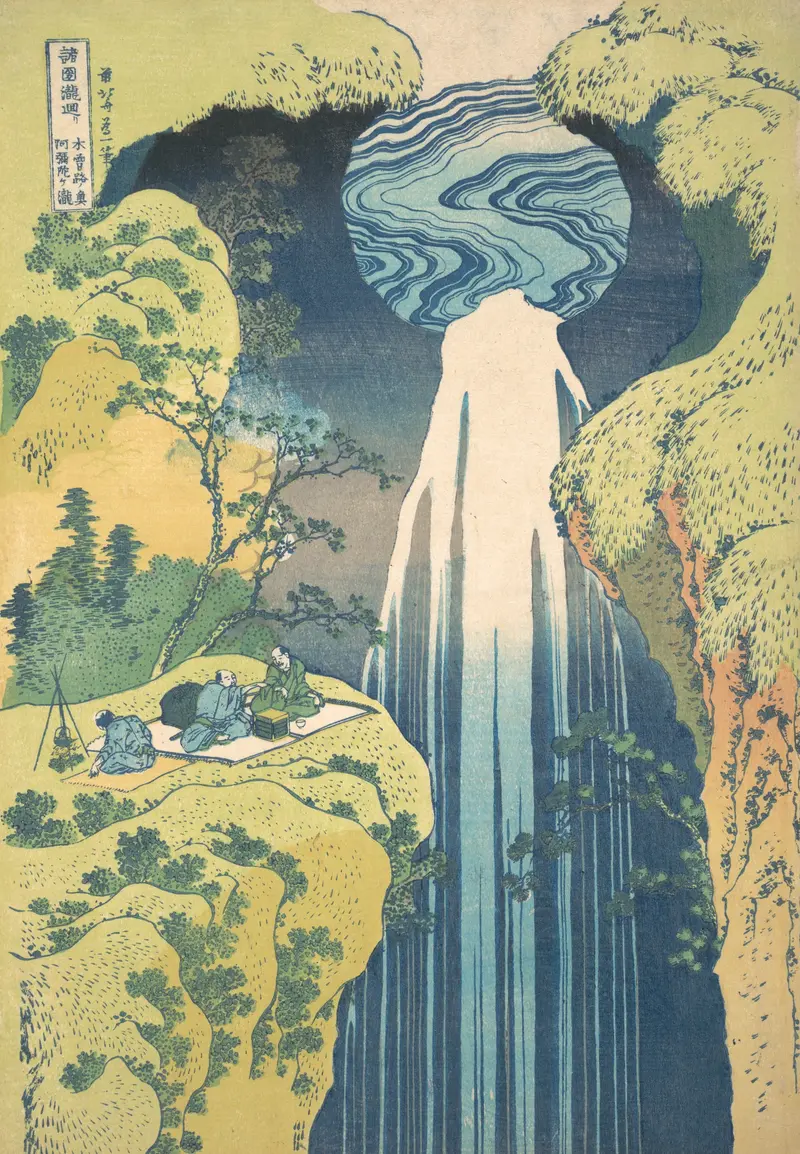
Amida Falls
Katsushika Hokusai
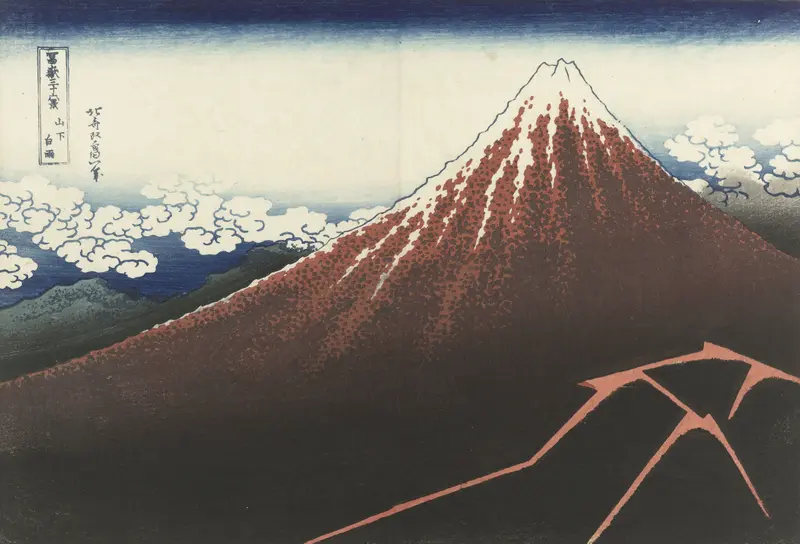
Rainstorm Beneath the Summit
Katsushika Hokusai
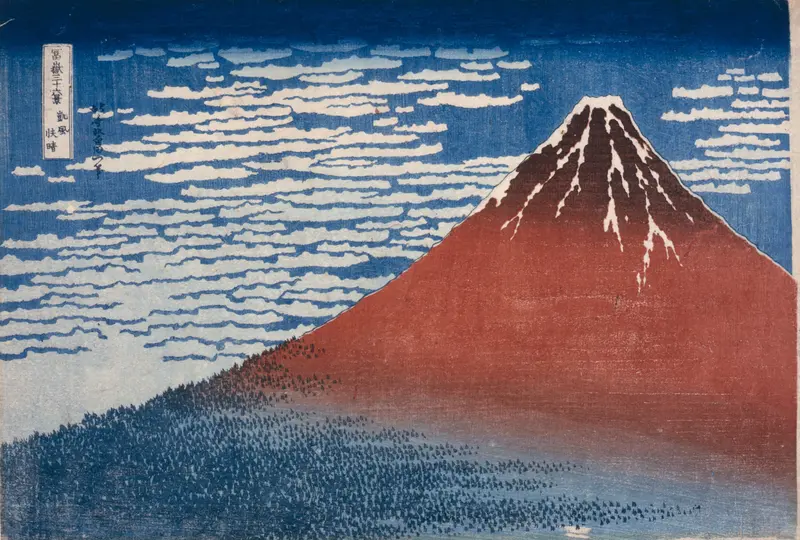
Fine Wind, Clear Morning (Red Fuji)
Katsushika Hokusai
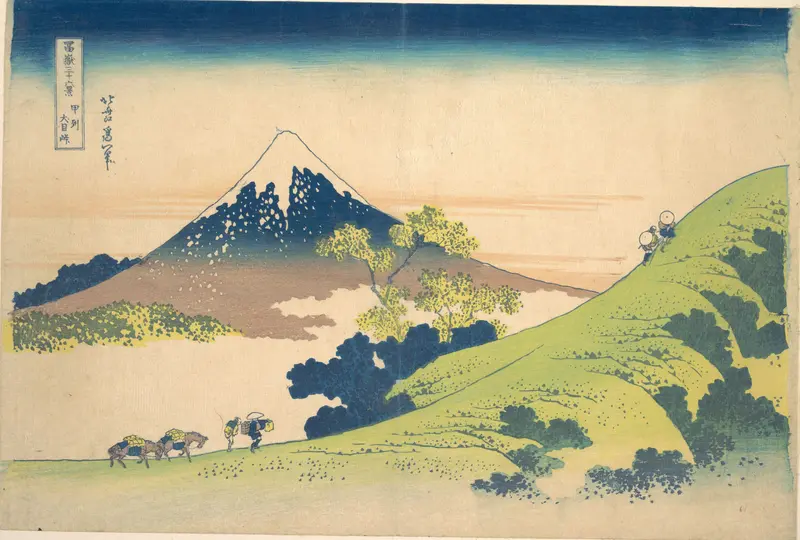
Inume Pass in Kai Province
Katsushika Hokusai
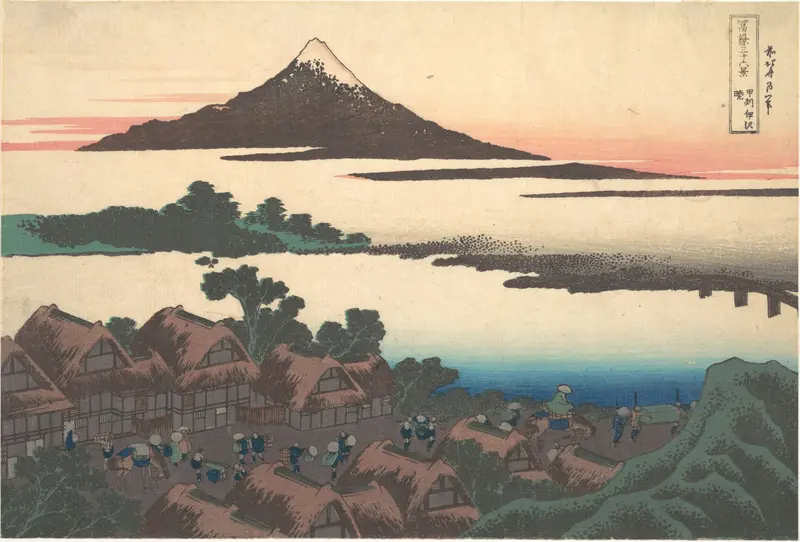
Dawn at Isawa in Kai Province
Katsushika Hokusai
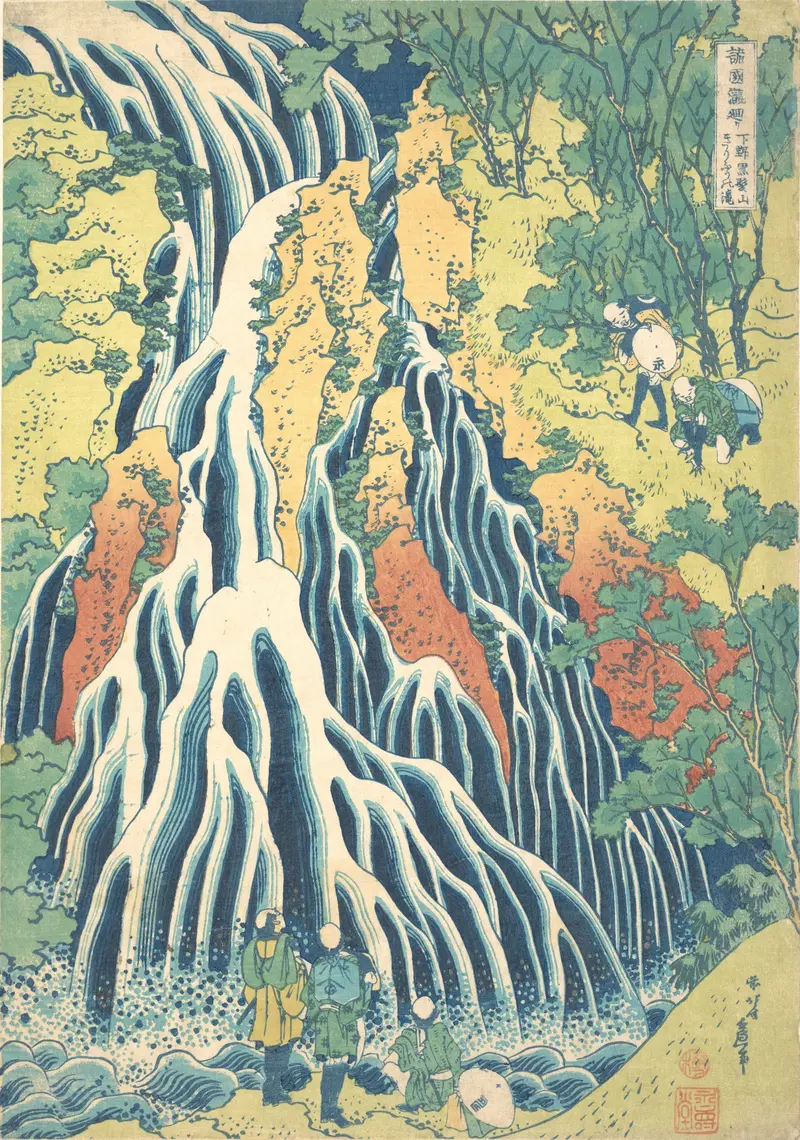
Kirifuri Waterfall at Kurokami Mountain
Katsushika Hokusai
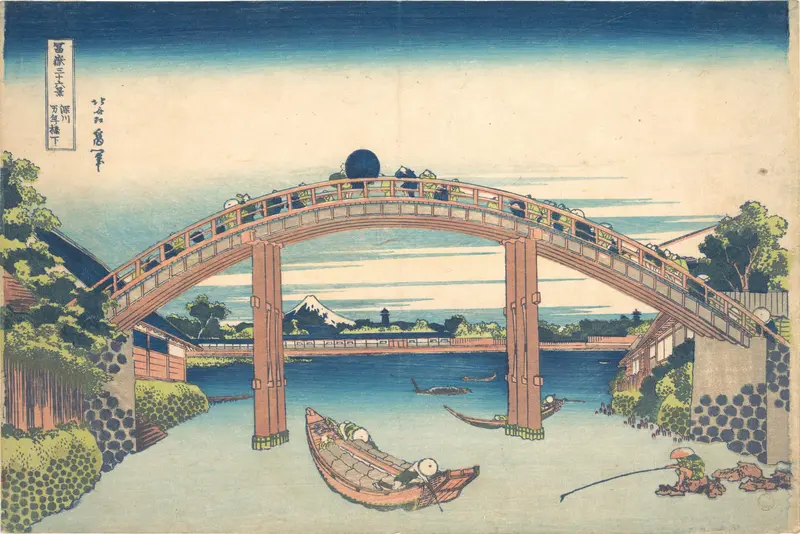
Under the Mannen Bridge at Fukagawa
Katsushika Hokusai
More Landscape Art

The Starry Night
Vincent van Gogh

View of Delft
Johannes Vermeer

Water Lilies
Claude Monet

The Grand Canal, Venice, looking north-west from the Ca' Corner to the Ca' Contarini degli Scrigni, with the campanile of Santa Maria della Carità
Canaletto

Windsor Castle
Canaletto

The Grand Canal looking North-East from the Palazzo Dolfin-Manin to the Rialto Bridge
Canaletto