
Troupeau s’abreuvant — History & Facts
Who listens when art speaks of silence? In Troupeau s’abreuvant, a quiet communion unfolds between nature and the gentle existence of livestock, echoing divinity in its serene simplicity. Focus on the tranquil gathering of sheep at the water's edge, where their soft silhouettes contrast beautifully against the vibrant greens and blues of the landscape. The artist's deft brushwork captures the flicker of sunlight on the water, inviting the viewer to appreciate the shimmering reflections as they dance delicately on the surface. Notice how the light falls upon the sheep's wool, creating a gentle warmth that envelops the scene, evoking a sense of peace and harmony. The juxtaposition of the living creatures and their environment invites contemplation about the relationship between humanity and nature.
The quietude of the moment suggests a deeper spiritual connection, evoking themes of divinity and the sacredness of rural life. The calmness of the animals, paired with the stillness of the surrounding landscape, emphasizes the beauty of existence in its simplest form, prompting reflections on what it means to find solace in nature. During the period of 1880-1895, while painting this piece in France, the artist was embracing the Impressionist movement, focusing on capturing the nuances of light and atmosphere. This era marked a time of significant transformation in the art world, where traditional techniques were being challenged, and new visions of reality began to emerge.
Boudin’s work from this period showcases his commitment to portraying the essence of coastal life and the pastoral, as he navigated a career filled with both admiration and criticism.
More Artworks by Eugène Boudin
Browse all →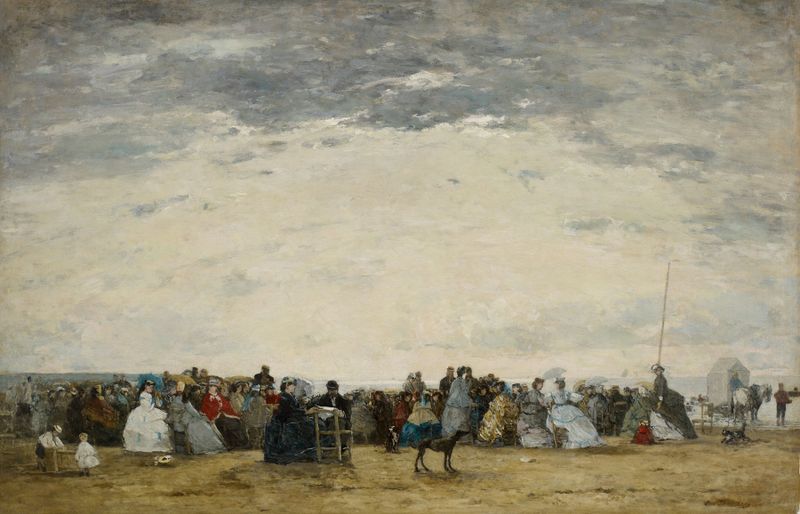
Vacationers on the Beach at Trouville
Eugène Boudin

Washerwoman near Trouville
Eugène Boudin
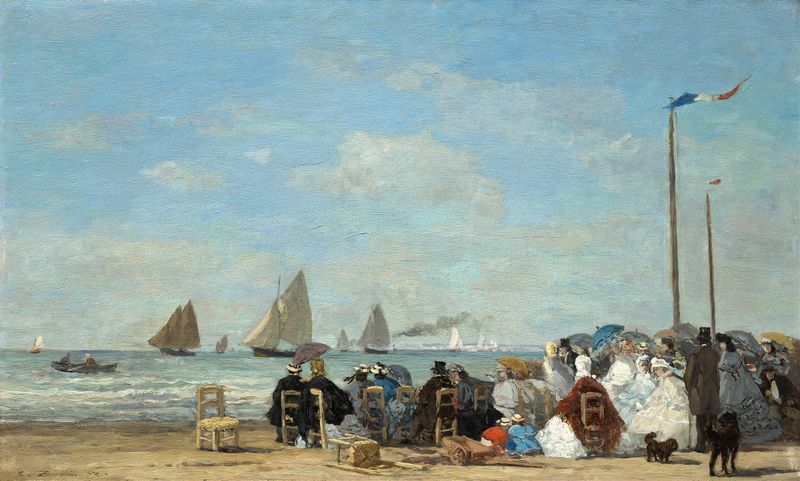
Beach Scene at Trouville
Eugène Boudin

Port aux environs d’Honfleur
Eugène Boudin

Le Faou, un coin du village
Eugène Boudin
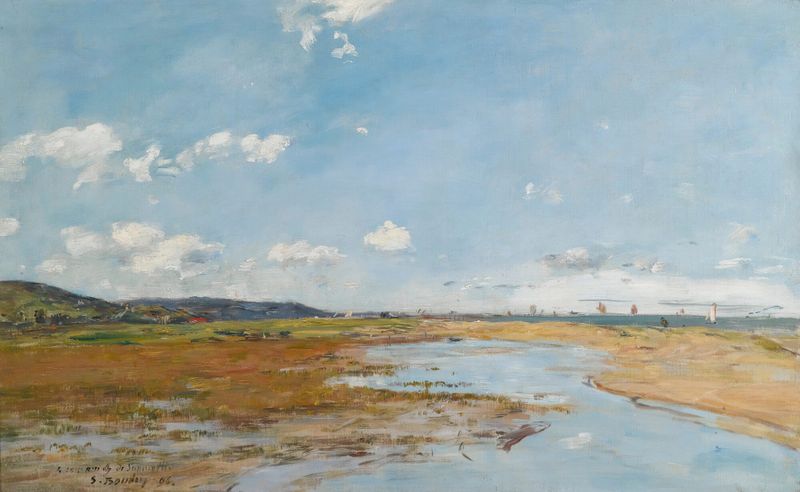
Deauville. Le Rivage
Eugène Boudin
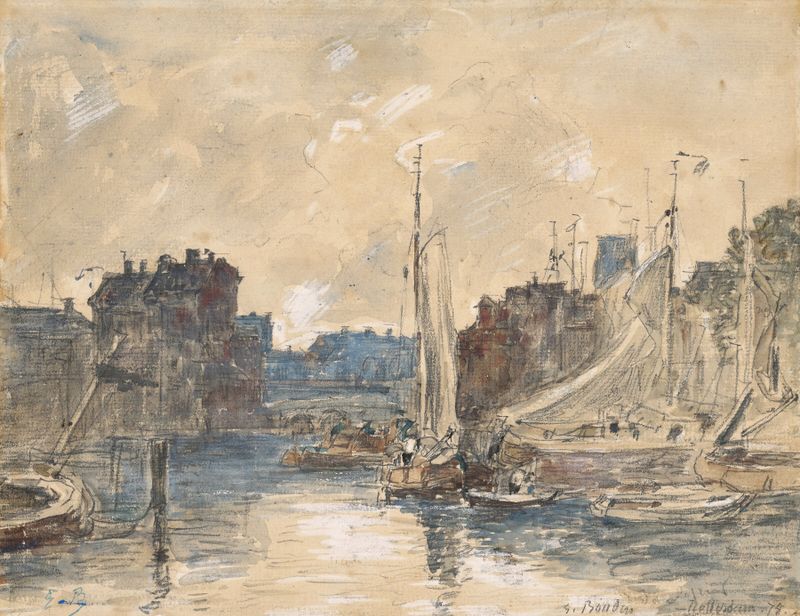
Port de Rotterdam
Eugène Boudin

View of Bordeaux, from the Quai des Chartrons
Eugène Boudin

Trouville, Scène De Plage
Eugène Boudin

Trouville, Le Port
Eugène Boudin





