
Tsars Shuyski brought by Żółkiewski to the Warsaw Sejm in front of Zygmunt III — History & Facts
On November 29, 1611, Warsaw witnessed a spectacle unmatched in the annals of Polish history: three Russian tsars, the Shuyski brothers, were marched as prisoners before the Polish king Zygmunt III Vasa and the assembled Sejm. This extraordinary reversal of fortune—Russian royalty brought in chains to the Polish capital—became a symbol of the shifting tides of power in Eastern Europe. Nearly three centuries later, Jan Matejko chose this moment for one of his final grand canvases, Tsars Shuyski brought by Żółkiewski to the Warsaw Sejm in front of Zygmunt III, painted in 1892.
The drama of this event, both a triumph and a warning, resonated deeply in Matejko’s Poland, still partitioned and longing for sovereignty. Matejko captures the instant when Hetman Stanisław Żółkiewski presents the humbled Shuyski brothers to King Zygmunt III. The tsars, dressed in somber Russian robes, stand with downcast eyes, their dignity battered but not wholly lost. Żółkiewski, arm outstretched in a gesture of both offering and command, embodies the might of the Polish-Lithuanian Commonwealth at its zenith.
The king, enthroned and resplendent in crimson and gold, looks down from his dais, surrounded by nobles and clergy, the hall ablaze with banners and the glint of armor. The light falls sharply on the faces of the captives and their captor, drawing the viewer’s gaze to the axis of power and humiliation. In its theatrical composition and psychological intensity, the painting recalls David’s The Coronation of Napoleon, though Matejko’s focus is on defeat, not triumph. The painting’s medium is not clearly documented, but its scale and technique are typical of Matejko’s late historical works, which often employed oil on canvas.
Created without a specific patron, it was part of the artist’s lifelong project to narrate Poland’s past in monumental form. Since its completion, Tsars Shuyski brought by Żółkiewski to the Warsaw Sejm in front of Zygmunt III has remained in Poland, passing through museum collections and surviving the upheavals of two world wars. Today, it stands as a testament to Matejko’s vision and the enduring power of history painting in shaping national memory.
More Artworks by Jan Matejko
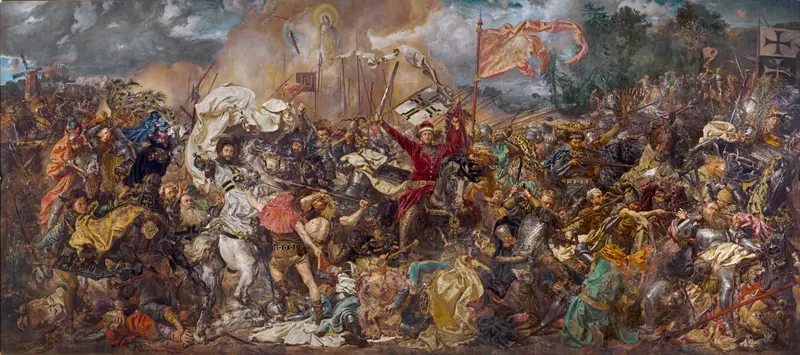
Battle of Grunwald
Jan Matejko

Stańczyk
Jan Matejko

Battle of Raclawice
Jan Matejko
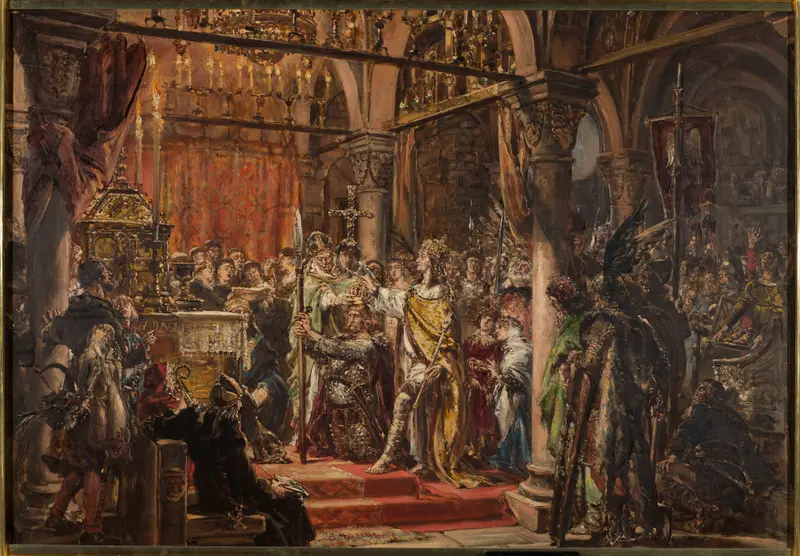
Coronation of the First King, 1001 AD, from the series “History of Civilization in Poland”
Jan Matejko
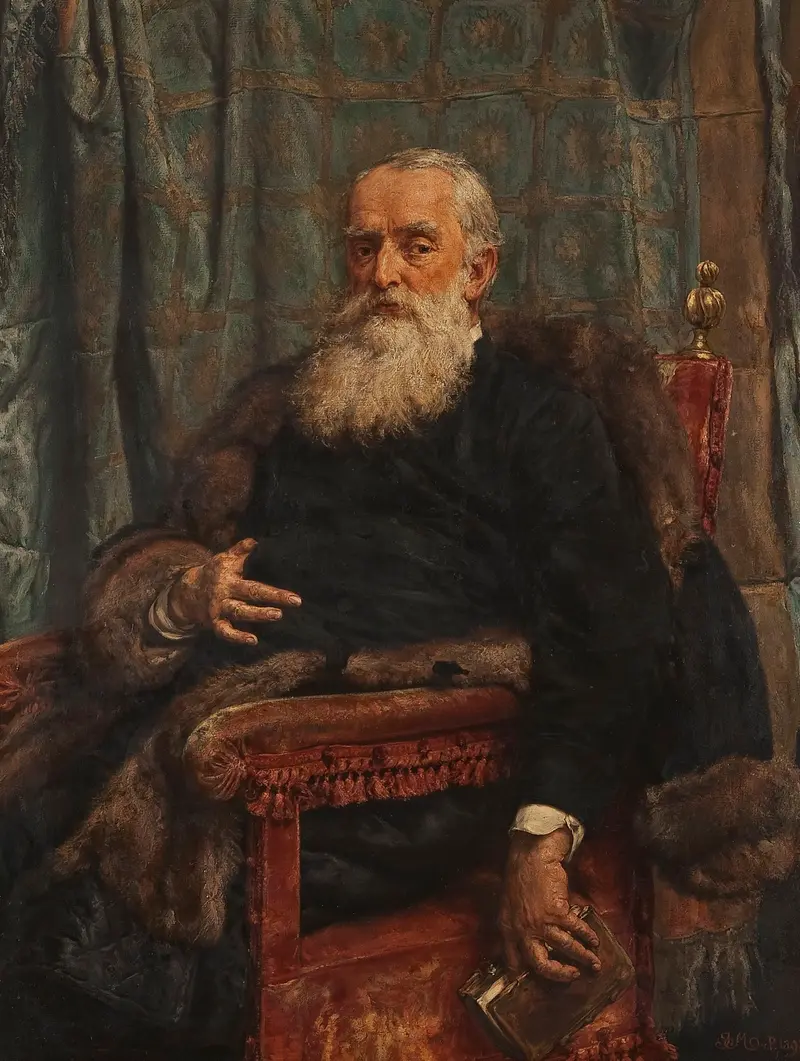
Portrait of Henryk Krajewski
Jan Matejko
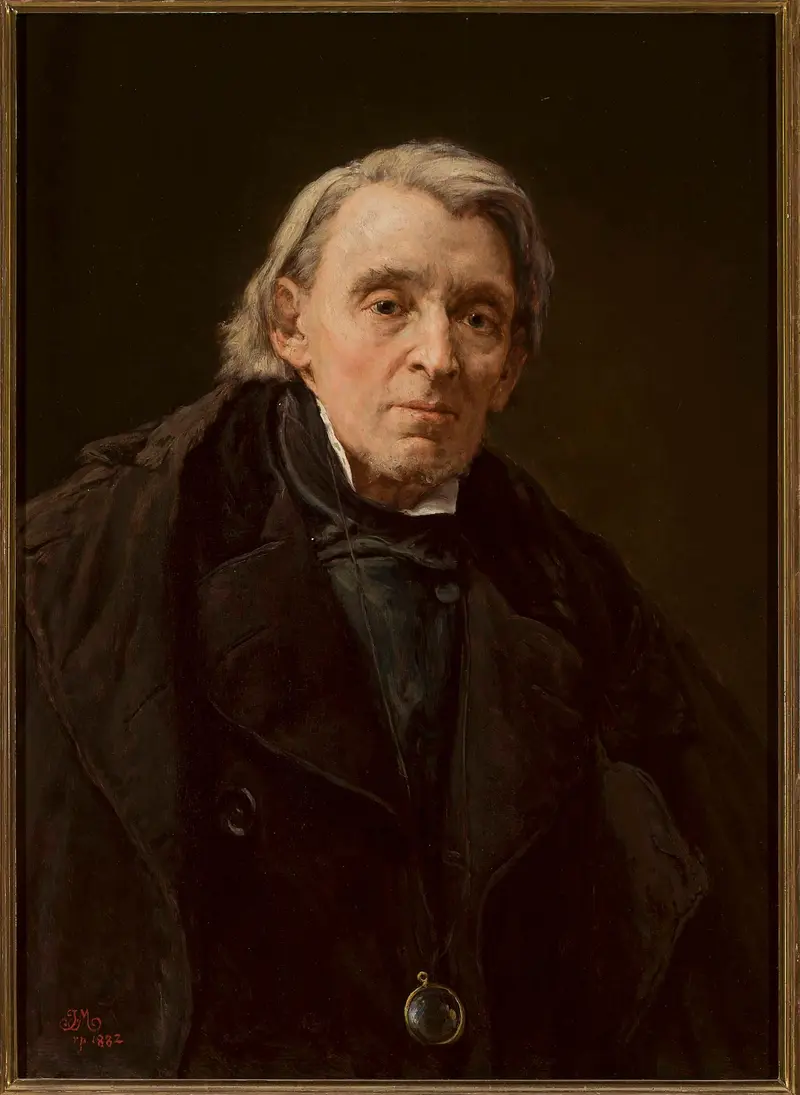
Portrait of Karol Podlewski
Jan Matejko
Portrait of Potocki and Poninski
Jan Matejko
Portrait of the artist's four children
Jan Matejko
Introduction of Christianity in Poland
Jan Matejko
Prussian Homage
Jan Matejko





