
Turver’s Farm, Wimbish, Essex — History & Facts
“Is beauty merely pain, cloaked in gold?” This question lingers in the soul as we contemplate the subtle melancholy of existence reflected in the landscape. The shifting hues of dawn and dusk remind us that truth often lies hidden beneath the surface of what we perceive as serene. Look to the left, where the rolling curves of the fields invite your gaze outward, stretching toward the horizon. Girtin’s delicate brushstrokes create a gentle rhythm, the soft greens and muted browns weaving together in a symphony.
Notice how the light plays across the landscape, illuminating patches of wildflowers while casting shadows that hint at untold stories buried in the earth. The composition draws you in, capturing an idyllic moment that feels both fleeting and eternal. As you explore further, an emotional complexity unfurls. The tranquility of the scene belies an underlying tension—distant clouds gather ominously, suggesting a change on the wind.
The farm, a symbol of rural beauty, stands firm yet vulnerable, reminding us of the fragility of life and the relentless march of time. In this quiet tableau, nature conceals not just beauty but also the bittersweet reality of existence, echoing the struggles of those who lived in that era. In 1799, Girtin painted this work during a time of significant transition in Britain, as the Industrial Revolution began to reshape the landscape and society. He was emerging as a prominent figure in the Romantic movement, championing the beauty of nature against the encroaching urbanization.
This piece captures a moment of reflection, a tribute to the simplicity of rural life amidst the complexities of a changing world.
More Artworks by Thomas Girtin
Browse all →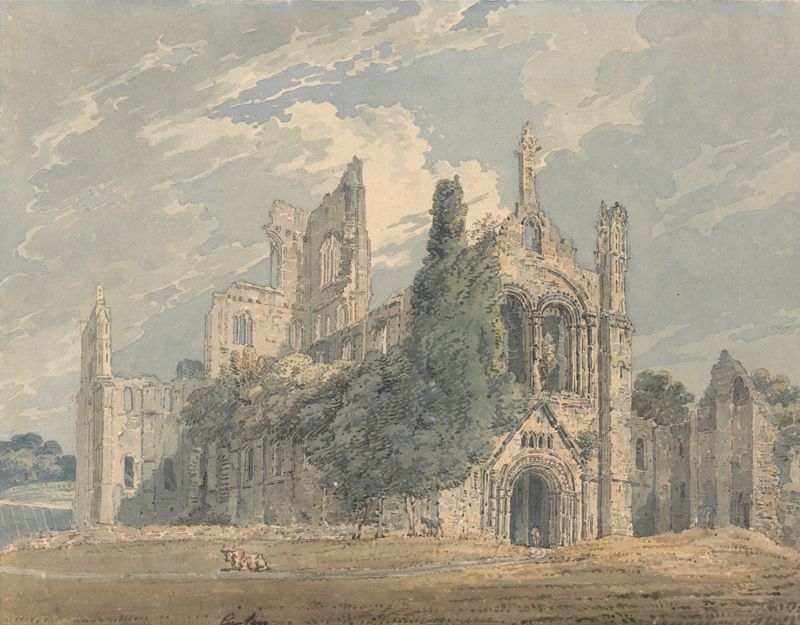
Kirkstall Abbey from the N.W.
Thomas Girtin
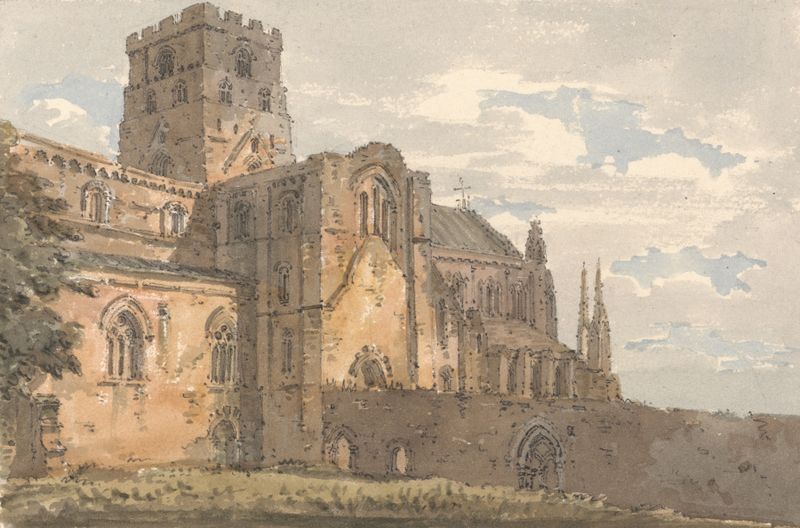
Carlisle Cathedral, Cumberland, from the South-west
Thomas Girtin
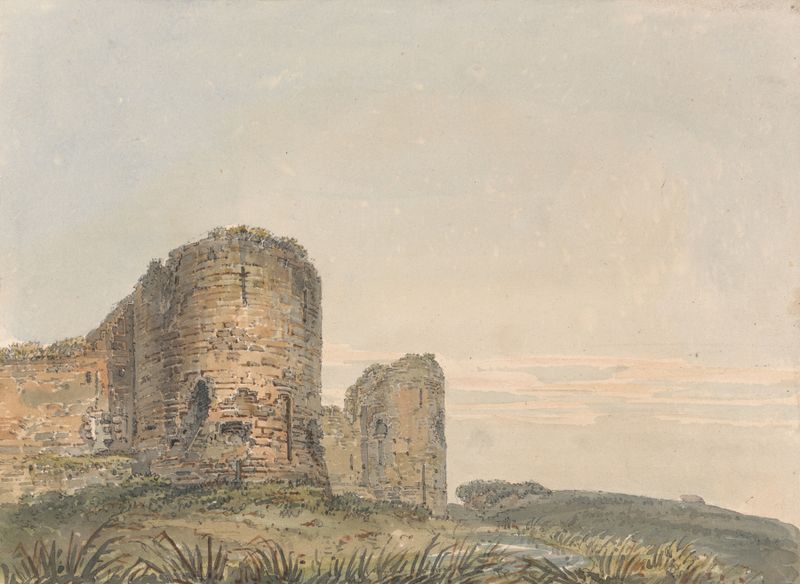
Pevensey Castle, Sussex
Thomas Girtin
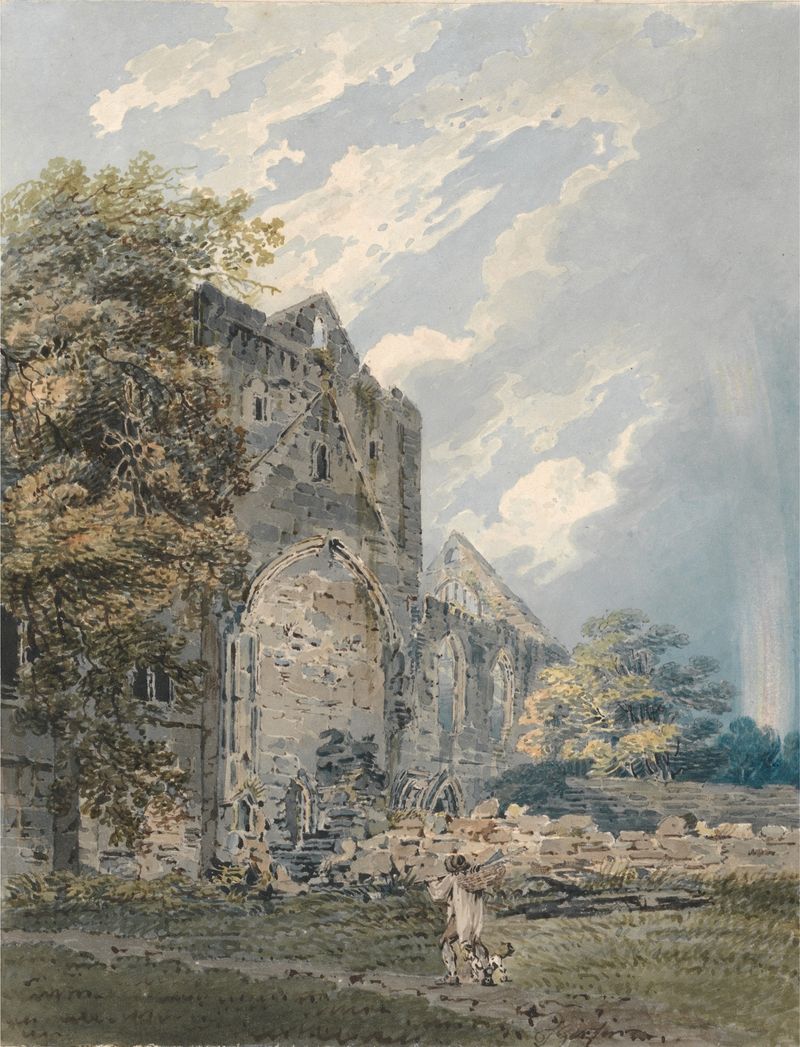
Pluscardine Abbey, Elgin
Thomas Girtin
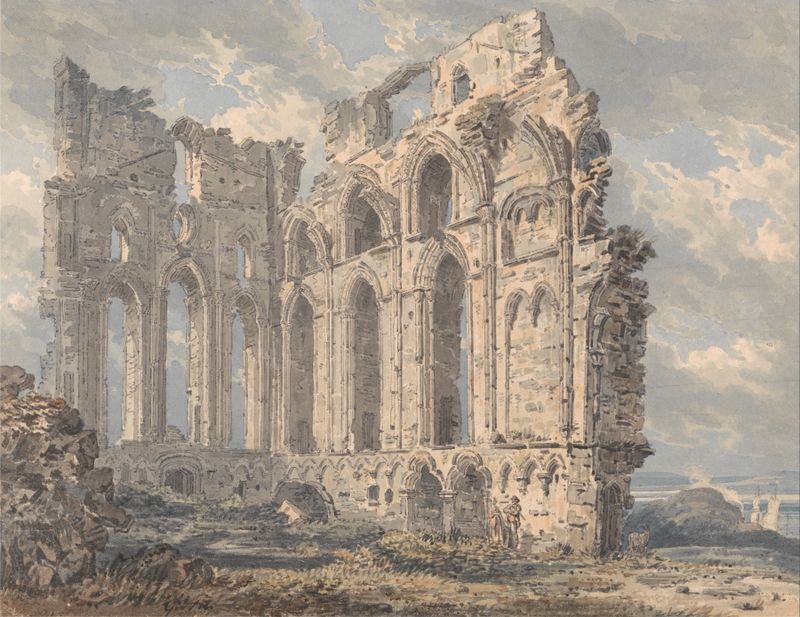
Tynemouth Priory, Northumberland
Thomas Girtin
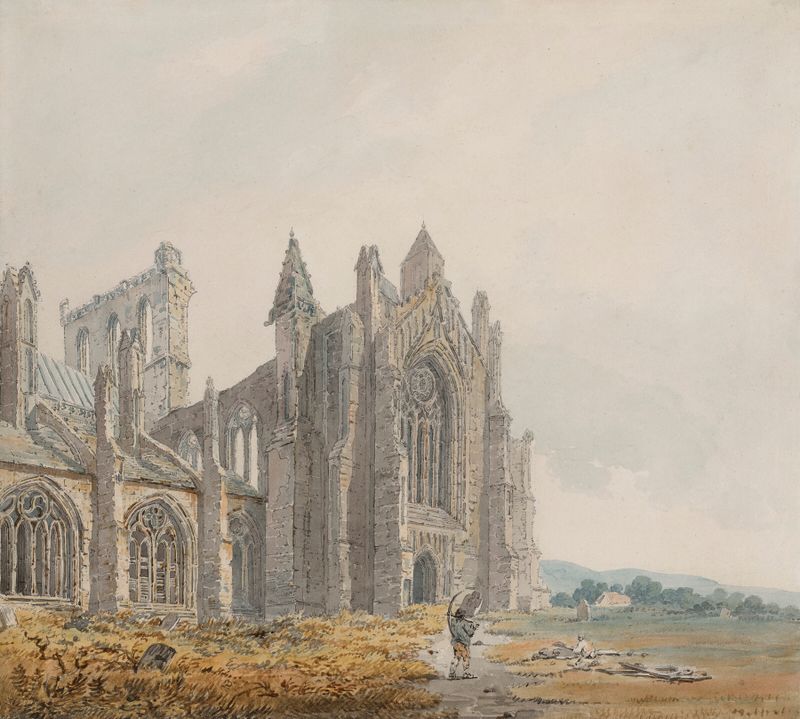
Melrose Abbey, Scotland
Thomas Girtin
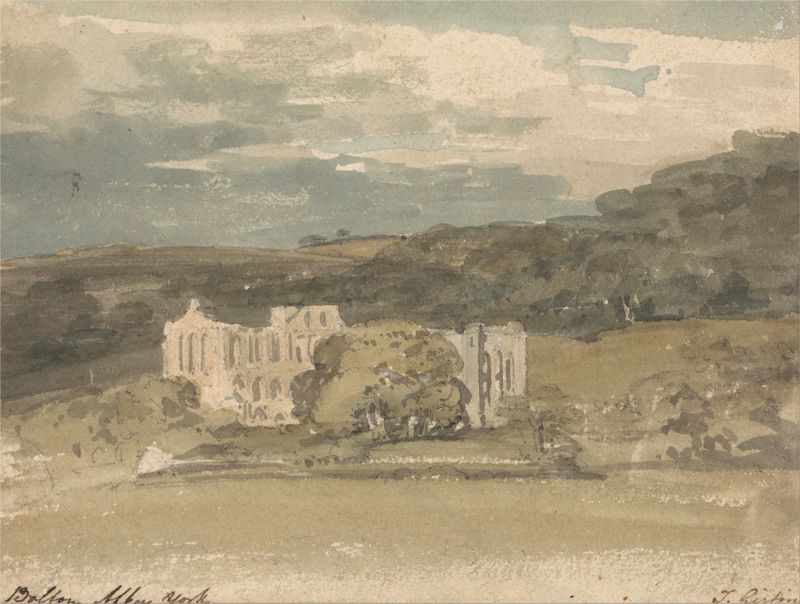
Rievaulx Abbey, Yorkshire
Thomas Girtin
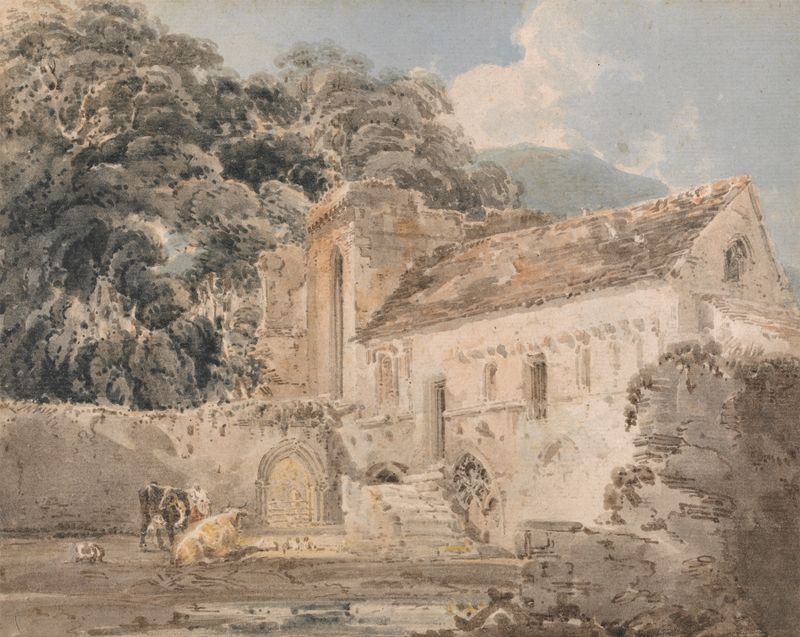
Valle Crucis Abbey, Denbighshire
Thomas Girtin
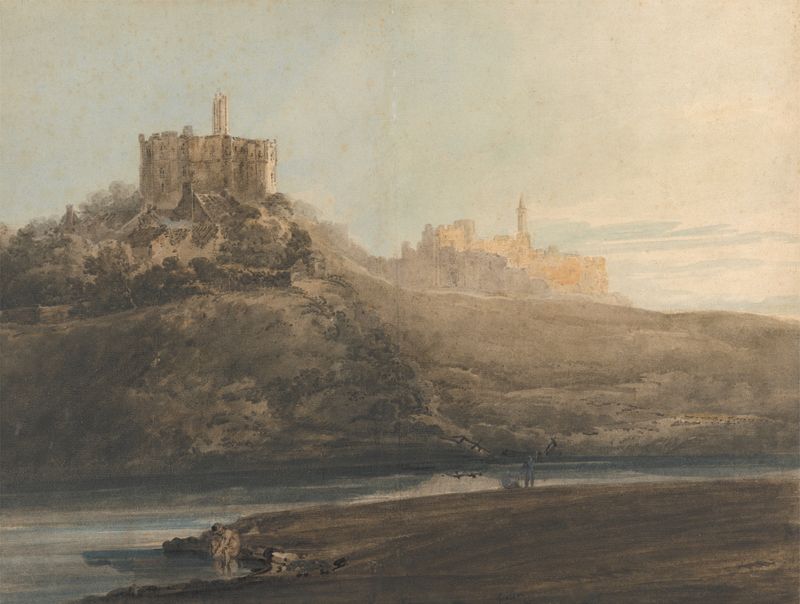
Warkworth Castle, Northumberland
Thomas Girtin
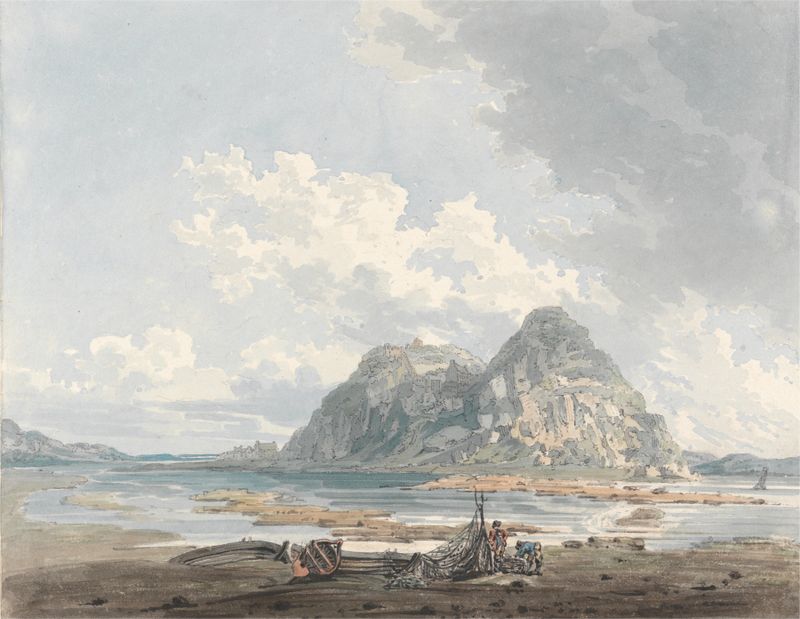
Dumbarton Rock and Castle
Thomas Girtin





