Two Doorways — History & Facts
What if beauty was never meant to be finished? In Two Doorways, an exploration of quiet obsession unfolds, inviting viewers to linger indefinitely in its ambiguous spaces. Look to the left at the doorway framed in deep shadows, where the heavy outlines create a stark contrast against the muted tones of the wall. Notice how the brushstrokes convey texture, as if the surface itself breathes, and the color palette—grays and soft blues—enhances the haunting stillness. The stark absence of figures emphasizes the emptiness of the space, suggesting an invitation to step into the unknown or perhaps an evocation of something lost. As you explore further, consider the duality represented by the doorways.
One suggests an entry, filled with promise, while the other remains shrouded in darkness, symbolizing the pull of the past, or the fear of what lies beyond. This tension between light and shadow evokes an emotional struggle—a quest for beauty that may forever elude completion. The stillness of the scene captures a moment frozen in time, where desire and confinement coexist in haunting harmony. Created between 1879 and 1880, this work emerged during a period of profound change for Whistler, reflecting his continuous experimentation with color, composition, and light.
Living in London, he was deeply influenced by the Aesthetic Movement, which emphasized beauty and artistry over narrative. This painting embodies that ethos, encapsulating the artist's quest for an elusive perfection that was both personal and revolutionary in the context of his time.
More Artworks by James Abbott McNeill Whistler
Browse all →
Nocturne in Blue and Silver
James Abbott McNeill Whistler
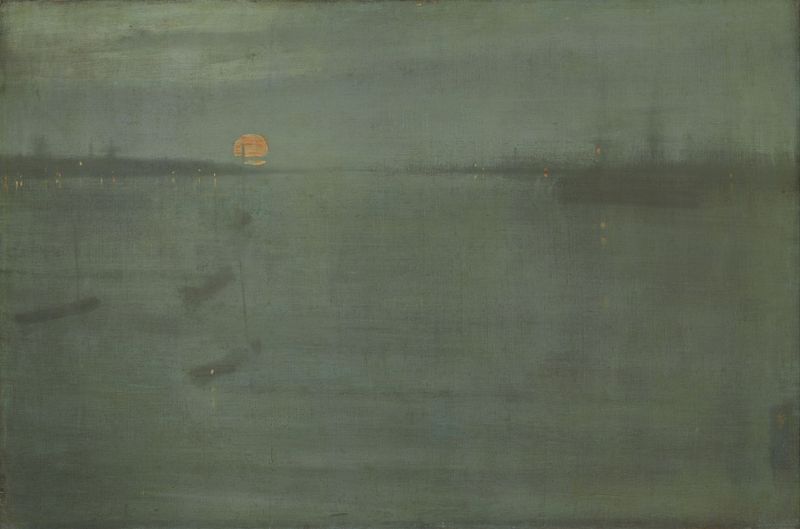
Nocturne: Blue and Gold–Southampton Water
James Abbott McNeill Whistler
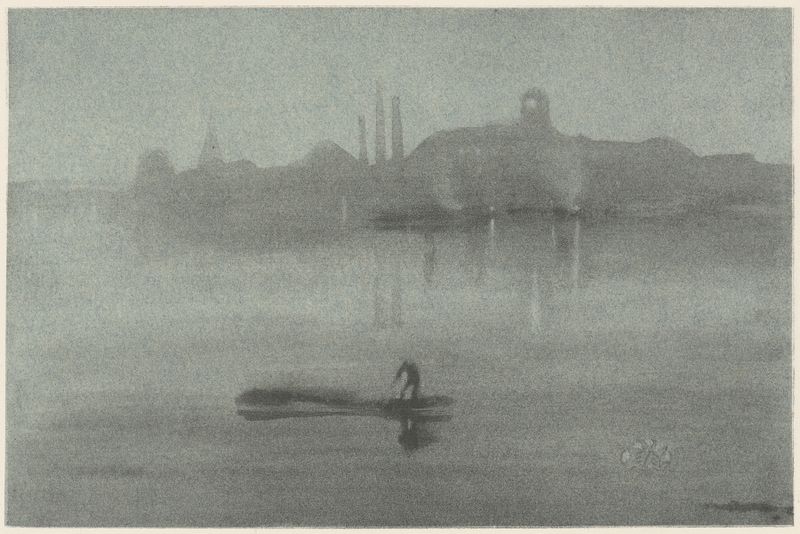
Nocturne
James Abbott McNeill Whistler
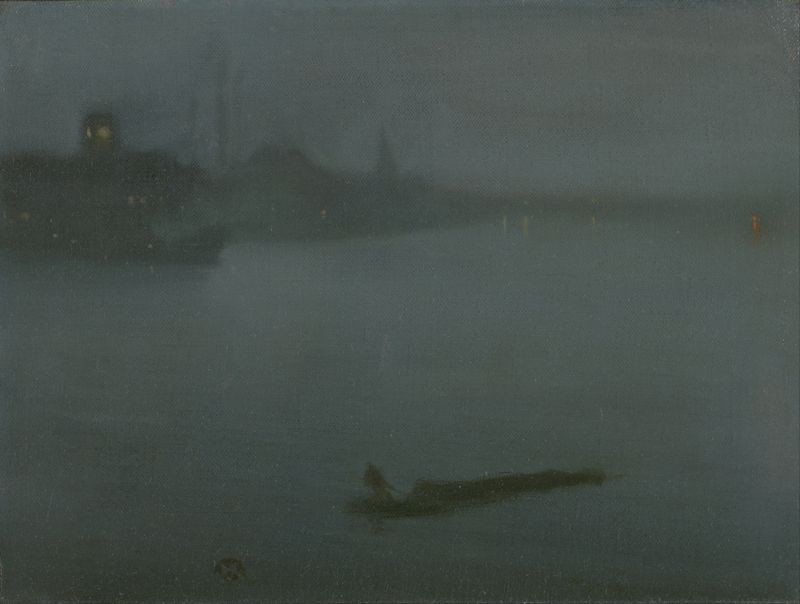
Nocturne in Blue and Silver
James Abbott McNeill Whistler
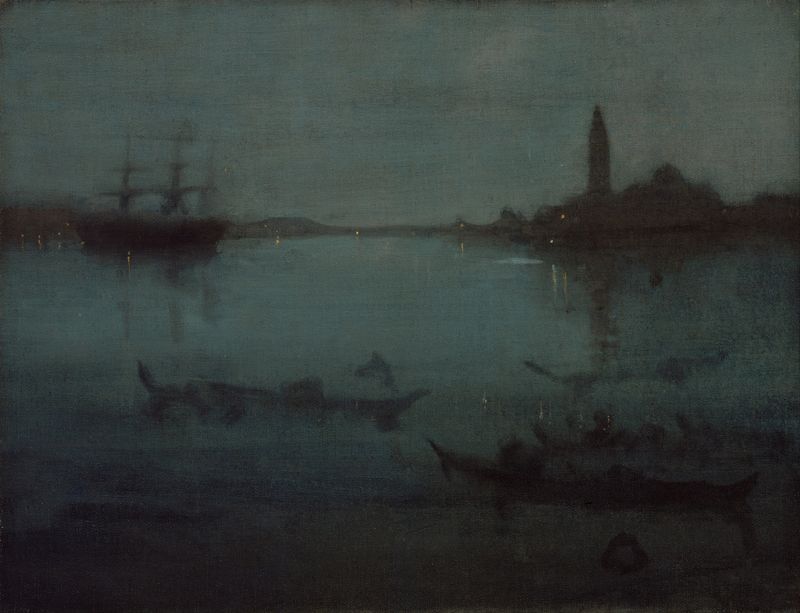
Nocturne in Blue and Silver- The Lagoon, Venice
James Abbott McNeill Whistler
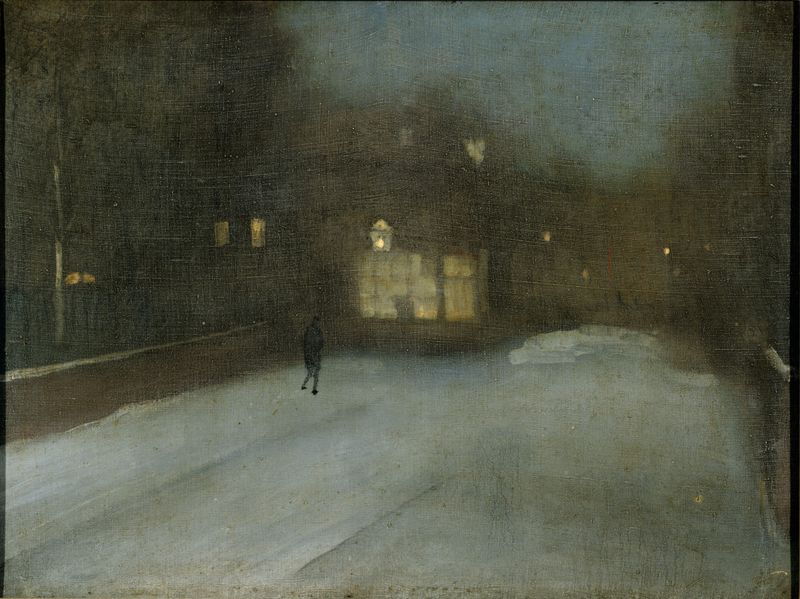
Nocturne in Grey and Gold: Chelsea Snow
James Abbott McNeill Whistler
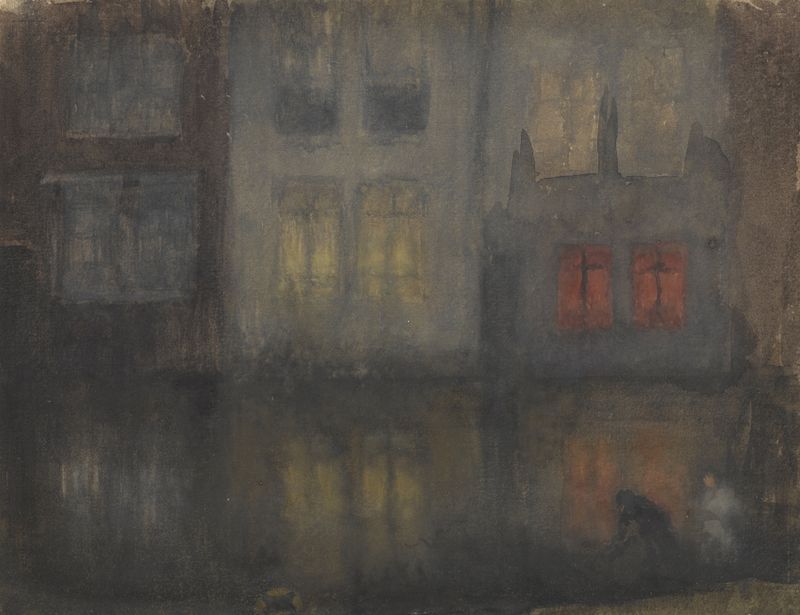
Nocturne: Black and Red—Back Canal, Holland
James Abbott McNeill Whistler
Old Battersea Bridge
James Abbott McNeill Whistler

Nocturne: Blue and Silver–Battersea Reach
James Abbott McNeill Whistler
Grey and Silver–Pier, Southend
James Abbott McNeill Whistler