
Une ferme bretonne — History & Facts
Could a single brushstroke hold eternity? In Une ferme bretonne, the quietude of a simple farm in Brittany is imprinted on canvas, inviting the viewer to pause and reflect on the delicate balance between nature and human existence. Look closely at the horizon where the sky meets the rustic farmhouse; notice how soft, pastel hues blend seamlessly into one another, creating a serene backdrop that envelops the scene. The textured strokes of white and blue convey the gentle movement of clouds, while the earthy tones of the barn ground the composition, creating a sanctuary amidst the vastness. The interplay of light and shadow is masterful, guiding your gaze across fields that whisper stories of the land and its caretakers. Amidst the tranquil beauty, there are whispers of contrasts—the solidity of the farmhouse against the ephemeral sky, the warmth of human presence against the coolness of nature.
This tension suggests a deeper faith in the continuity of life, where the mundane becomes sacred. The rustic environment encapsulates a shared history, an homage to the resilience of those who inhabit these timeless spaces, suggesting that every brushstroke is an act of devotion. Eugène Boudin painted this piece in 1857 while living in France, a time when the Impressionist movement was beginning to take root. He found himself captivated by the coastal landscapes and rural scenes of his homeland, blending naturalism with a burgeoning interest in light and color.
As he explored the countryside, Boudin laid the groundwork for a new artistic ethos, one that celebrated not just the subject, but the emotional resonance of place and the experience of being alive within it.
More Artworks by Eugène Boudin
Browse all →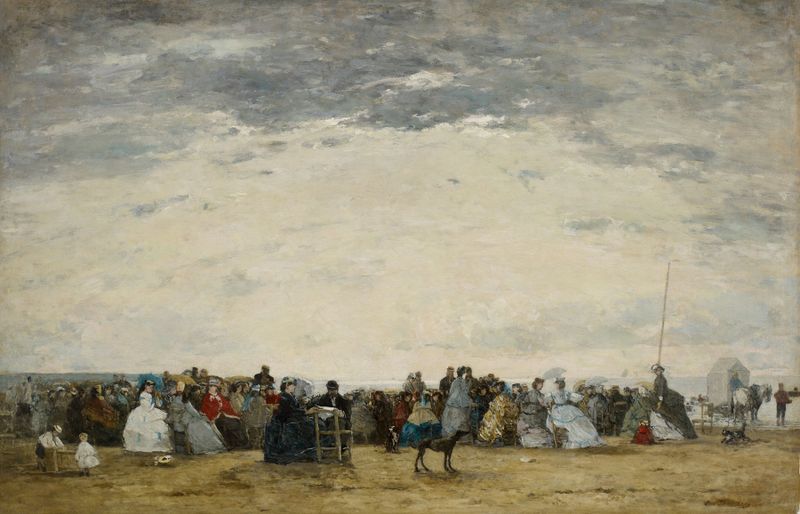
Vacationers on the Beach at Trouville
Eugène Boudin

Washerwoman near Trouville
Eugène Boudin
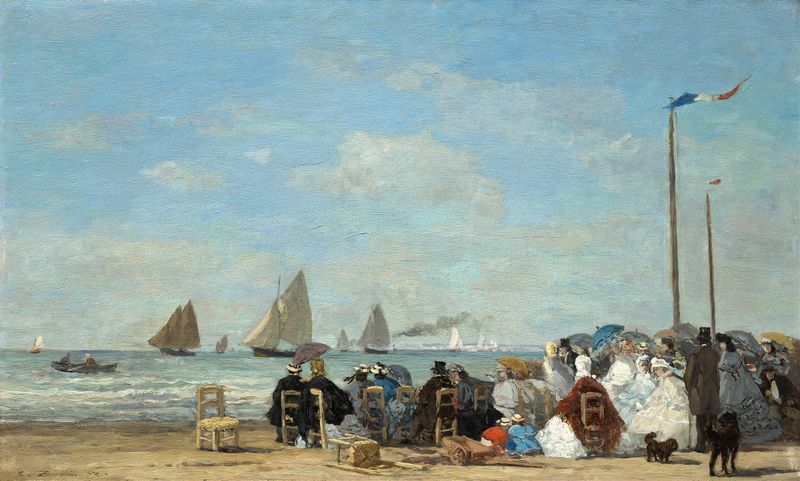
Beach Scene at Trouville
Eugène Boudin

Port aux environs d’Honfleur
Eugène Boudin

Le Faou, un coin du village
Eugène Boudin
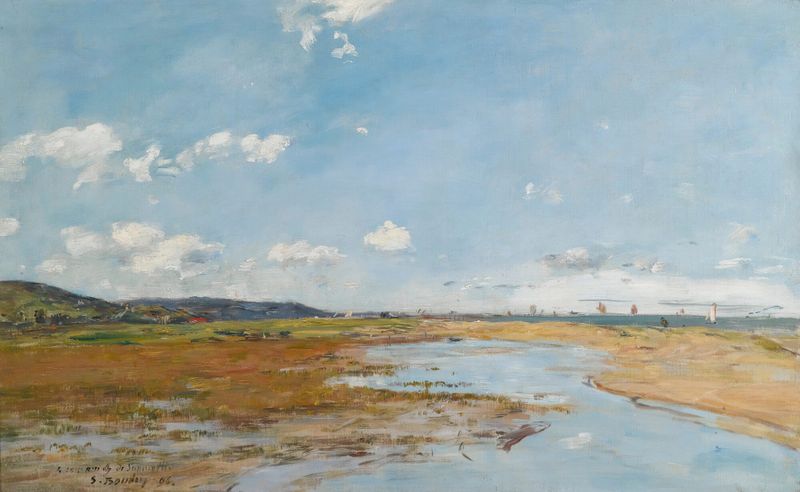
Deauville. Le Rivage
Eugène Boudin
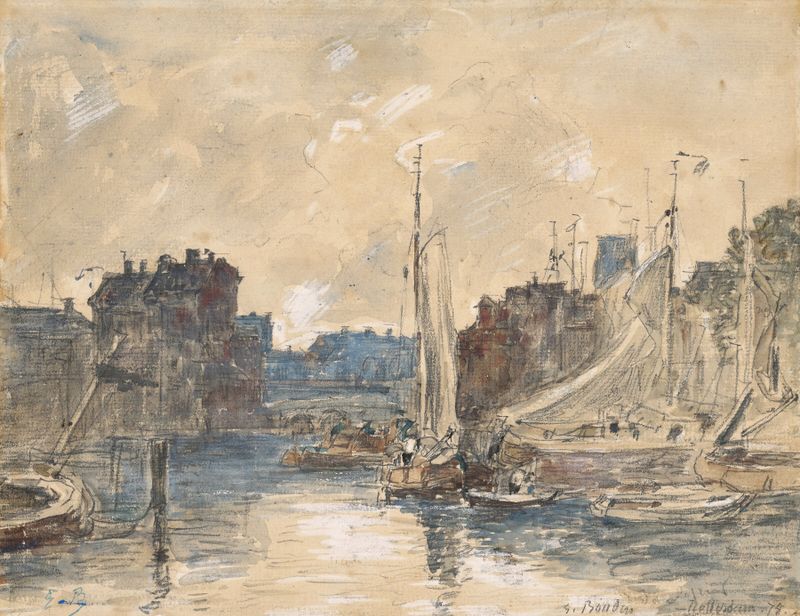
Port de Rotterdam
Eugène Boudin

View of Bordeaux, from the Quai des Chartrons
Eugène Boudin

Trouville, Scène De Plage
Eugène Boudin

Trouville, Le Port
Eugène Boudin





