
Une Odalisque — History & Facts
What first holds the viewer in Une Odalisque is the direct, almost questioning gaze that meets us through layers of gauze and shadow. The sitter’s face emerges from a swirl of pale fabric, her features half-veiled yet intensely present, as if the act of painting has caught her in a private moment of thought. The wood-grained background is left bare, a deliberate choice that throws every brushstroke of the face and veil into sharper relief.
Light glances off the folds of her headscarf, tracing the delicate play of transparency and concealment, while her tilted head and parted lips suggest both distance and intimacy. The palette is restrained but warm, with creamy whites and muted earths lending the image a quiet gravity. Painted in 1884, this work belongs to the world of late nineteenth-century Orientalism, when European artists such as Theodoros Ralli found inspiration in imagined scenes of the East. While little is recorded about the specific journey of this painting, its subject and style speak to a period when Western collectors hungered for visions of exotic beauty and mystery—often filtered through the artist’s own lens of fantasy and fascination.
Works like this were rarely portraits in the true sense; rather, they offered viewers a window onto a world both alluring and inaccessible, shaped as much by contemporary taste as by any lived reality. The sitter’s guarded expression lingers in the mind, inviting us to look again and wonder what lies behind the veil.
More Artworks by Theodoros Ralli

The Sleeping Concubine
Theodoros Ralli
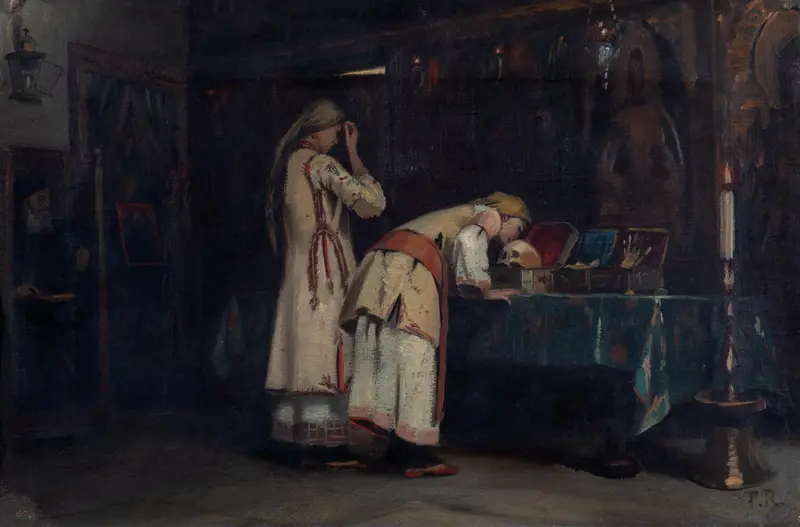
Holy Relics
Theodoros Ralli
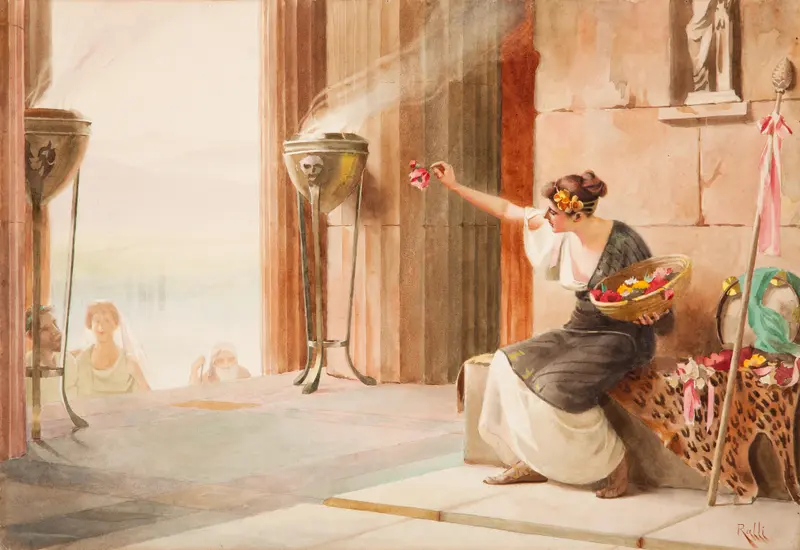
Flower Seller at the Parthenon
Theodoros Ralli
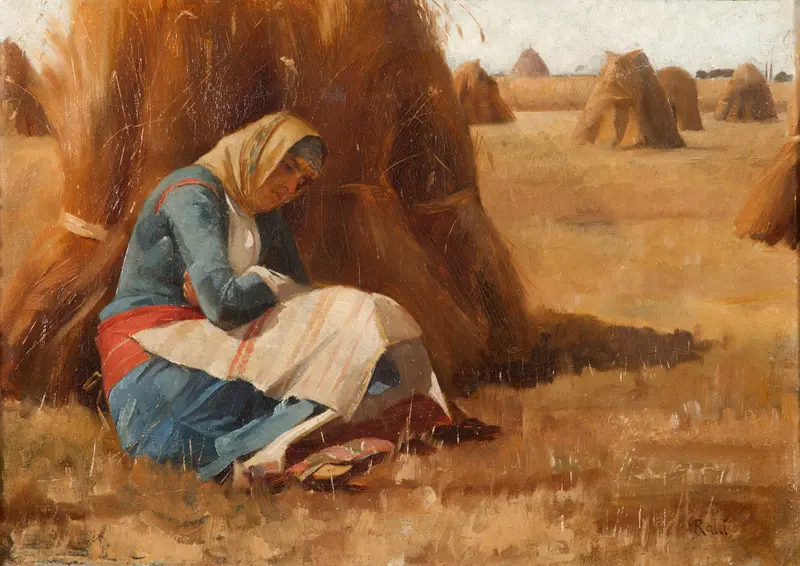
Resting by a Haystack
Theodoros Ralli
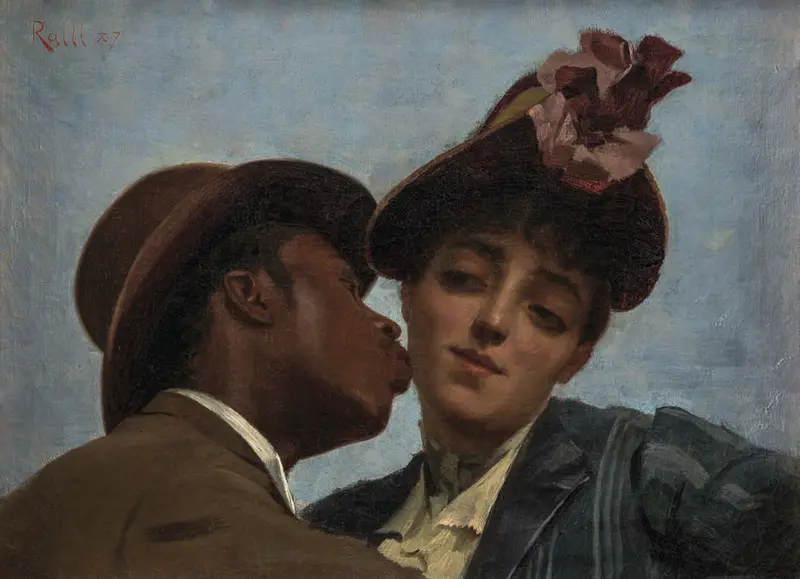
The Kiss (Ralli)
Theodoros Ralli
The Sacred Serpent
Theodoros Ralli
A Moment of Reflection
Theodoros Ralli
Eavesdropping (Ralli)
Theodoros Ralli
Holy Friday, Greece
Theodoros Ralli
A Moment's Rest
Theodoros Ralli





