
Une pendaison sur la place de Grève et l’Hôtel de Ville en 1583 — History & Facts
In the stillness of history, unspoken truths echo through time, begging to be heard. The weight of the moment carries an unsettling gravity, as the unflinching gaze of the past forces us to confront our own complicity in that silence. Focus on the somber palette of grays and earthy browns that dominate the composition, creating an atmosphere thick with despair. Look to the center, where a darkened figure hangs, suspended between the earthly plane and the realms of judgment.
Notice how the stark contrast of the figure against the muted backdrop amplifies the horror of the scene, while shadows creep in, as if to envelop the spectators gathered beneath. The architectural forms of the Hôtel de Ville loom in the distance, their grandeur starkly juxtaposed with the macabre event, reminding us of the relentless march of civilization amid suffering. Within this haunting tableau lies a complex interplay of power and vulnerability. The spectators, though rendered as mere silhouettes, are engulfed in an air of silent complicity, each one a witness to the tragedy unfolding.
The absence of reaction among the crowd speaks volumes, hinting at a shared responsibility borne by society in the face of brutality. This chilling disconnect between the scene and the onlookers invites reflection on the darker aspects of human nature and the societal norms that perpetuate violence. Created in a turbulent period between 1915 and 1945, the artist crafted this piece amid global upheaval. Living through two world wars, Fédor Hoffbauer sought to explore themes of morality, justice, and the human condition.
In a world grappling with the consequences of unchecked power, this striking work stands as a poignant reminder of the echoes of history that still resonate today.
More Artworks by Fédor Hoffbauer
Browse all →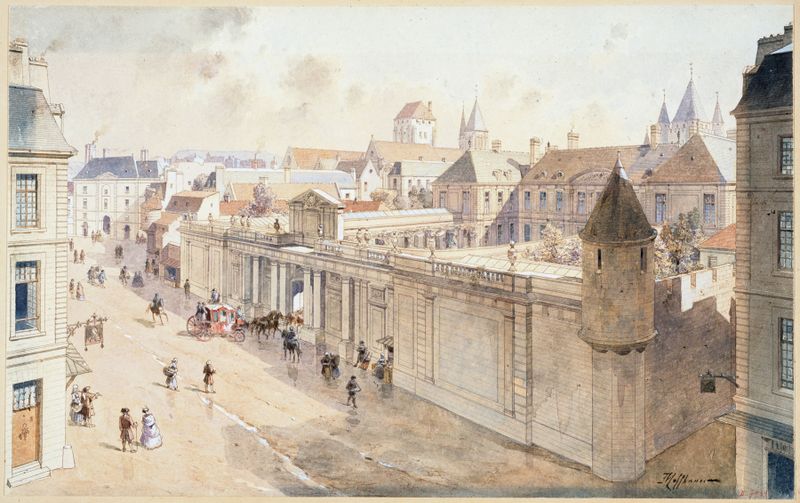
Le palais du Grand Prieur au Temple, en 1770
Fédor Hoffbauer
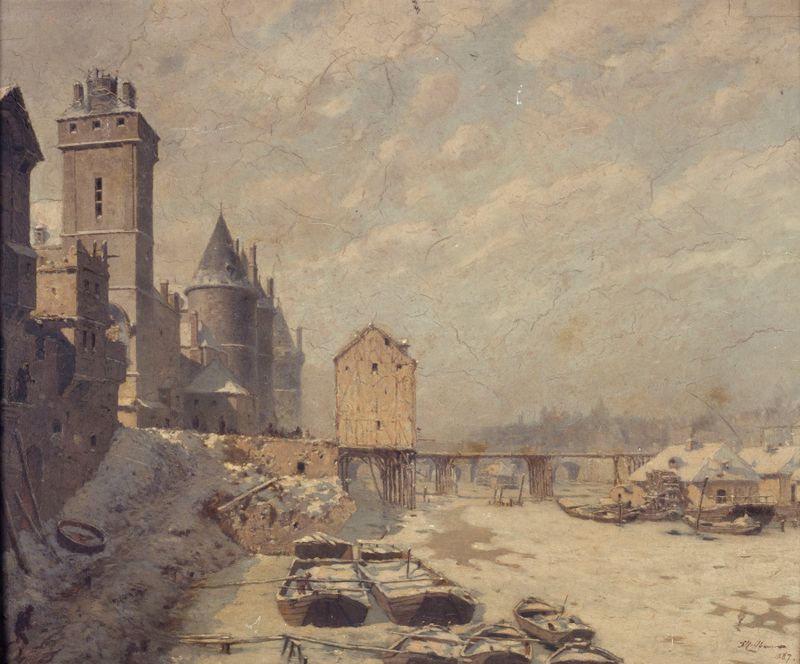
La tour de l’Horloge, la Conciergerie et le pont au Change, en 1621
Fédor Hoffbauer

Banquet des officiers de la marine Russe, dans la salle des fêtes à l’Hôtel de Ville. Fêtes Franco-Russes à Paris
Fédor Hoffbauer

Le Grand Châtelet et le pont de Bois, 1621-1645
Fédor Hoffbauer
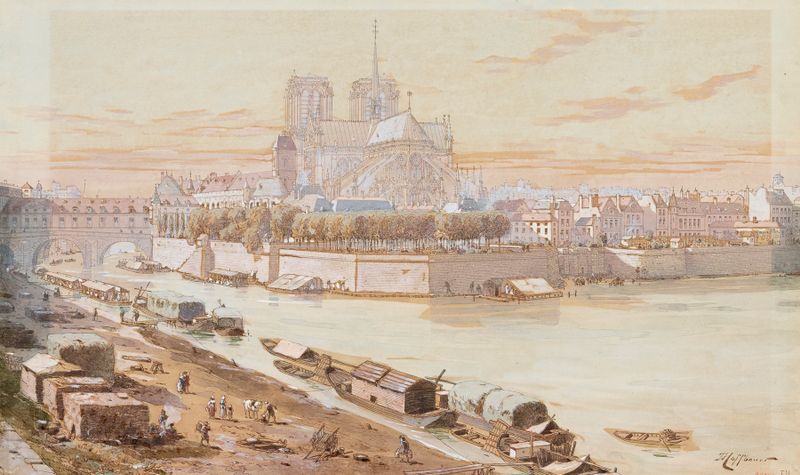
Notre-Dame et l’Evêché en 1750
Fédor Hoffbauer

Vue panoramique de Paris en 1588, depuis les toits du Louvre, avec le Pont-Neuf en construction
Fédor Hoffbauer
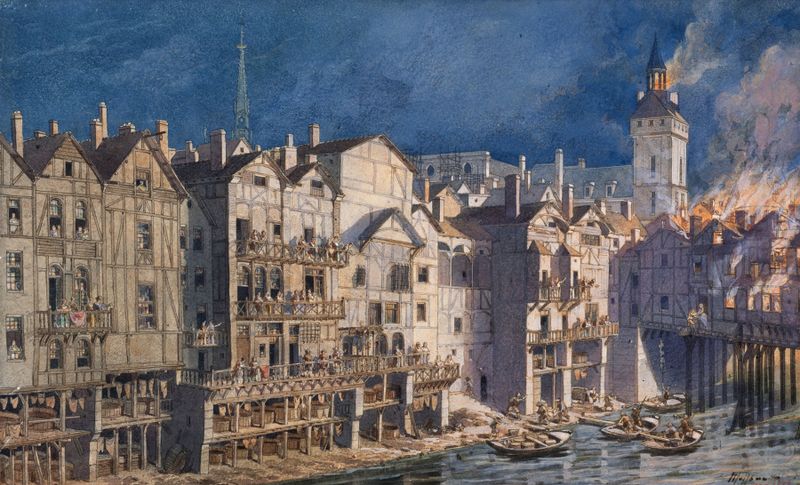
La Cité entre le pont Notre Dame et le pont au Change en 1621
Fédor Hoffbauer

L’Hôtel de Ville et le pont d’Arcole en 1842
Fédor Hoffbauer

Le Cimetière des Innocents en 1750
Fédor Hoffbauer
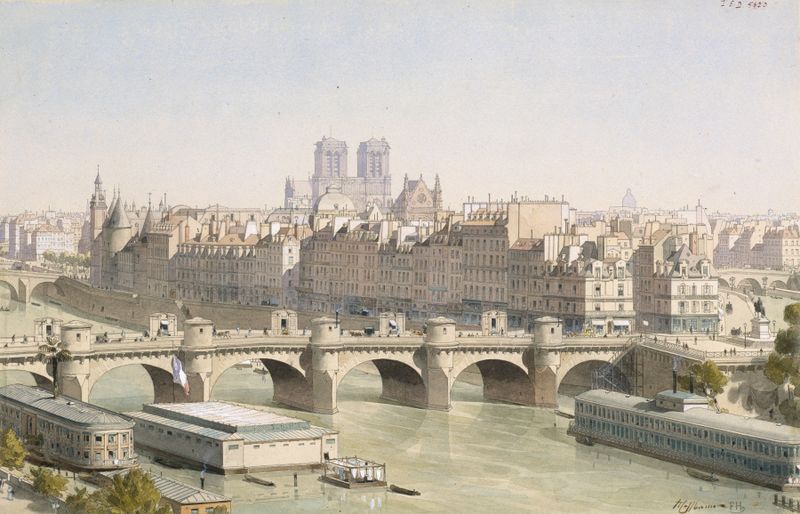
Vue de l’île de la Cité et le pont-Neuf avec ses boutique, vers 1840
Fédor Hoffbauer
More Historical Art
Browse all →
The Night Watch Militia Company of District II under the Command of Captain Frans Banninck Cocq
Rembrandt van Rijn

Lincoln Memorial
Henry Bacon

The Third of May 1808
Francisco de Goya

Isaac and Rebecca, Known as ‘The Jewish Bride’
Rembrandt van Rijn

The Charge of the Mamelukes (1814)
Francisco de Goya

De vier ruiters van de apocalyps
Albrecht Dürer