
Une Rue à Asnières — History & Facts
Art reveals the soul when the world turns away. In the bustling streets of the past, moments of quiet sorrow linger beneath the surface, reminding us that grief often walks hand in hand with the mundane. Look to the left at the solitary figure, shrouded in the muted tones of a somber coat. The cool grays and blues of the buildings tower above, creating a stark contrast with the warm earth tones of the cobblestones.
Notice how the flickering light casts elongated shadows, highlighting the solitude and introspection of the passerby. Layers of texture invite the viewer’s gaze, revealing the vibrant brushstrokes that breathe life into the scene while hinting at the disquiet that resonates within. The tension between the bustling street and the individual's stillness speaks volumes. Subtle details—a discarded hat, a stray dog—suggest unseen stories and struggles that ripple beneath the vibrant surface of urban life.
The juxtaposition of the animated surroundings against the quiet grief of the lone figure raises questions about connection and isolation, evoking a profound sense of empathy for those often overlooked in the crowd. In 1880, the artist captured Une Rue à Asnières during a period marked by rapid industrialization and social change in France. Raffaëlli, deeply attuned to the nuances of modern life and its unrelenting pace, sought to document the unseen emotions of urban experiences. This piece reflects his commitment to portraying the human condition amid the evolving landscape of his time.
More Artworks by Jean François Raffaëlli
Browse all →
Autumn In Paris
Jean François Raffaëlli

Le jardin du Luxembourg
Jean François Raffaëlli
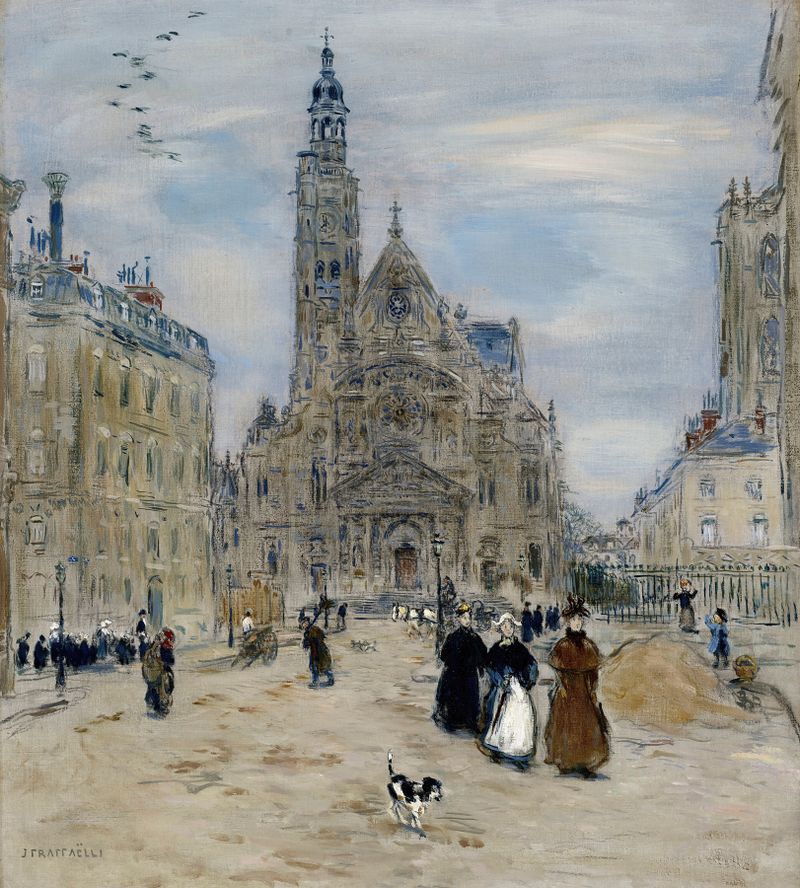
Saint-Étienne-du-Mont, Paris
Jean François Raffaëlli
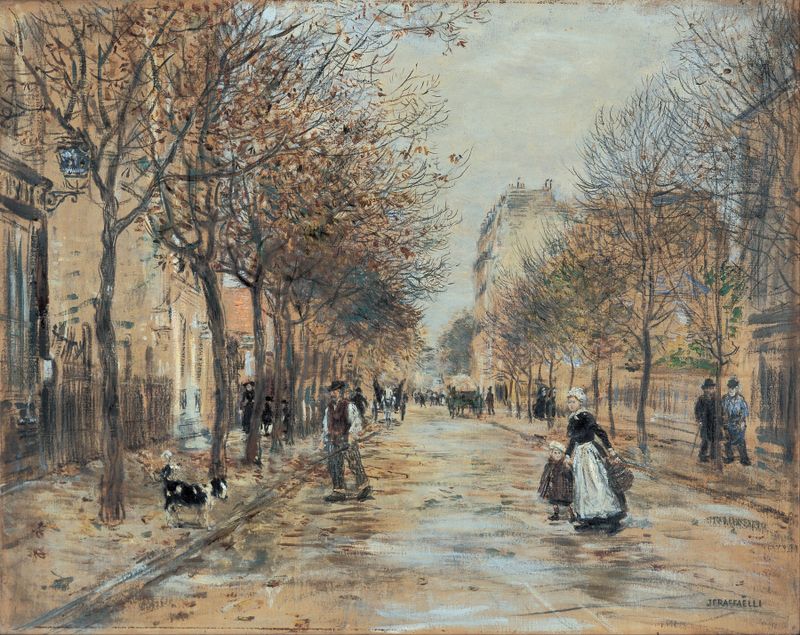
Street in Asnières
Jean François Raffaëlli
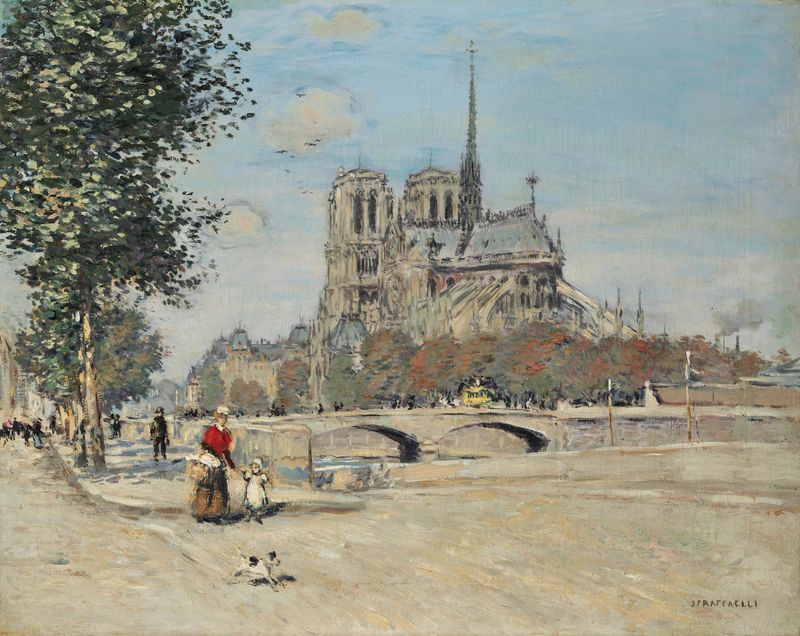
Notre-Dame de Paris et le pont de l’Archevêché
Jean François Raffaëlli

Place de Saint-Germain des Prés, Paris
Jean François Raffaëlli
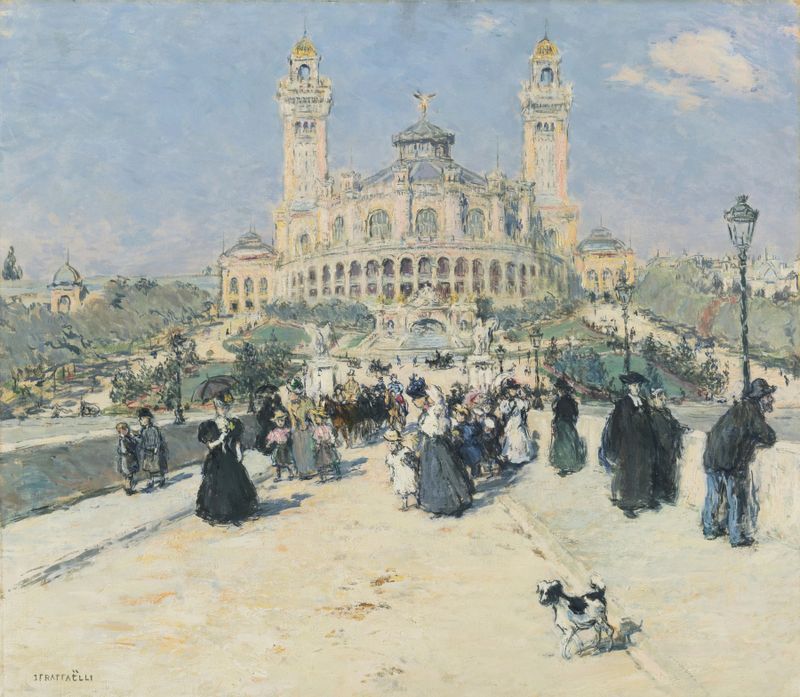
Le Trocadéro
Jean François Raffaëlli

Les Champs-Élysées
Jean François Raffaëlli

Le boulevard des Italiens
Jean François Raffaëlli

The Quai Malaquais, Paris
Jean François Raffaëlli





