
Vaches au pré — History & Facts
Could beauty survive in a century of chaos? The quietude painted by Eugène Boudin suggests that it can, even amidst the clamor of life. Look closely at the grazing cows in Vaches au pré, where a tender light bathes the scene in a soft, golden hue. The artist’s brushstrokes reveal a tranquil pasture, with each cow depicted in gentle detail—notice the way their forms evoke a sense of harmony with the land. The lush greenery, punctuated by dappled shadows, contrasts with the peaceful animals, drawing the viewer’s gaze to this idyllic coexistence.
The composition invites us to linger over the colors and textures that breathe life into the serene tableau. Beyond the pastoral beauty lies an emotional tension: the stillness of the scene whispers of a world untouched by the turmoil of contemporary society. The cows, embodiments of pastoral innocence, seem oblivious to the changes encroaching upon their existence. There is a juxtaposition between nature’s tranquility and the unseen chaos of the late 19th century, as industrialization began to alter landscapes and lifestyles.
This quiet moment becomes a poignant commentary on the fragility of such beauty. Boudin painted Vaches au pré between 1888 and 1895, during a period when he was deeply influenced by the Impressionist movement. Living in Normandy, he was surrounded by the serene coastal scenes and rural life that characterized his work. At this time, the art world was shifting, with artists seeking new ways to capture light and atmosphere, reflecting the changing nature of society itself.
Boudin’s dedication to en plein air painting allowed him to immortalize fleeting moments of beauty that might otherwise have been lost to history.
More Artworks by Eugène Boudin
Browse all →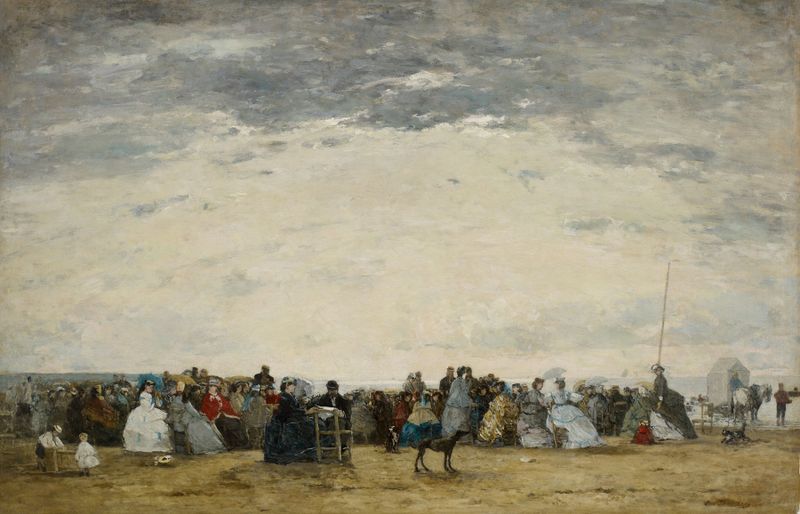
Vacationers on the Beach at Trouville
Eugène Boudin

Washerwoman near Trouville
Eugène Boudin
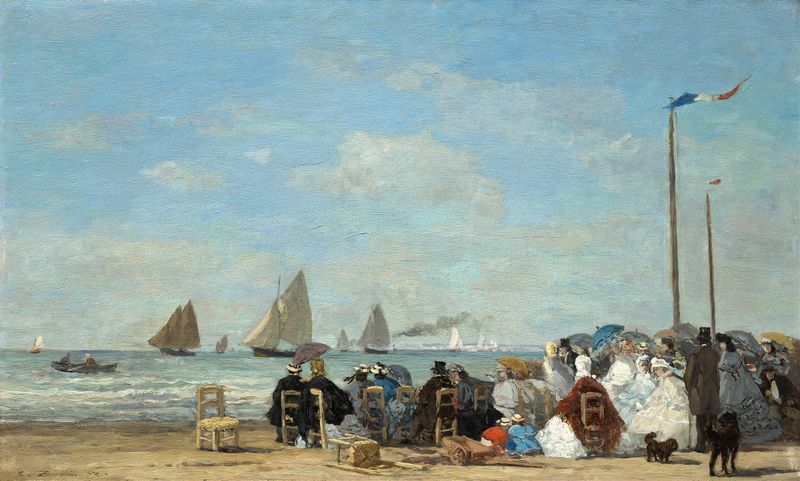
Beach Scene at Trouville
Eugène Boudin

Port aux environs d’Honfleur
Eugène Boudin

Le Faou, un coin du village
Eugène Boudin
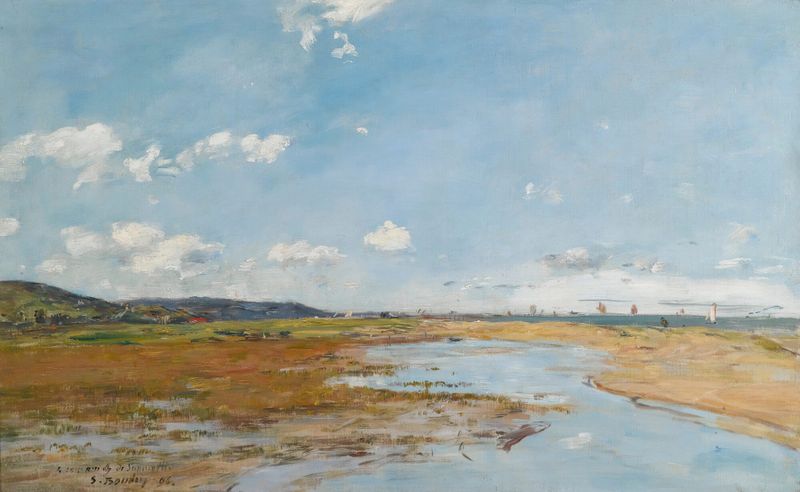
Deauville. Le Rivage
Eugène Boudin
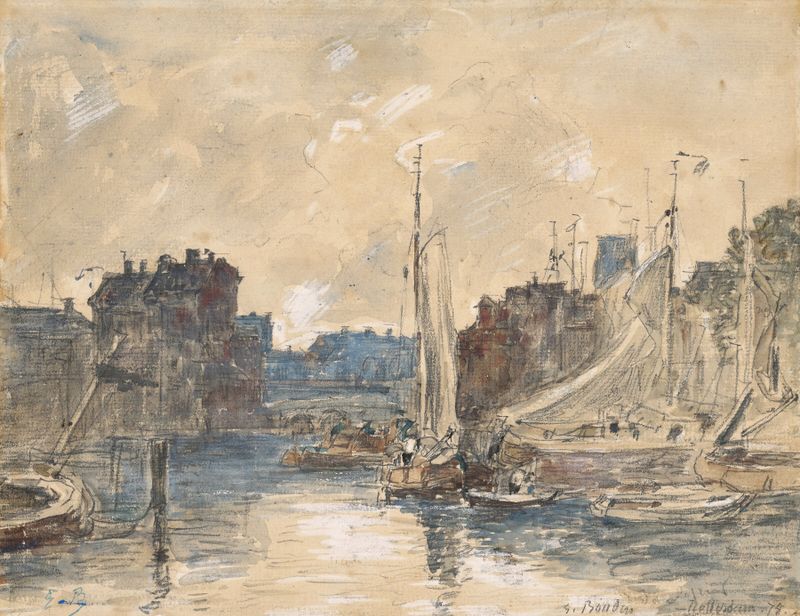
Port de Rotterdam
Eugène Boudin

View of Bordeaux, from the Quai des Chartrons
Eugène Boudin

Trouville, Scène De Plage
Eugène Boudin

Trouville, Le Port
Eugène Boudin





