
Valley of the Conway — History & Facts
In the depths of isolation, a single valley invites contemplation and echoes the soul's solitude. Look to the center of the canvas, where the winding river snakes through the mountains, its surface shimmering with a delicate blue hue. The soft, muted colors of the surrounding landscape draw the eye outward, contrasting the vibrant sky that hints at an approaching storm. Notice how the wisps of cloud blend seamlessly into the horizon, suggesting both a beauty and a foreboding that envelops the scene.
This interplay of light and shadow creates a sense of depth, making the viewer acutely aware of the valley's embrace—both inviting and isolating. The emotional tension in this piece lies in the contrast between the grandeur of nature and the innate loneliness it can evoke. Each rugged peak stands like a sentinel, silently witnessing the passage of time. The lush greens and browns symbolize life, yet they are underscored by a pervasive stillness, suggesting abandonment and longing.
This duality resonates with anyone who has experienced both the beauty of nature and the pangs of solitude, offering a profound reflection on the human condition. In 1800, during a period of great artistic exploration, the painter captured this scene while working in Wales. Girtin, known for his innovative watercolors, was influenced by the Romantic movement's emphasis on emotion and the sublime. His engagement with nature at this moment was not just a reflection of his personal experiences, but also a response to the broader artistic currents that sought to convey deeper psychological truths through landscapes.
More Artworks by Thomas Girtin
Browse all →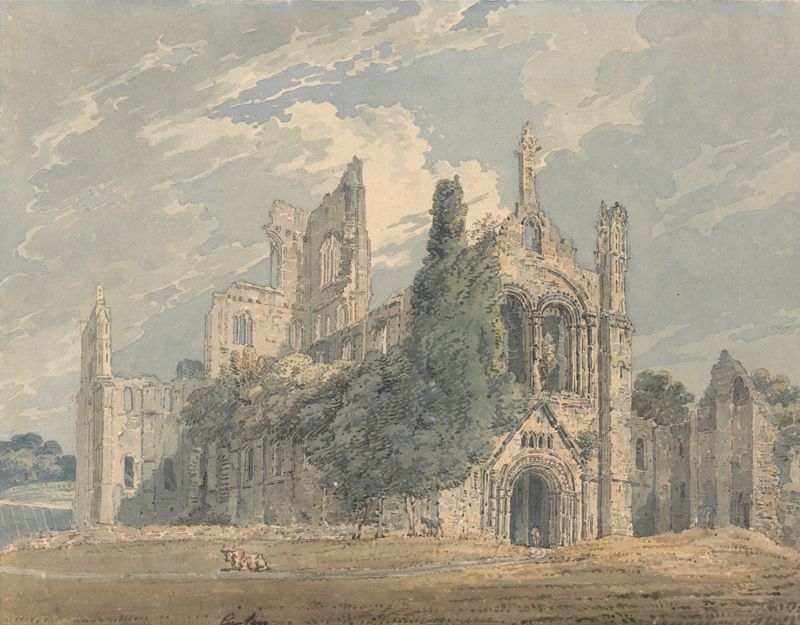
Kirkstall Abbey from the N.W.
Thomas Girtin
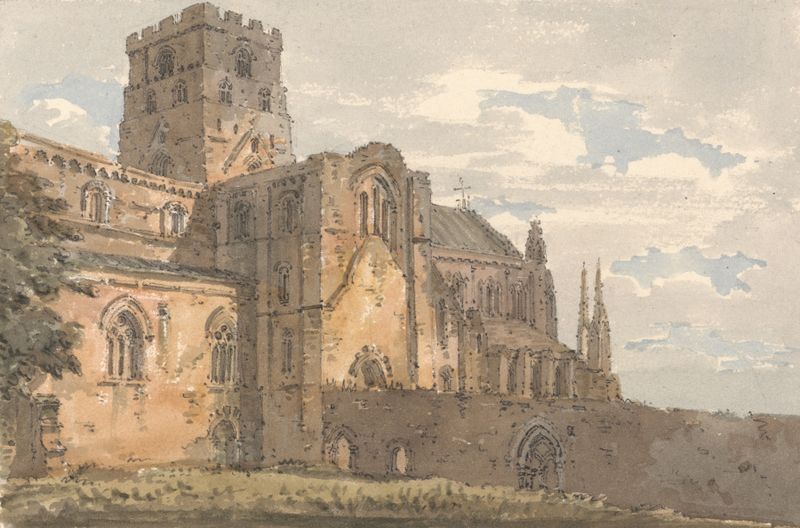
Carlisle Cathedral, Cumberland, from the South-west
Thomas Girtin
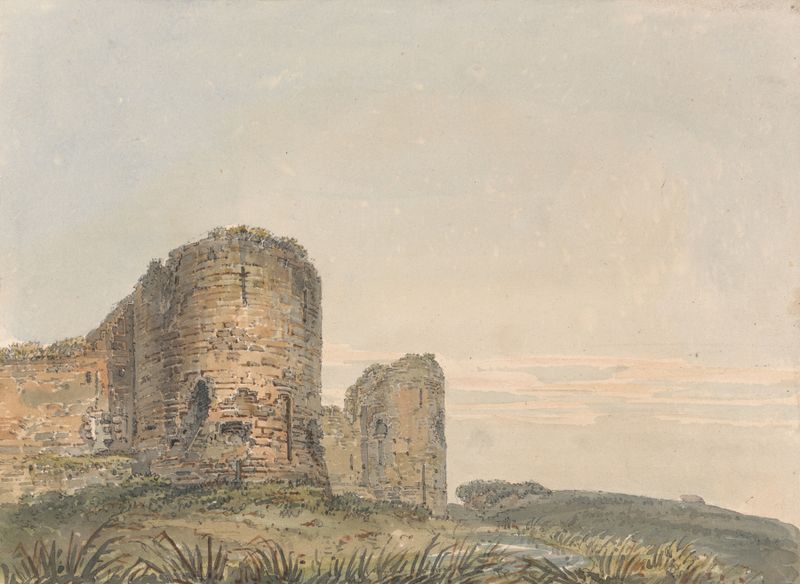
Pevensey Castle, Sussex
Thomas Girtin
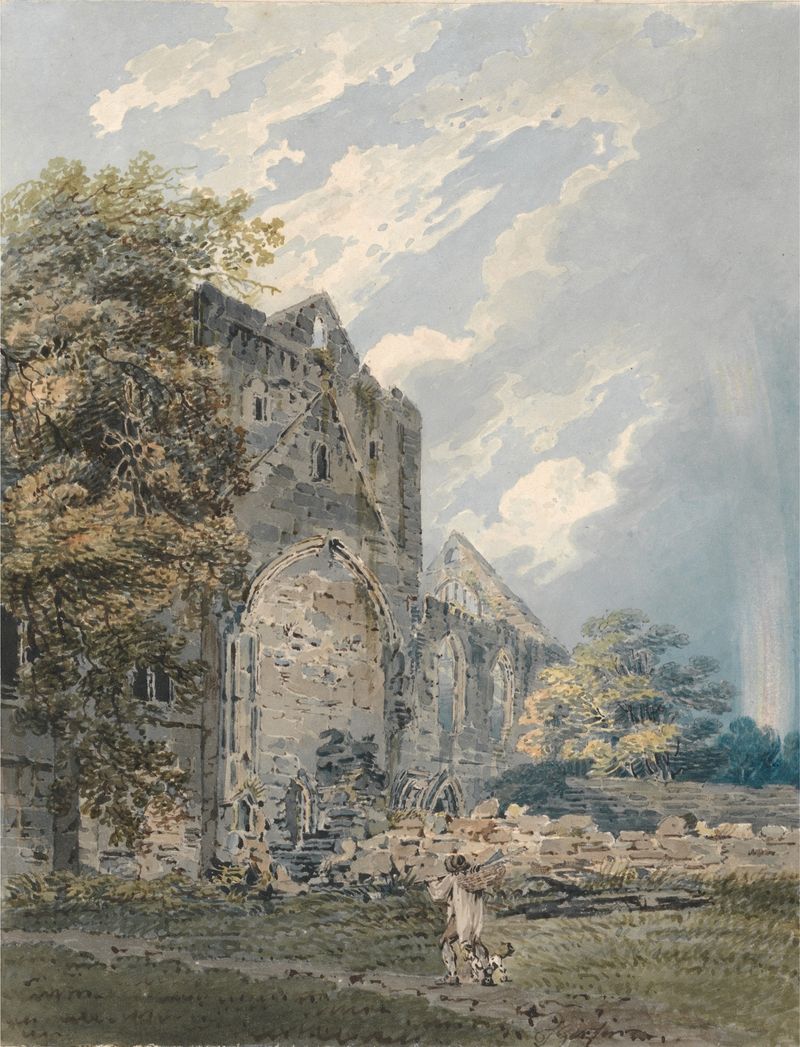
Pluscardine Abbey, Elgin
Thomas Girtin
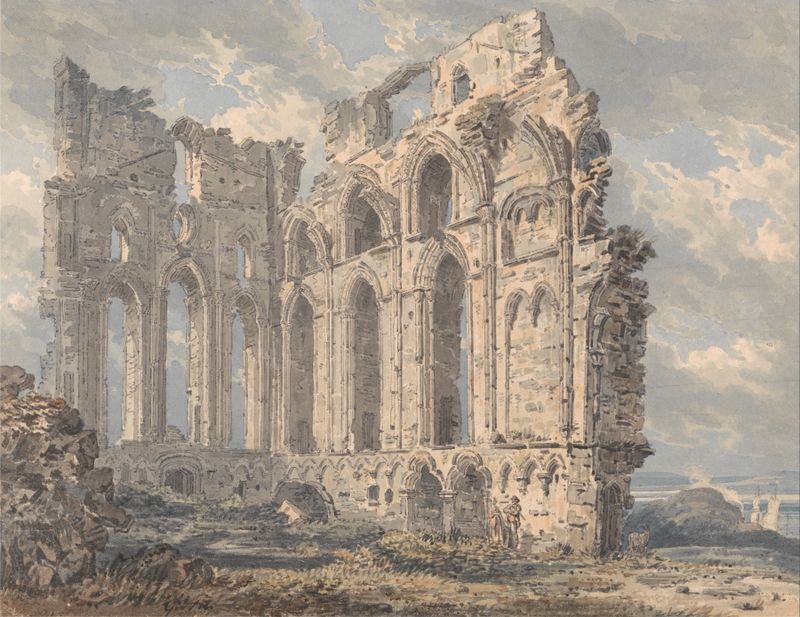
Tynemouth Priory, Northumberland
Thomas Girtin
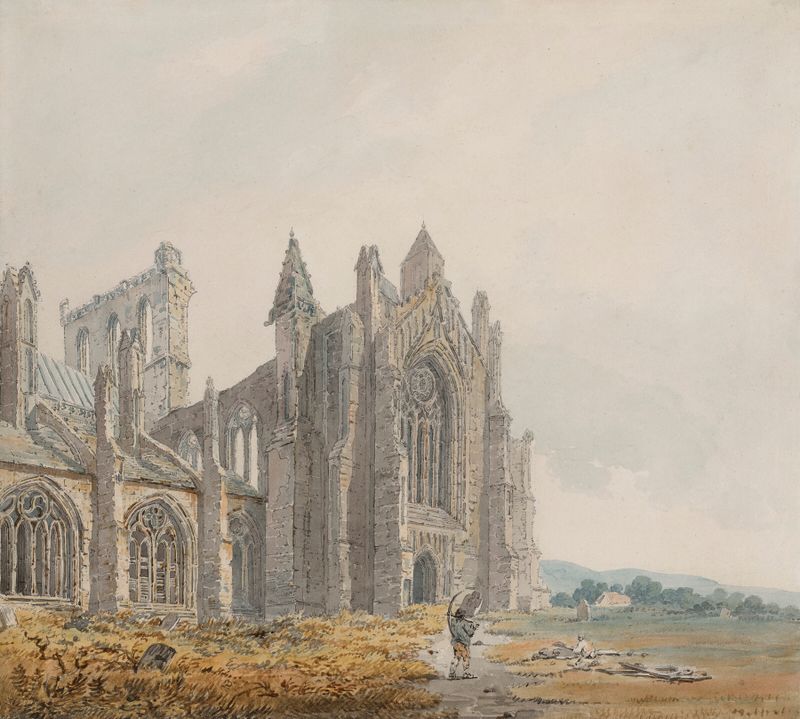
Melrose Abbey, Scotland
Thomas Girtin
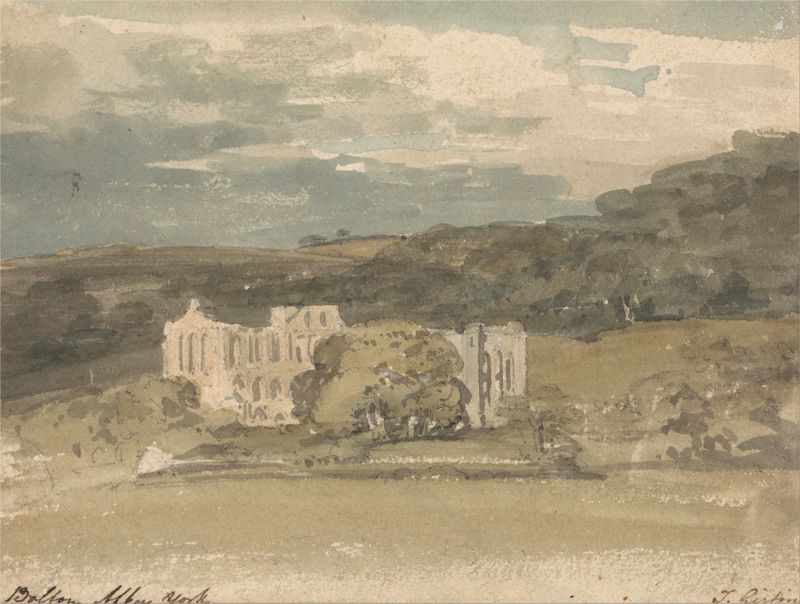
Rievaulx Abbey, Yorkshire
Thomas Girtin
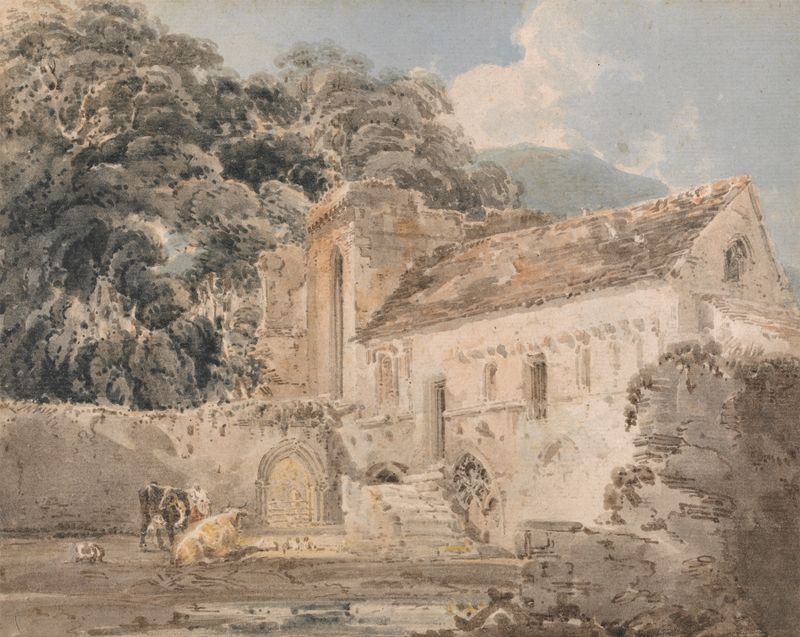
Valle Crucis Abbey, Denbighshire
Thomas Girtin
Warkworth Castle, Northumberland
Thomas Girtin
Dumbarton Rock and Castle
Thomas Girtin





