
Venise, église San Giorgio — History & Facts
In Venise, église San Giorgio, the essence of awakening saturates the canvas, breathing life into a moment suspended in time. Look to the left at the elegant silhouette of the church rising against the vibrant backdrop of the Venetian sky. The soft pastels blend seamlessly, with delicate strokes bringing the water to life, reflecting hues of lavender and soft gold. Notice how the gentle brushwork captures the ripples, creating a sense of movement that dances across the surface, inviting viewers to step into this serene scene.
The interplay of light and shadow not only reveals the architectural details of the church but also suggests an ethereal quality, as if the structure is poised to awaken from its slumber. Hidden within the image lies a deeper commentary on transience and permanence. The church, a symbol of resilience, stands steadfast amidst the fluidity of the water, evoking a contrast between the temporal nature of life and the enduring presence of faith. The soft edges of the reflections hint at a fleeting moment, while the warm tones convey a sense of hope and renewal.
There is a palpable tension between what is real and what is merely a reflection of reality, prompting viewers to contemplate their own journeys of awakening. In 1895, as Boudin painted this scene in Venice, he was immersed in a world rapidly shifting toward modernity and impressionism. He had already garnered respect as a precursor to the movement, embracing the play of light and atmosphere that defined impressionist landscapes. This painting serves as a culmination of his lifelong exploration of color and form, capturing not just a place, but a moment filled with the promise of new beginnings.
More Artworks by Eugène Boudin
Browse all →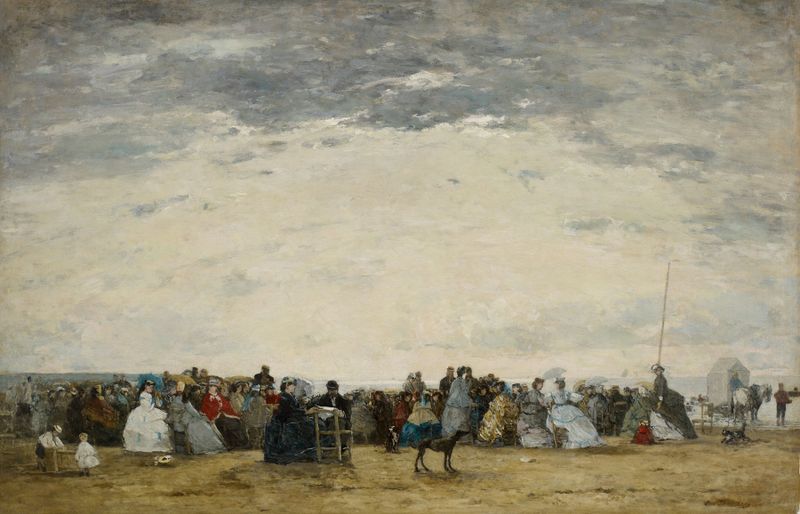
Vacationers on the Beach at Trouville
Eugène Boudin

Washerwoman near Trouville
Eugène Boudin
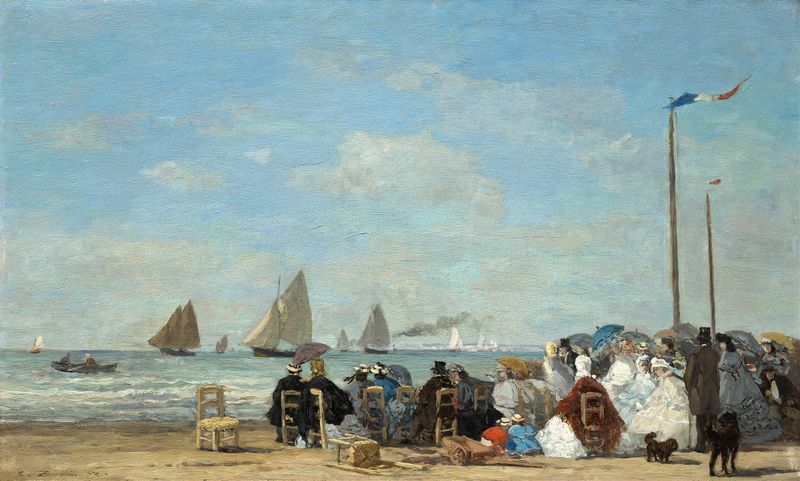
Beach Scene at Trouville
Eugène Boudin

Port aux environs d’Honfleur
Eugène Boudin

Le Faou, un coin du village
Eugène Boudin
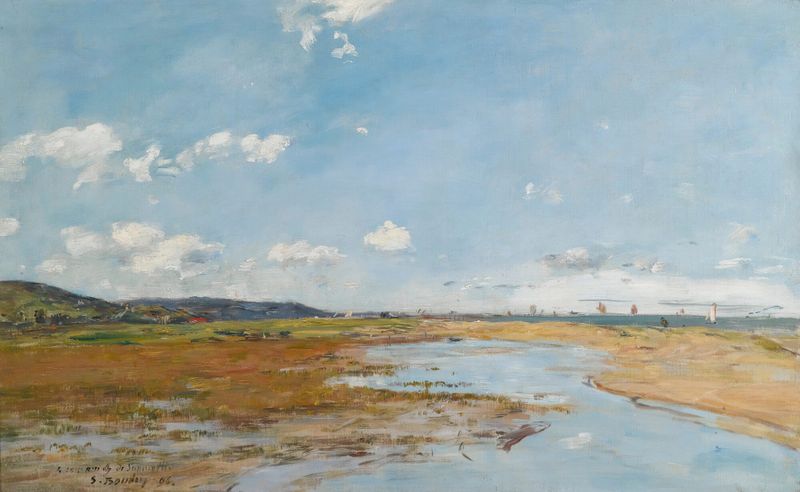
Deauville. Le Rivage
Eugène Boudin
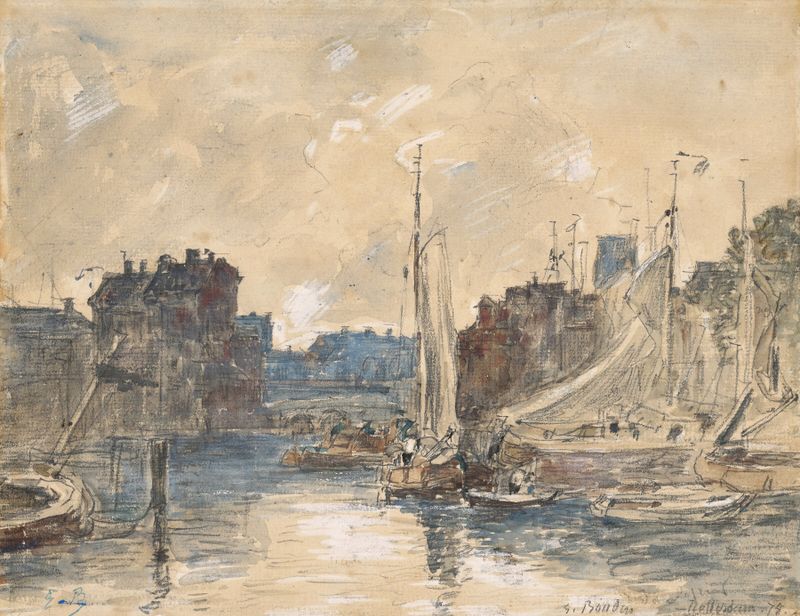
Port de Rotterdam
Eugène Boudin

View of Bordeaux, from the Quai des Chartrons
Eugène Boudin

Trouville, Scène De Plage
Eugène Boudin

Trouville, Le Port
Eugène Boudin
More Architecture Art
Browse all →
The statue of Liberty
Frédéric Auguste Bartholdi

View of Houses in Delft, Known as ‘The Little Street’
Johannes Vermeer

View of Houses in Delft, Known as ‘The Little Street’
Johannes Vermeer

The Cathedral in Rouen. The portal, Grey Weather
Claude Monet

The yellow house
Vincent van Gogh

The Church in Auvers-sur-Oise, View from the Chevet
Vincent van Gogh