
Venise. La Salute. La Douane — History & Facts
Can beauty exist without sorrow? In Venise. La Salute. La Douane, the answer lingers like a wistful breeze across the canvas, where the splendor of Venice is tinged with a quiet melancholy. Look to the left at the soft, diffused light illuminating the iconic Basilica di Santa Maria della Salute.
Notice how the ethereal clouds swirl above the warm, golden tones of the cityscape, casting reflections in the gentle, rippling water below. The brushstrokes are fluid and delicate, capturing the essence of a moment where time seems to pause, inviting viewers to lose themselves in the serene beauty of the scene. The vibrant hues of the boats and their sails gently contrast with the muted background, creating a harmonious dialogue between movement and stillness. Yet beneath this visual harmony lies an undercurrent of loss.
The boats bobbing on the water, seemingly vibrant and alive, evoke a sense of transient joy that wades close to sorrow. The painting captures a fleeting moment, perhaps a memory of what once was or a reminder of the ephemeral nature of beauty itself. Each detail, from the delicate façade of the buildings to the shimmering surface of the water, hints at the inevitable passage of time, urging us to cherish our own moments. Eugène Boudin painted this work in 1895, during a period when he had already established himself as a master of atmospheric landscapes.
He often sought refuge in the seaside towns of France and Italy, capturing their essence with his characteristic style. At this time, the world of art was shifting towards Impressionism, and Boudin was embraced by his contemporaries for his innovative approaches to light and color, even as he wrestled with the impact of change in the rapidly modernizing landscapes he loved.
More Artworks by Eugène Boudin
Browse all →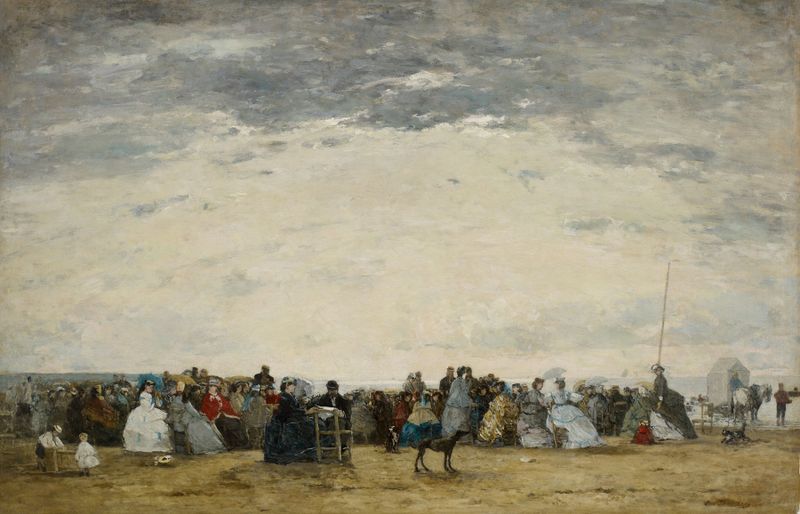
Vacationers on the Beach at Trouville
Eugène Boudin

Washerwoman near Trouville
Eugène Boudin
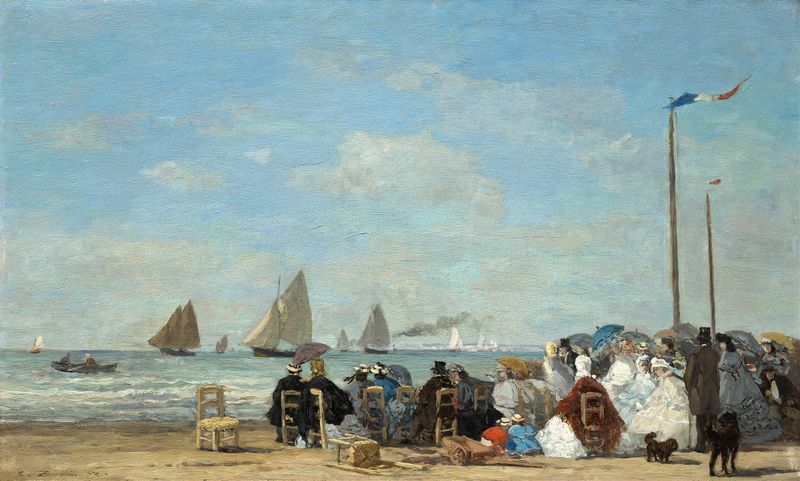
Beach Scene at Trouville
Eugène Boudin

Port aux environs d’Honfleur
Eugène Boudin

Le Faou, un coin du village
Eugène Boudin
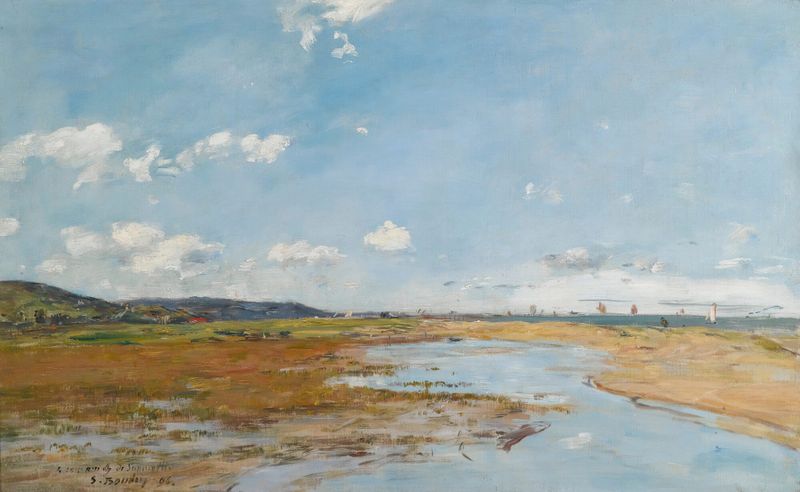
Deauville. Le Rivage
Eugène Boudin
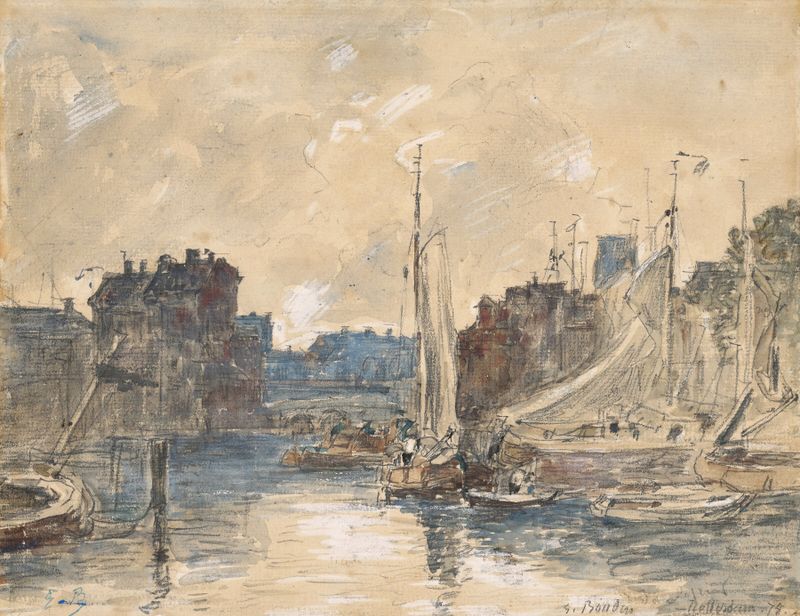
Port de Rotterdam
Eugène Boudin

View of Bordeaux, from the Quai des Chartrons
Eugène Boudin

Trouville, Scène De Plage
Eugène Boudin

Trouville, Le Port
Eugène Boudin
More Architecture Art
Browse all →
The statue of Liberty
Frédéric Auguste Bartholdi

View of Houses in Delft, Known as ‘The Little Street’
Johannes Vermeer

View of Houses in Delft, Known as ‘The Little Street’
Johannes Vermeer

The Cathedral in Rouen. The portal, Grey Weather
Claude Monet

The yellow house
Vincent van Gogh

The Church in Auvers-sur-Oise, View from the Chevet
Vincent van Gogh