
Venise; le quai et l’église San Biagio — History & Facts
This sentiment resonates deeply as we gaze upon a scene where serenity and decay coexist in haunting harmony. In the quaint embrace of Venice, an exquisite façade belies the underlying deterioration of a world caught between time and oblivion. Look to the left at the church of San Biagio, its majestic dome bathed in warm light, yet hinting at the weight of history it bears. Notice how Boudin employs soft, muted colors to capture the delicate interplay between water and stone, with the lapping waves reflecting the church’s weathered details.
The composition is masterfully balanced, drawing your gaze along the canal, where drifting boats seem to float on a dreamlike surface, merging the natural with the manmade. As you delve deeper, the contrasts become striking. The vibrant hues of the canal and the gentle play of light evoke a sense of fleeting beauty, while the crumbling edges of the architecture whisper of decay and neglect. This duality creates a poignant tension, prompting the viewer to ponder the inevitable passage of time and the stories etched into every crack and crevice.
Each brushstroke invites reflection on both the allure and the transience of this enchanting city. In 1895, Boudin painted this piece during a significant period in his career, as he was gaining recognition for his contributions to Impressionism. Living in France, he had already made a name for himself, but this work illustrates his longing for the atmosphere of the coast and cities beyond. The world of art was shifting, and as his own style matured, he captured not only the beauty of the moment but also the bittersweet echo of a fading past.
More Artworks by Eugène Boudin
Browse all →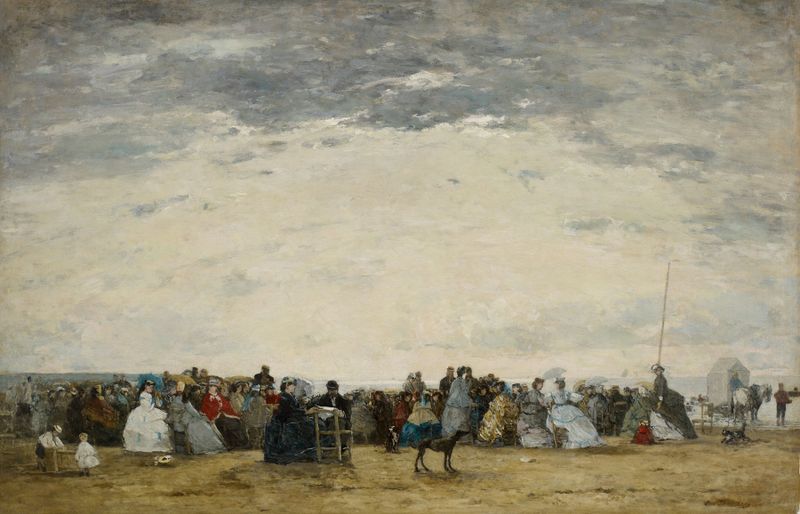
Vacationers on the Beach at Trouville
Eugène Boudin

Washerwoman near Trouville
Eugène Boudin
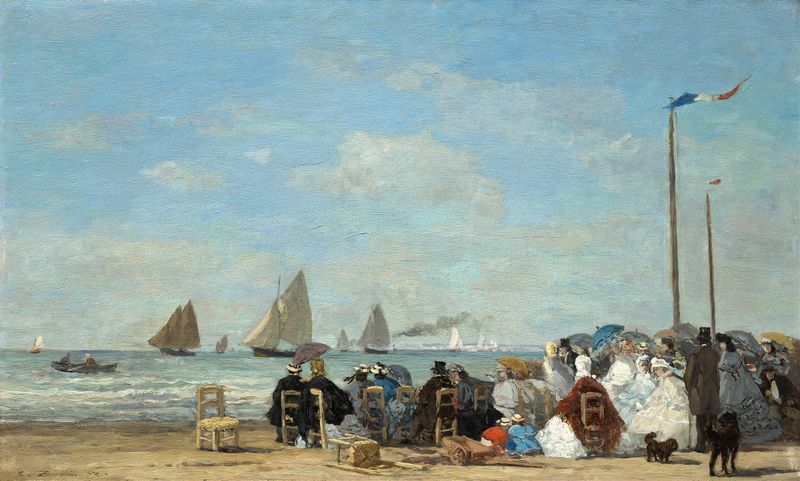
Beach Scene at Trouville
Eugène Boudin

Port aux environs d’Honfleur
Eugène Boudin

Le Faou, un coin du village
Eugène Boudin
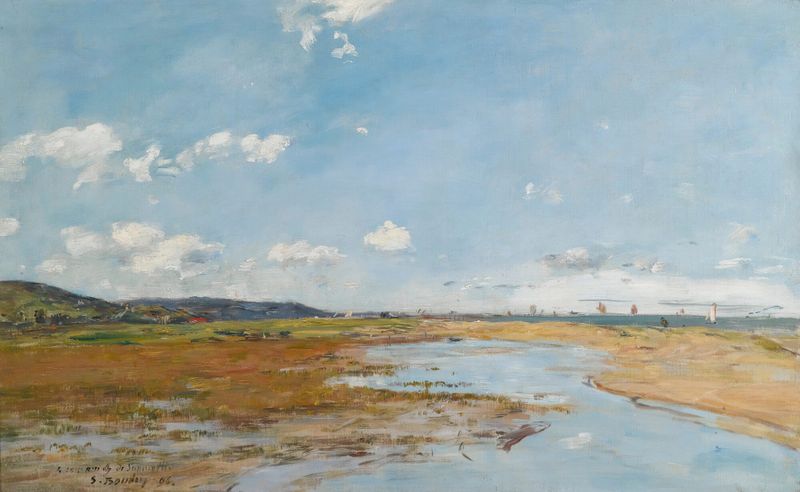
Deauville. Le Rivage
Eugène Boudin
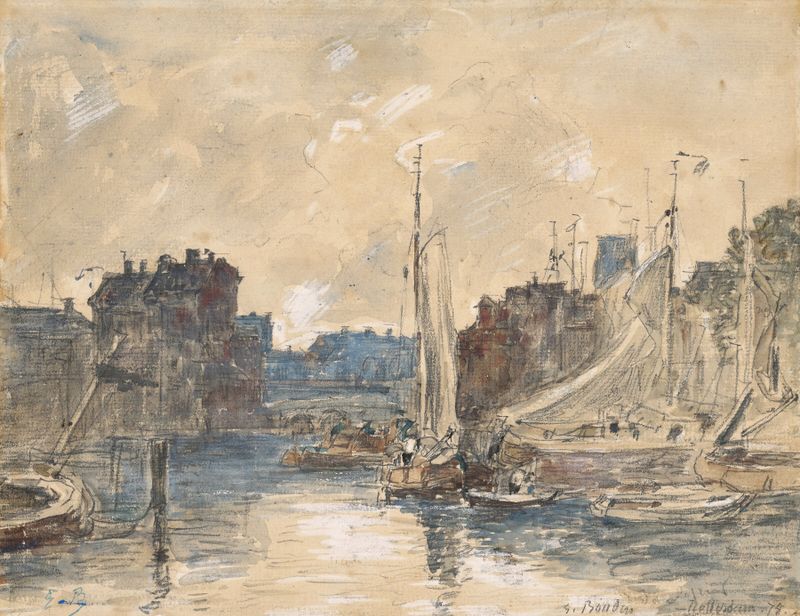
Port de Rotterdam
Eugène Boudin

View of Bordeaux, from the Quai des Chartrons
Eugène Boudin

Trouville, Scène De Plage
Eugène Boudin

Trouville, Le Port
Eugène Boudin





