
View in the Hague — History & Facts
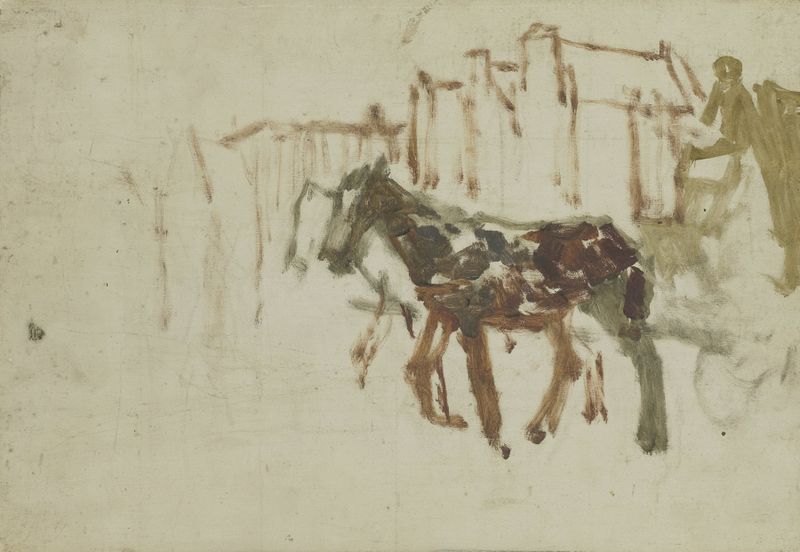
Could a single brushstroke hold eternity? In View in the Hague, strands of illusion dance across the canvas, inviting us to ponder the interplay between reality and perception. Look to the left at the delicate, muted hues of the buildings, rising quietly against the backdrop of a softly-lit sky. Notice how the brushwork captures the fleeting quality of light as it bathes the scene, instilling a sense of tranquility and timelessness. The gentle ripples of the water reflect these colors, creating a symphony of nature and architecture that draws the eye deeper into the composition, while the slightly blurred edges evoke a dreamlike quality. Yet beneath this serene facade lies a complex emotional tension.
The juxtaposition of stillness and movement suggests a world in transition, capturing the moment just before life unfolds — perhaps a passerby or a whisper of wind that never arrives. The muted palette conveys a subtle melancholy, as if the artist yearns to immortalize a fleeting moment forever lost to time. Every brushstroke becomes a doorway to an experience that is both personal and universal. Created in the late 19th to early 20th century, this work emerged during a transformative era for Breitner, who was heavily influenced by the burgeoning Impressionist movement.
Living in The Hague, he blended traditional elements with innovative techniques to capture the essence of modern life. This painting reflects not only his artistic evolution but also the shifting dynamics of society during a time when artists sought to redefine their connection with the world around them.
More Artworks by George Hendrik Breitner
Browse all →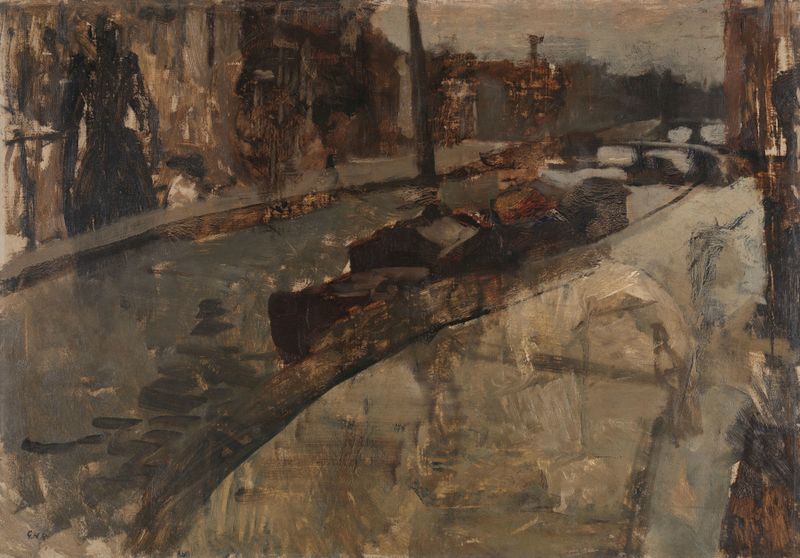
Prinsengracht near Lauriergracht, Amsterdam
George Hendrik Breitner
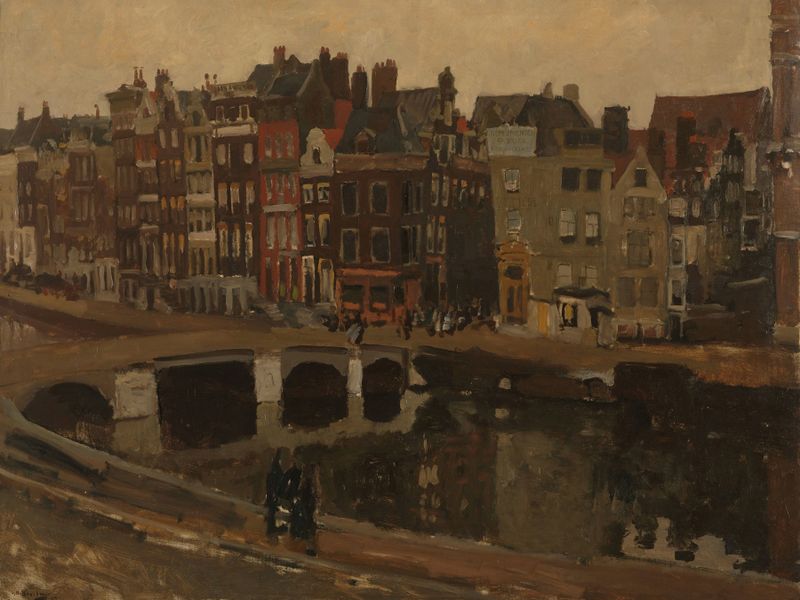
The Rokin, Amsterdam
George Hendrik Breitner

The Rokin, Amsterdam
George Hendrik Breitner
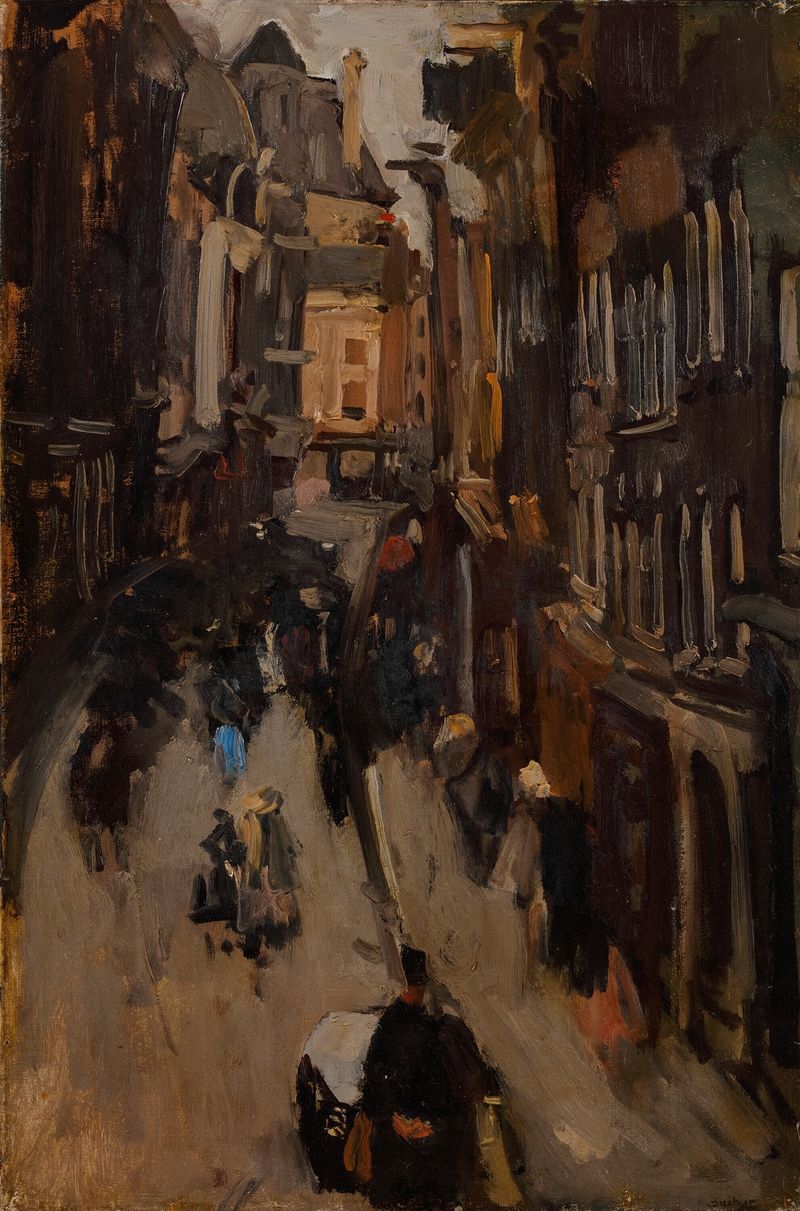
A busy day in the Kalverstraat, Amsterdam
George Hendrik Breitner

The Damrak, Amsterdam
George Hendrik Breitner
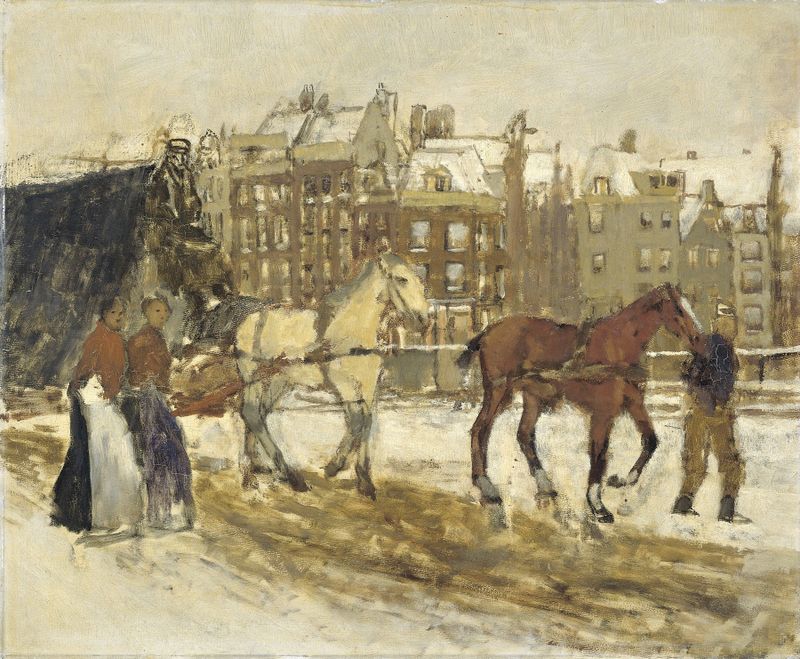
The Rokin, Amsterdam
George Hendrik Breitner

The Baanbrugsteeg looking from the Haarlemmerdijk towards the Vinkenstraat and the Brouwersgracht
George Hendrik Breitner

The Leidsegracht, Amsterdam
George Hendrik Breitner
The Rokin
George Hendrik Breitner

Gezicht op de Dam
George Hendrik Breitner





