
View Near Fort Miller — History & Facts
Can paint confess what words never could? In View Near Fort Miller, the canvas unfolds a transformative landscape, inviting the viewer into a realm where nature speaks silently yet powerfully, hinting at stories of change and growth. Look to the left at the gently flowing river, its reflective surface capturing the hues of the sky as if nature is mirroring a quiet introspection. The foreground teems with lush greenery, the brush strokes vibrant yet controlled, leading your eye towards the distant hills that cradle the horizon. Note the soft, diffused light that bathes the scene, highlighting the delicate interplay between shadow and illumination, a visual metaphor for the complexities of existence. The artist intertwines contrasting elements, such as the lush foreground against the starkness of the mountains in the background, symbolizing the tension between the tangible world and the unseen.
This dichotomy invites contemplation, suggesting that while nature remains constant, it is also a landscape of change and adaptation. Subtle hints of seasonal transition and the wear of time echo the themes of transformation inherent in the human experience. John Hill painted this piece between 1821 and 1822, during his time in New York. This period marked a flourishing of American landscape painting, as artists began to explore the unique beauty of their homeland.
Hill, influenced by the burgeoning Romantic movement, sought to capture the sublime in nature, reflecting a broader cultural shift towards an appreciation of the American wilderness and its profound connection to identity.
More Artworks by John Hill
Browse all →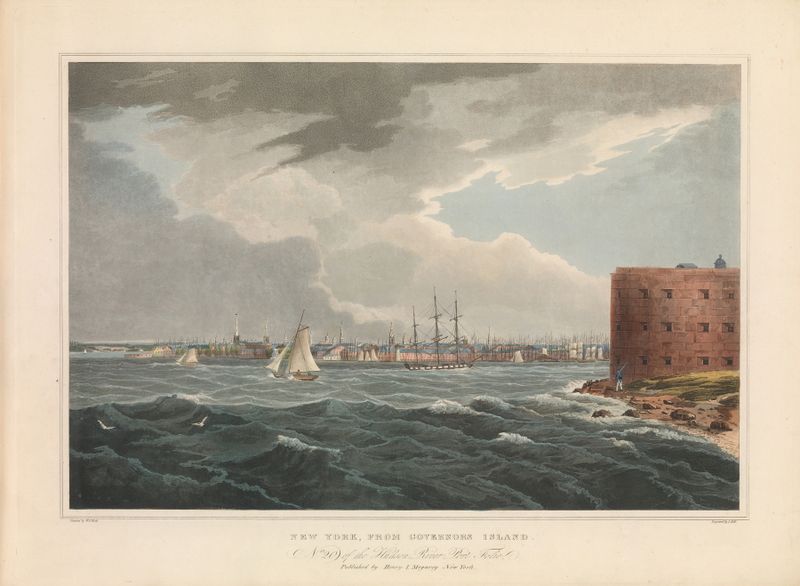
New York from Governor’s Island
John Hill

West Point
John Hill
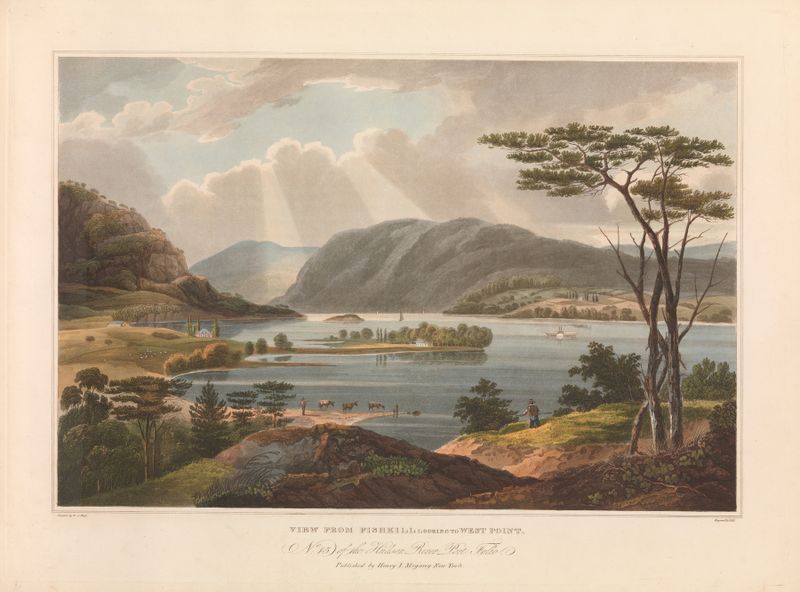
View from Fishkill Looking To West-Point
John Hill

View Near Hudson
John Hill
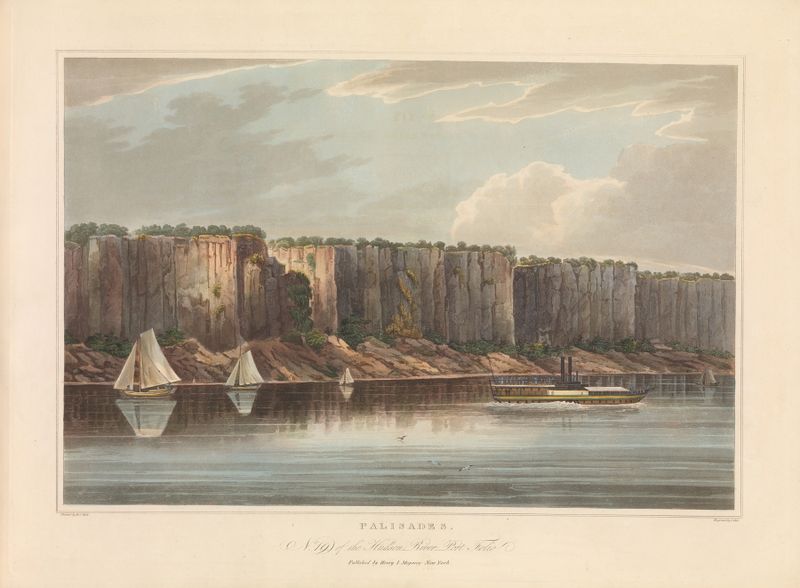
The Palisades
John Hill
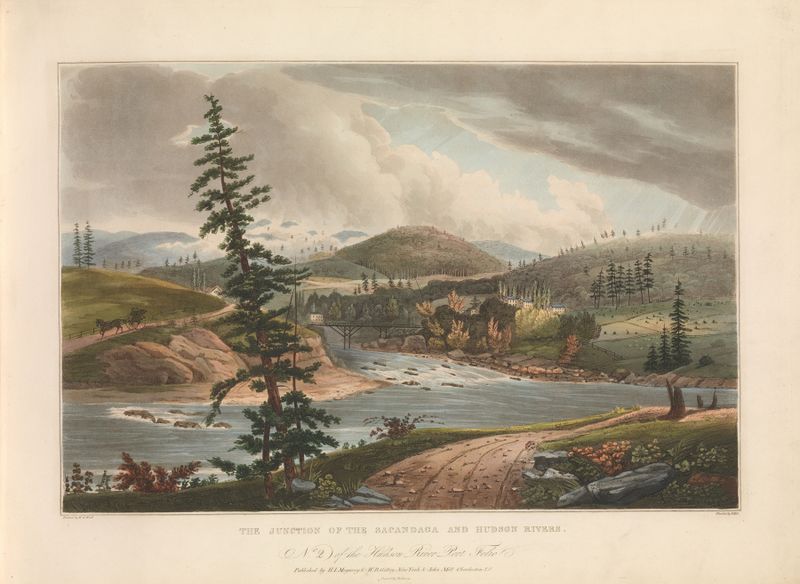
Junction of the Sacandaga and Hudson Rivers
John Hill
City Hall
John Hill

North-West Front, Cassiobury
John Hill

Glenns Falls
John Hill

His Majesty’s Frigate ‘Endymion’
John Hill





