
View Near Fort Montgomery — History & Facts
When did color learn to lie? In View Near Fort Montgomery, a deceptive tranquility cloaks a landscape that thrums with hidden tension, whispering of past violence and looming conflict. Focus first on the sweeping expanse of the foreground, where soft greens and browns pulse under a sky washed in blues and whites. The gentle flow of the river draws the eye inwards, leading to the distant fort, its imposing structure a stark contrast to the serene hues. Notice how the artist employs delicate brushwork to create a sense of movement within the water, suggesting a life that churns just beneath the surface — a powerful undercurrent masked by beauty. Yet, there is more than meets the eye.
The fort, a reminder of human conflict, looms with an air of foreboding, hinting at the tension between nature and civilization. The sky, though luminous, carries a weight that suggests impending change, a reflection of the turbulent post-Revolutionary era in which this work was created. Small details—a silhouetted tree bent against the wind, the shadows creeping out from the fort—evoke a sense of unease, subtly inviting the viewer to question the idyllic facade. In the early 1820s, Hill found himself immersed in changing artistic currents, influenced by the emerging romantic sensibilities that emphasized emotion and the sublime.
He painted this scene while in the United States, navigating the complexities of a landscape shaped not just by tranquility, but also by the scars of a war-torn history. This work stands as a testament to the dual nature of beauty and violence, a truth woven into the very fabric of the nation.
More Artworks by John Hill
Browse all →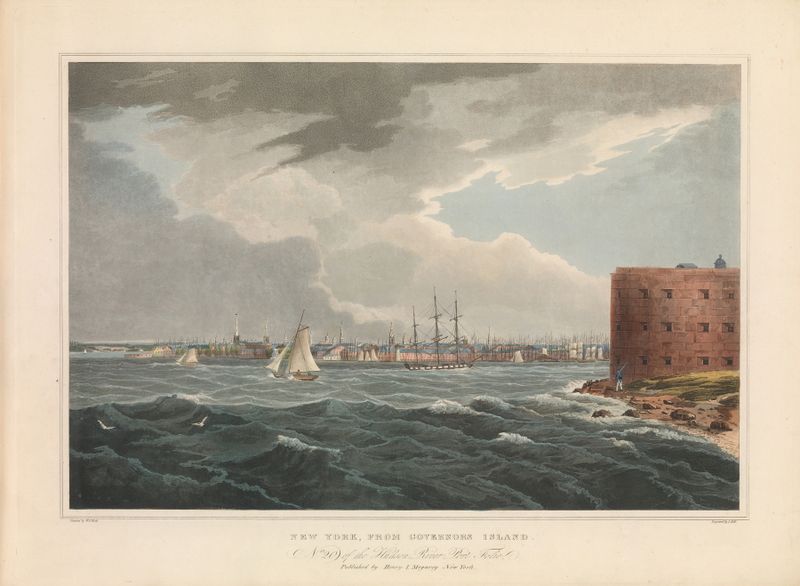
New York from Governor’s Island
John Hill

West Point
John Hill
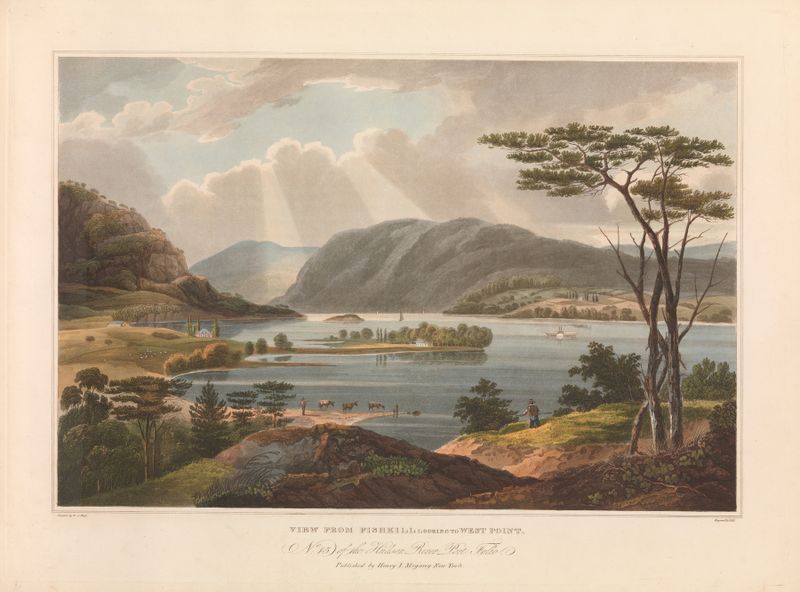
View from Fishkill Looking To West-Point
John Hill

View Near Hudson
John Hill
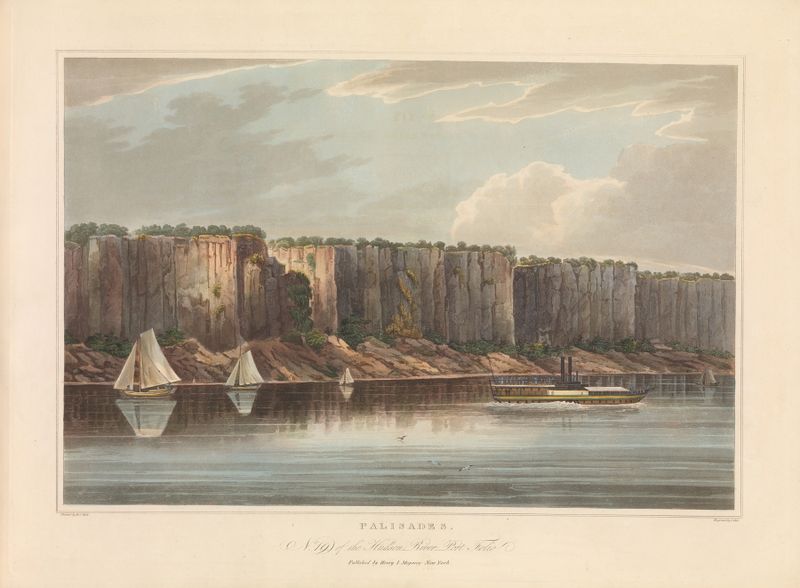
The Palisades
John Hill
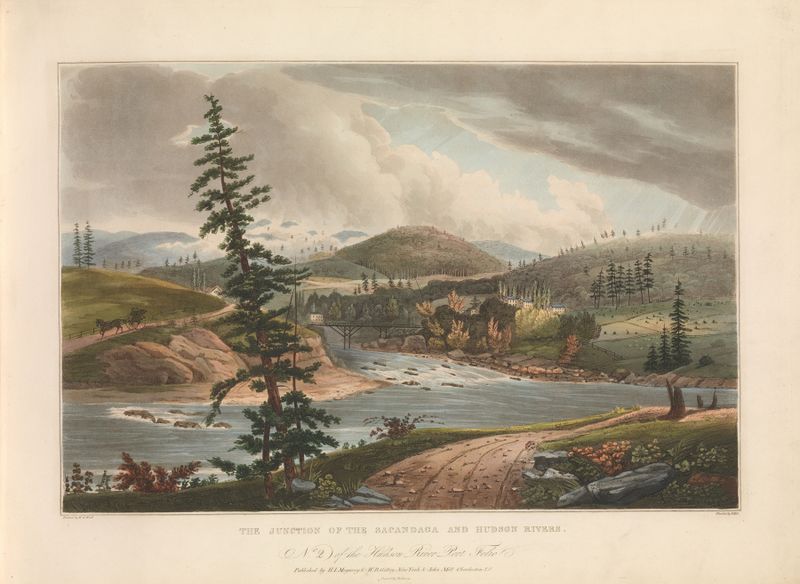
Junction of the Sacandaga and Hudson Rivers
John Hill
City Hall
John Hill

North-West Front, Cassiobury
John Hill

Glenns Falls
John Hill

His Majesty’s Frigate ‘Endymion’
John Hill





