View of a brook in the countryside, a castle in the hillside above, with Pâris and Oenone in the foreground — History & Facts
When did color learn to lie? The delicate interplay between nature and imagination invites us to reconsider the truth in what we see. In this artwork, what glimmers with vibrancy may conceal a deeper narrative beneath the surface. Look to the foreground, where Pâris and Oenone are poised in a moment of intimacy. Their forms are rendered with gentle precision, the soft hues of their garments flowing like the brook that meanders nearby.
Notice how the sunlight dances off the water's surface, reflecting an ethereal glow that evokes both serenity and yearning. The castle, perched high on the hillside, looms above them—a watchful guardian that hints at grandeur yet isolates the figures in their tranquil embrace. The contrast between the serene brook and the imposing castle speaks to the tension between human emotion and the weight of destiny. While Pâris and Oenone are enveloped in a world of lush greens and soft blues, the dark stone of the castle contrasts sharply, suggesting that beauty and oppression often coexist.
The brook, a symbol of life’s flow, meanders unperturbed, contrasting with the static power of the structure above, inviting a reflection on the constraints society places on love and freedom. In this undated work, Bertin demonstrated his mastery of landscape painting during a time when Romanticism was on the rise. Living in France, he was influenced by the picturesque qualities of nature and the philosophical ideas that swirled through the art world. His focus on blending emotion with the natural environment revealed a transitional moment in art, where the boundaries between reality and imagination began to blur, laying the groundwork for future movements.
More Artworks by Jean-Victor Bertin
Browse all →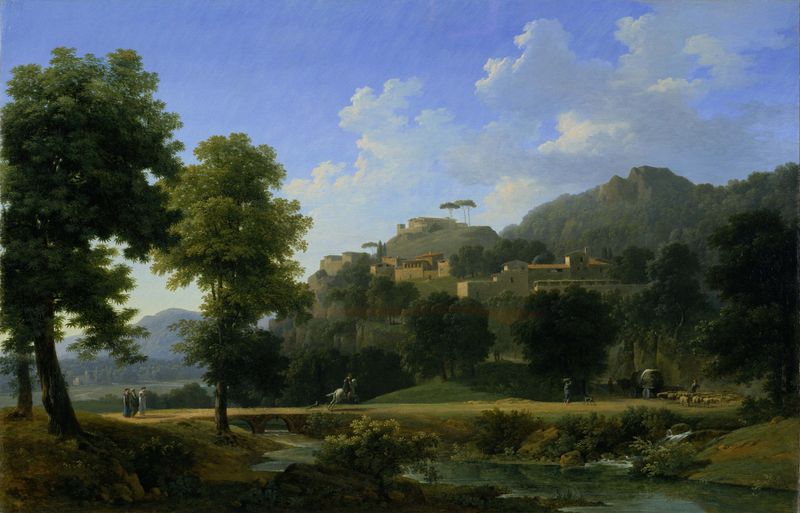
Italian Landscape
Jean-Victor Bertin
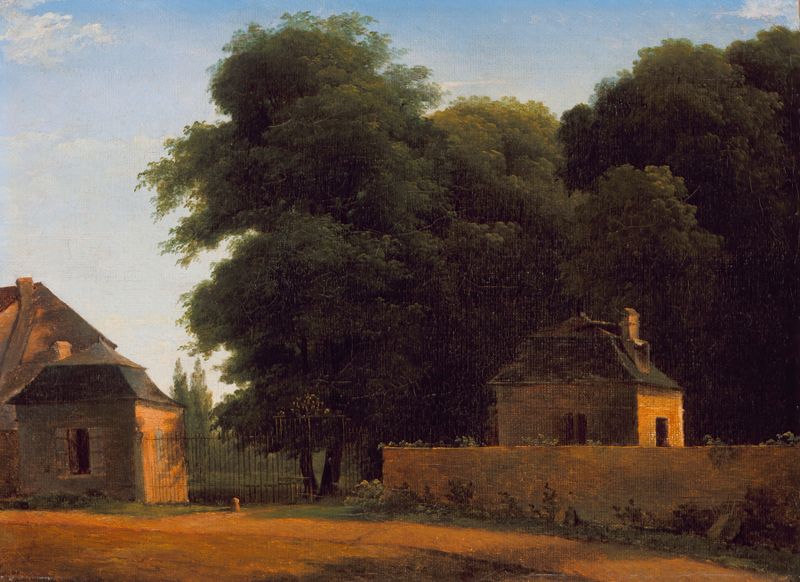
Entry to the Park at St. Cloud
Jean-Victor Bertin
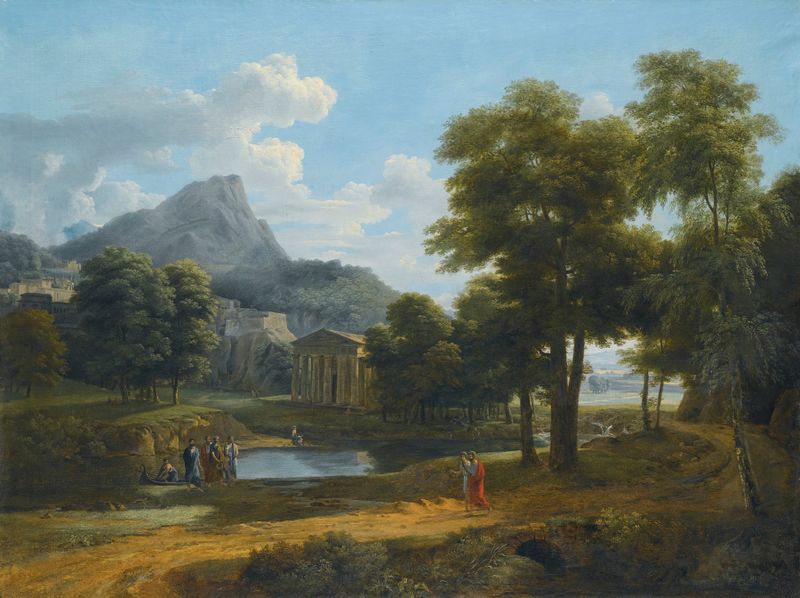
A Mountainous Landscape, With A View Of Pheneos And The Temple Of Minerva Caphyes
Jean-Victor Bertin
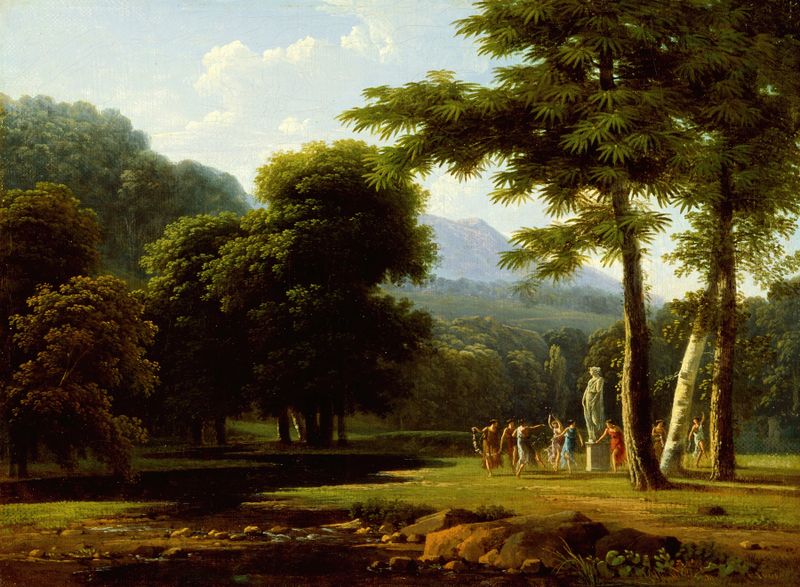
Landscape
Jean-Victor Bertin
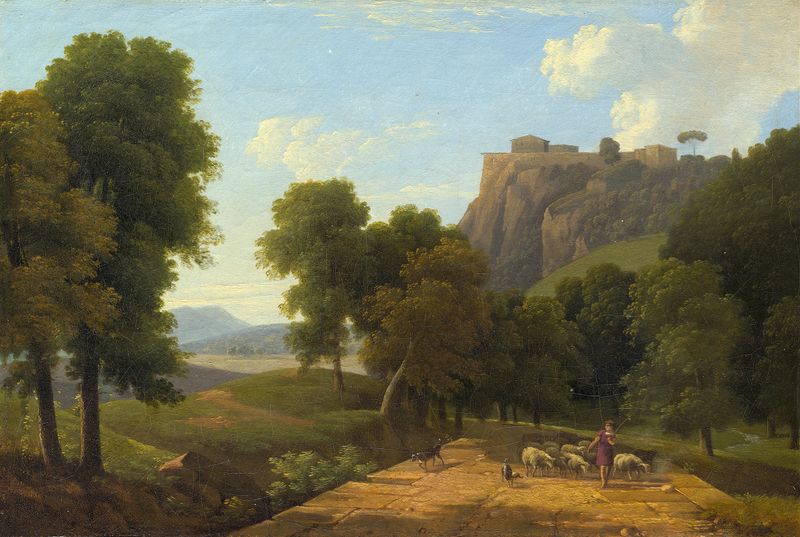
Shepherd with his Flock
Jean-Victor Bertin
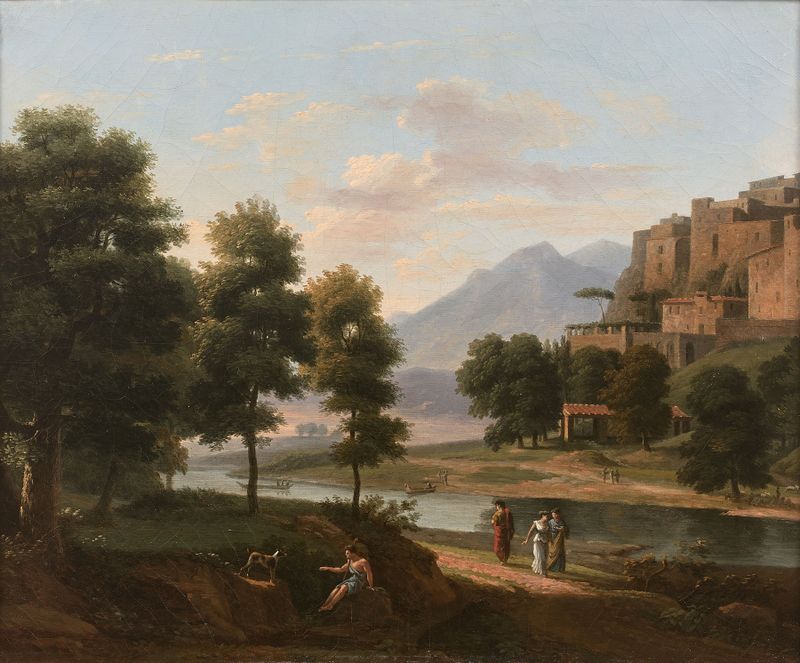
Paysage d’Arcadie animé de personnages
Jean-Victor Bertin
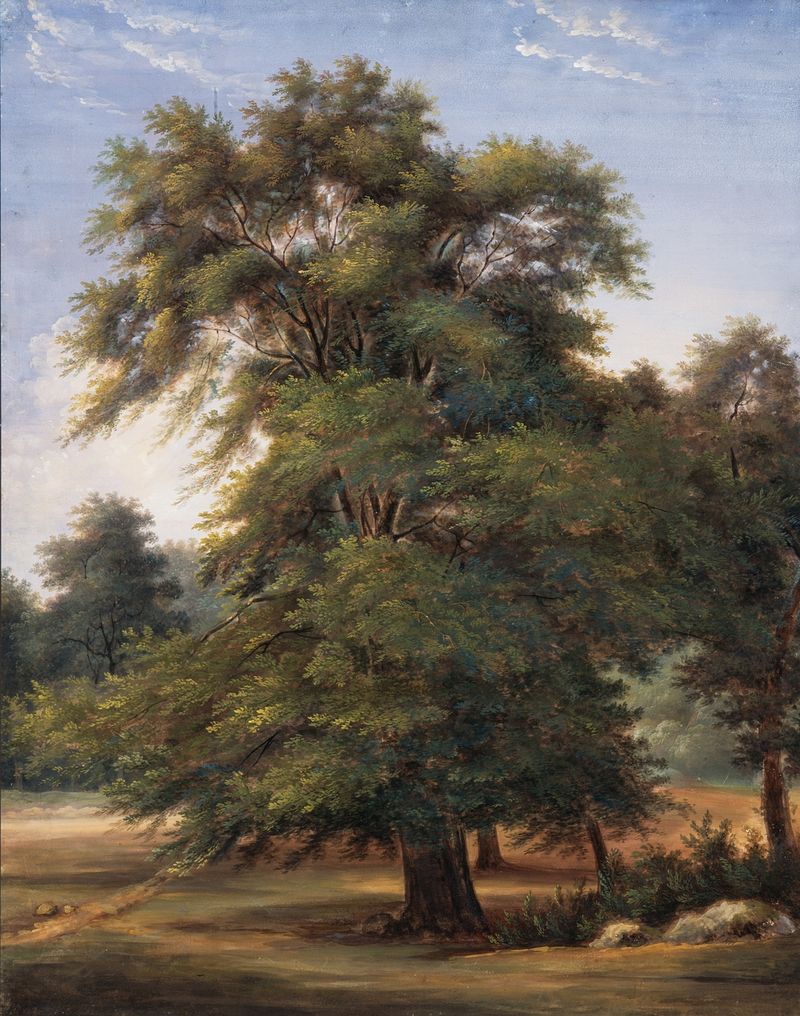
Study of a Tree
Jean-Victor Bertin
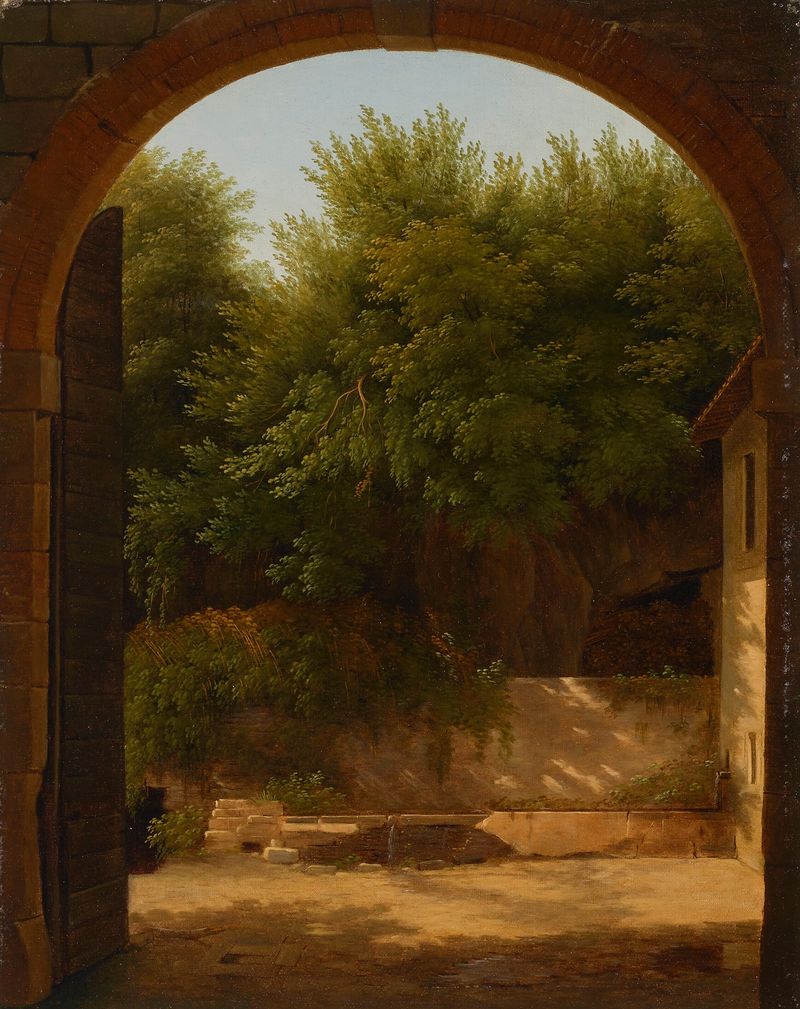
A view of a sunlit courtyard with a trough, seen through an archway
Jean-Victor Bertin
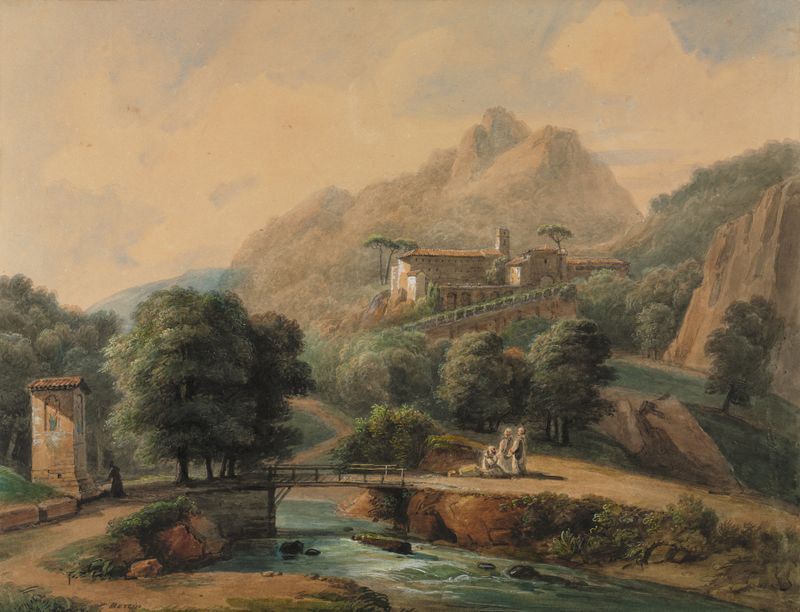
Paysage Italien; L’Abbaye et Les Religieux
Jean-Victor Bertin
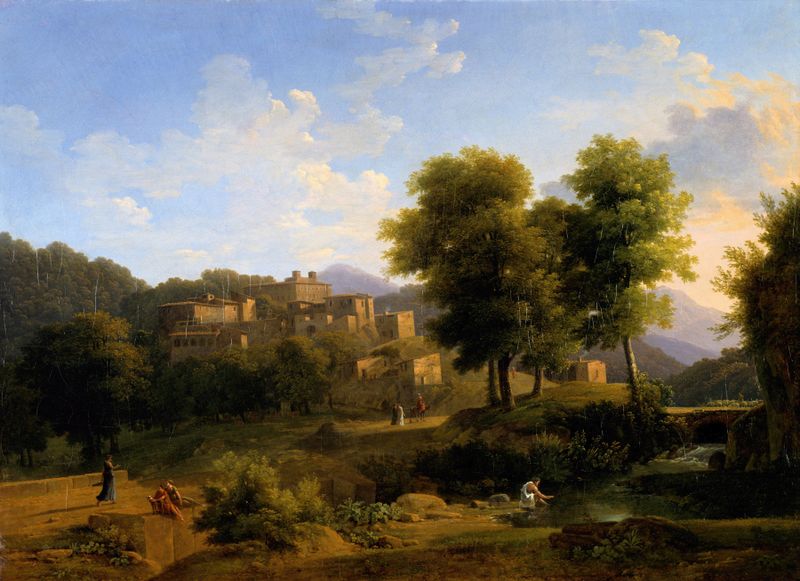
View of a Town in the Sabine Hills
Jean-Victor Bertin