
View of Chimney Rock, Ohalilah Sioux Village in the foreground — History & Facts
What first catches the eye in View of Chimney Rock, Ohalilah Sioux Village in the foreground is the way the sky commands the entire scene—broad, layered clouds part just enough to let shafts of sunlight spill onto the plains, as if the land itself is being quietly revealed. The painter, Albert Bierstadt, draws you into a world where the drama is not in action, but in atmosphere: the soft golden light bathes the clustered tipis, picking out the figures in red and ochre, and glancing off the water where horses and a dog wade. Each detail is a deliberate invitation—the distant Chimney Rock, rising like a monument at the horizon, anchors the eye and gives the landscape a sense of both scale and destination.
The scene is calm, but not empty: people gather, ride, and tend to daily tasks, their gestures suggesting a rhythm of life that is both communal and deeply connected to place. Painted in 1860, this work belongs to the era when American artists like Bierstadt were traveling west to capture landscapes that many in the East had never seen. Such paintings were often made for audiences hungry for images of the frontier, and they blend careful observation with a sense of spectacle. The presence of the Ohalilah Sioux village in the foreground reflects a period when Indigenous life was still a living reality on these lands, even as westward expansion threatened profound change.
Now held by the Colby College Museum of Art, the painting stands as a record of both a specific time and a broader cultural moment—one that asks viewers to look again, not just at the land, but at the lives shaped by it.
More Artworks by Albert Bierstadt

A Storm in the Rocky Mountains, Mt. Rosalie
Albert Bierstadt
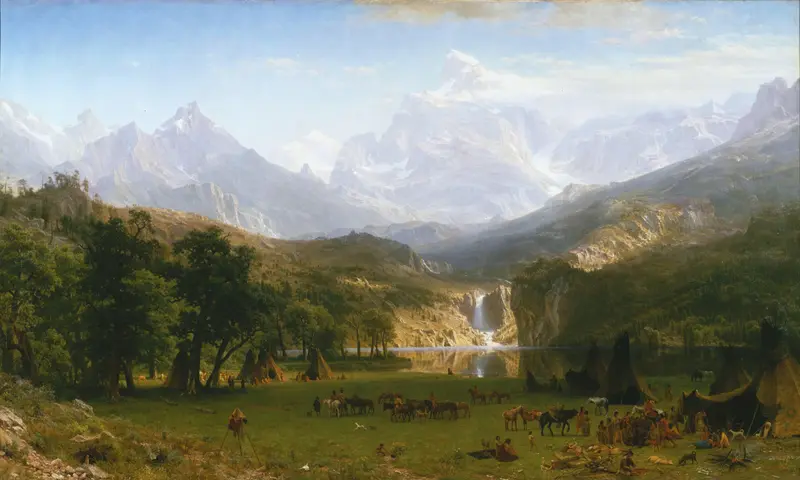
The Rocky Mountains, Lander's Peak
Albert Bierstadt
Niagara from the American Side
Albert Bierstadt
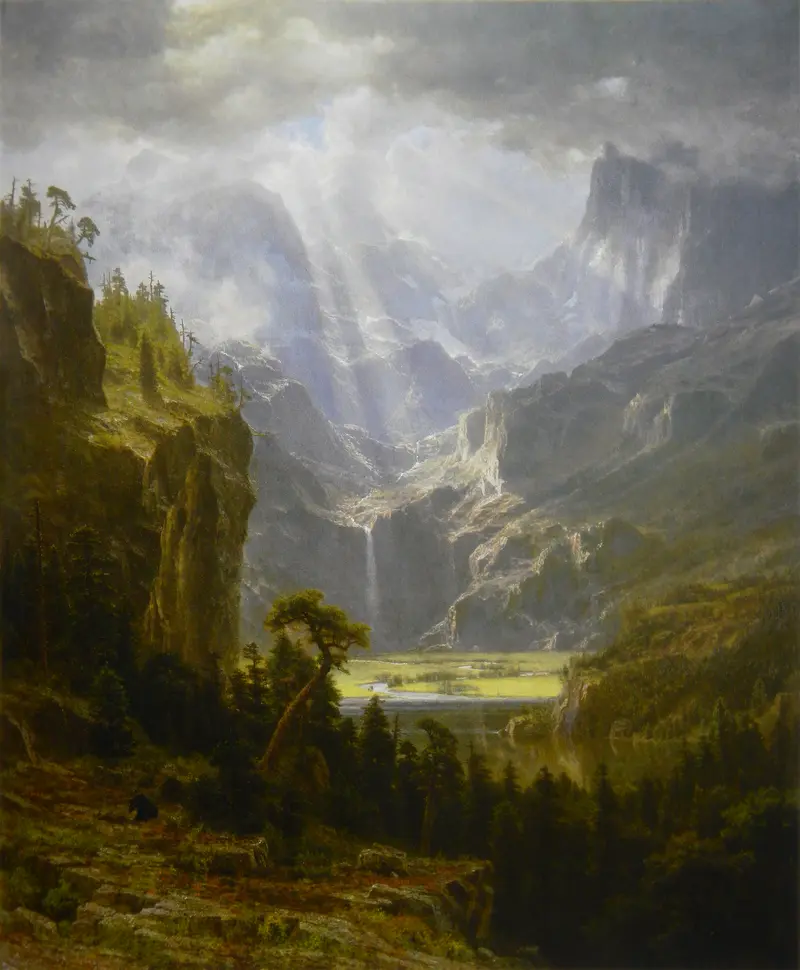
Rocky Mountains, Lander’s Peak
Albert Bierstadt

Valley of the Yosemite
Albert Bierstadt
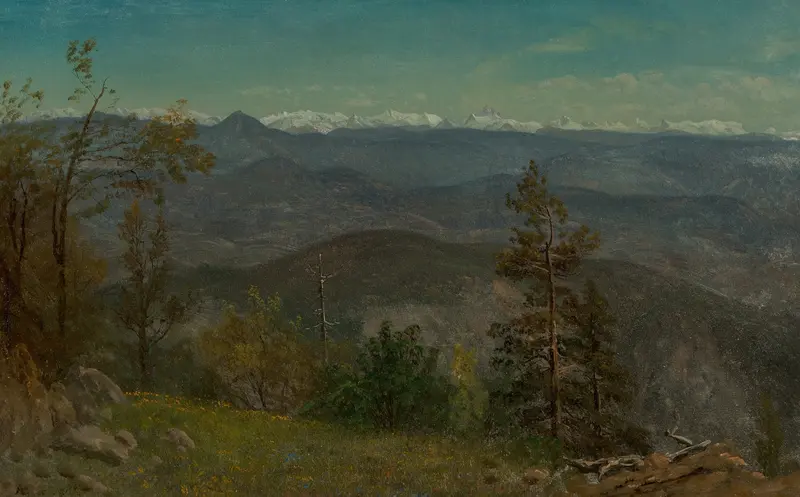
Yosemite Valley, California
Albert Bierstadt
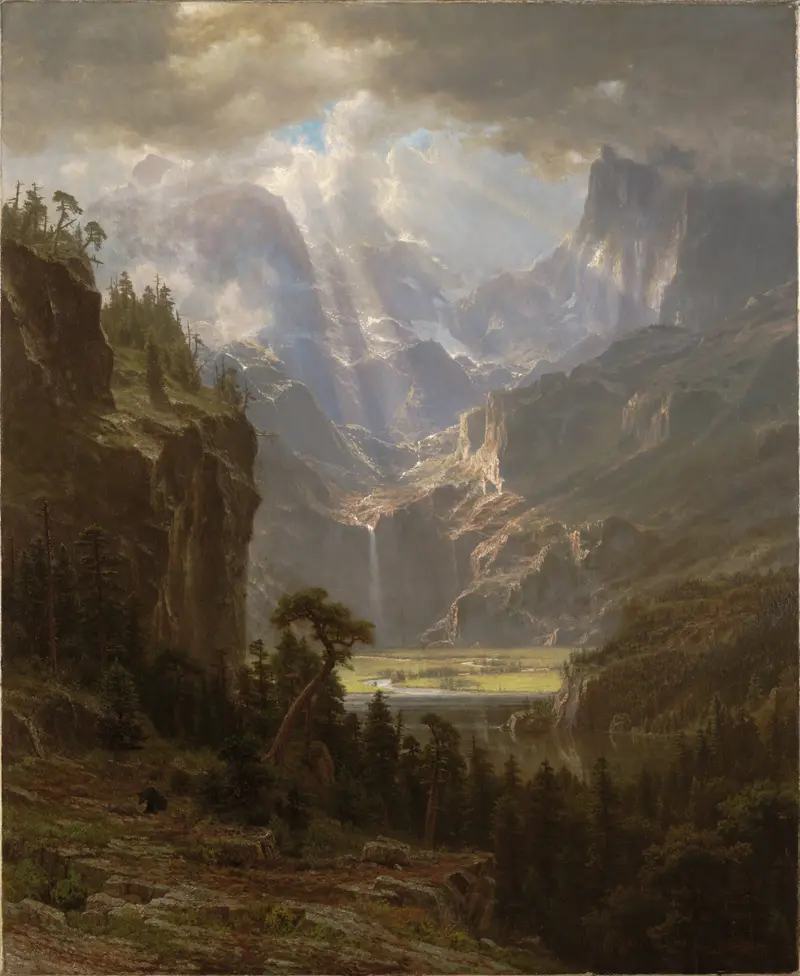
Rocky Mountains, "Lander's Peak"
Albert Bierstadt

Laramie Peak
Albert Bierstadt
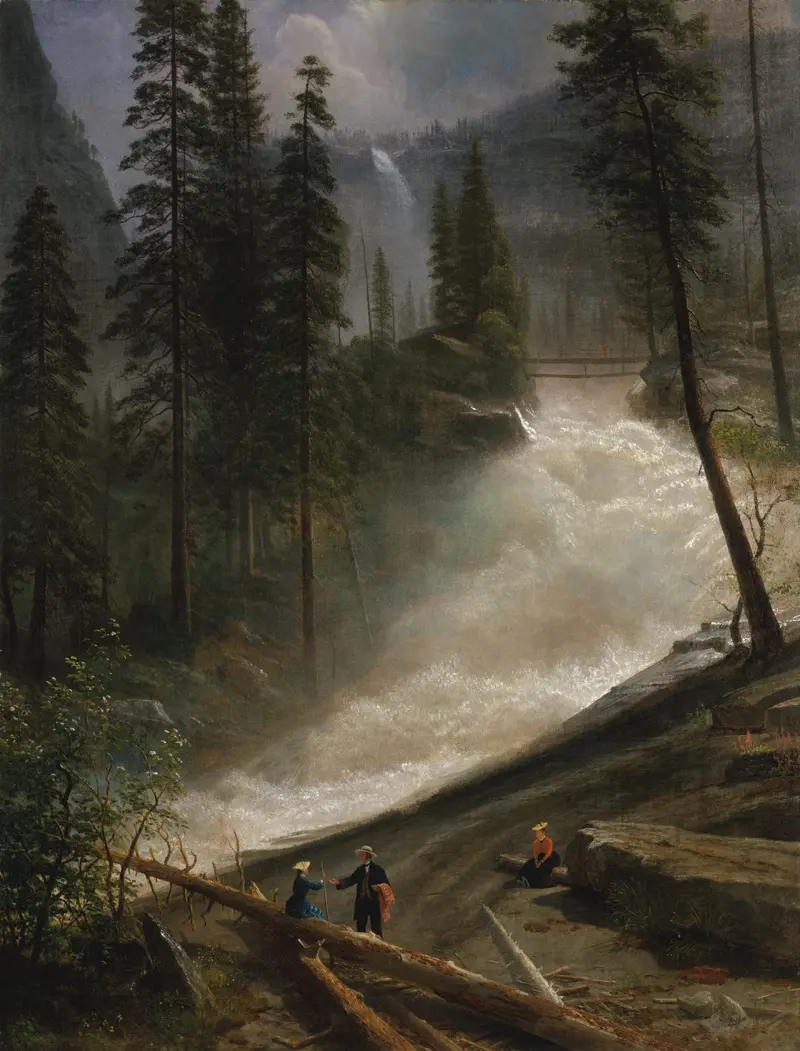
Nevada Falls, Yosemite
Albert Bierstadt
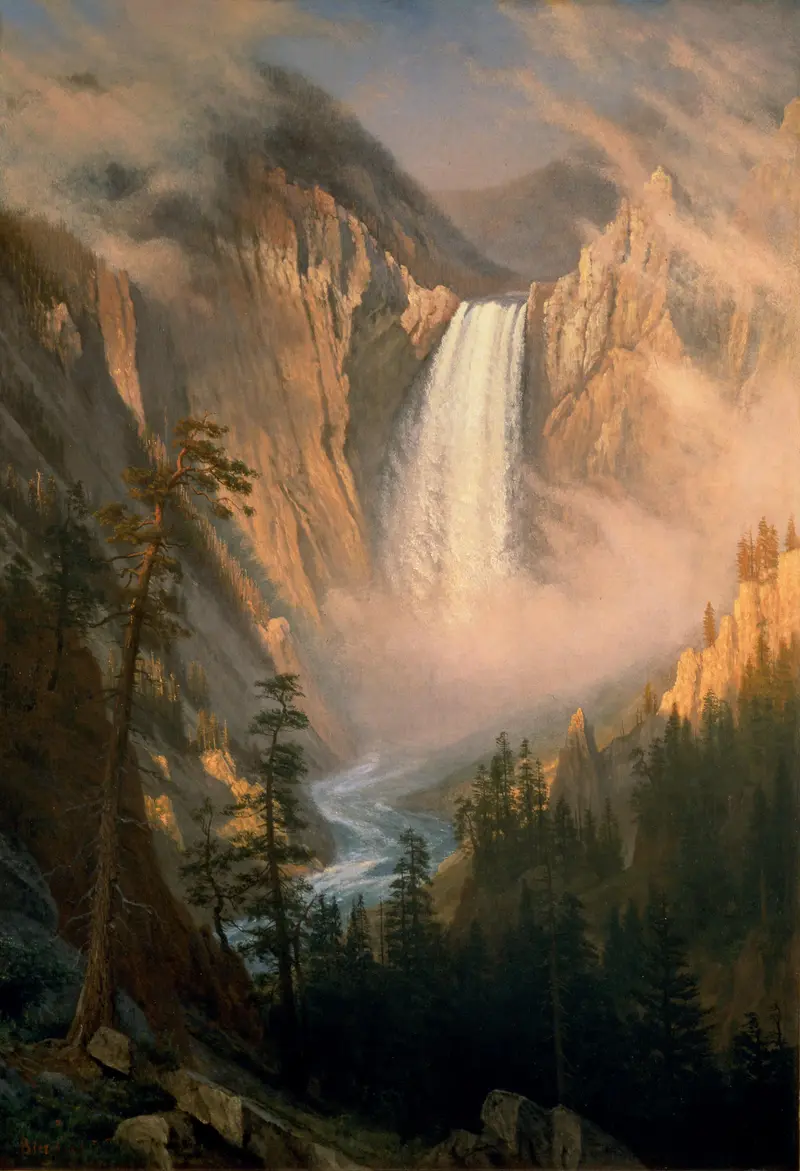
Yellowstone Falls
Albert Bierstadt
More Landscape Art

The Starry Night
Vincent van Gogh

View of Delft
Johannes Vermeer

Water Lilies
Claude Monet

The Grand Canal, Venice, looking north-west from the Ca' Corner to the Ca' Contarini degli Scrigni, with the campanile of Santa Maria della Carità
Canaletto

Windsor Castle
Canaletto

The Grand Canal looking North-East from the Palazzo Dolfin-Manin to the Rialto Bridge
Canaletto