
View of Dam Square, with the Old Weigh House — History & Facts
What first catches the eye in View of Dam Square, with the Old Weigh House is the sense of a city in motion, bathed in the golden light of a Dutch afternoon. The monumental forms of Amsterdam’s Stadhuis and the old Waag anchor the composition, their facades catching the sun and casting long shadows that stretch across the bustling square. Look closer: the painter, Abraham Storck, fills the scene with a lively cast—merchants, townsfolk, dogs, and even a carriage drawn by a pair of horses—each figure carefully placed to guide the viewer’s gaze deeper into the everyday theater of 17th-century urban life.
The sky, vast and luminous, opens above it all, lending the square a sense of openness and possibility. This painting belongs to a world where cityscapes were more than records; they were celebrations of civic pride and prosperity. In the Dutch Republic of the 1670s, such works were often commissioned by wealthy burghers or city officials eager to display the order and grandeur of their environment. The year 1675, as noted in the collection record, places this painting at the height of Amsterdam’s Golden Age, a period when the city’s architecture and public spaces were symbols of its economic and cultural ascendancy.
History has kept few traces of this specific canvas’s journey, but in its careful rendering of buildings and people, it invites us to step into the square and imagine ourselves among the crowd.
More Artworks by Abraham Storck

The Muscovite legation visiting Amsterdam, 29 August 1697
Abraham Storck
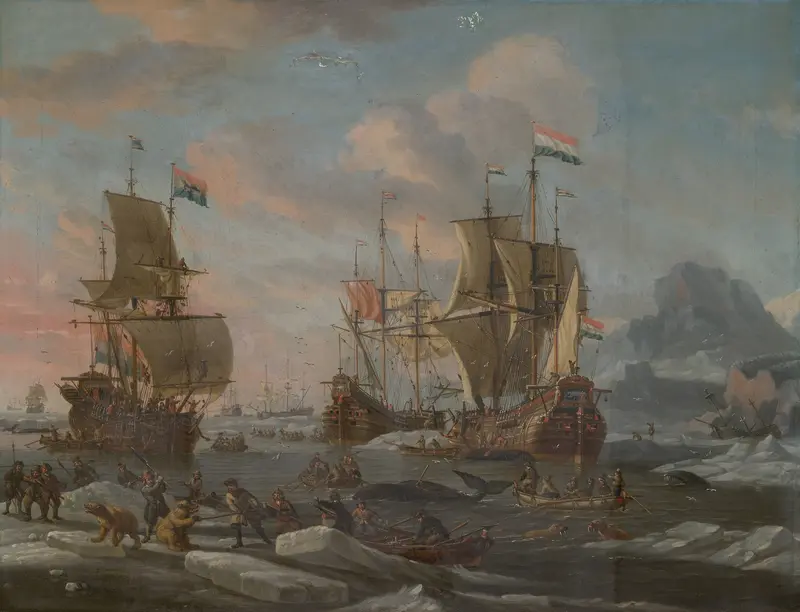
The Dutch Whaling Fleet
Abraham Storck
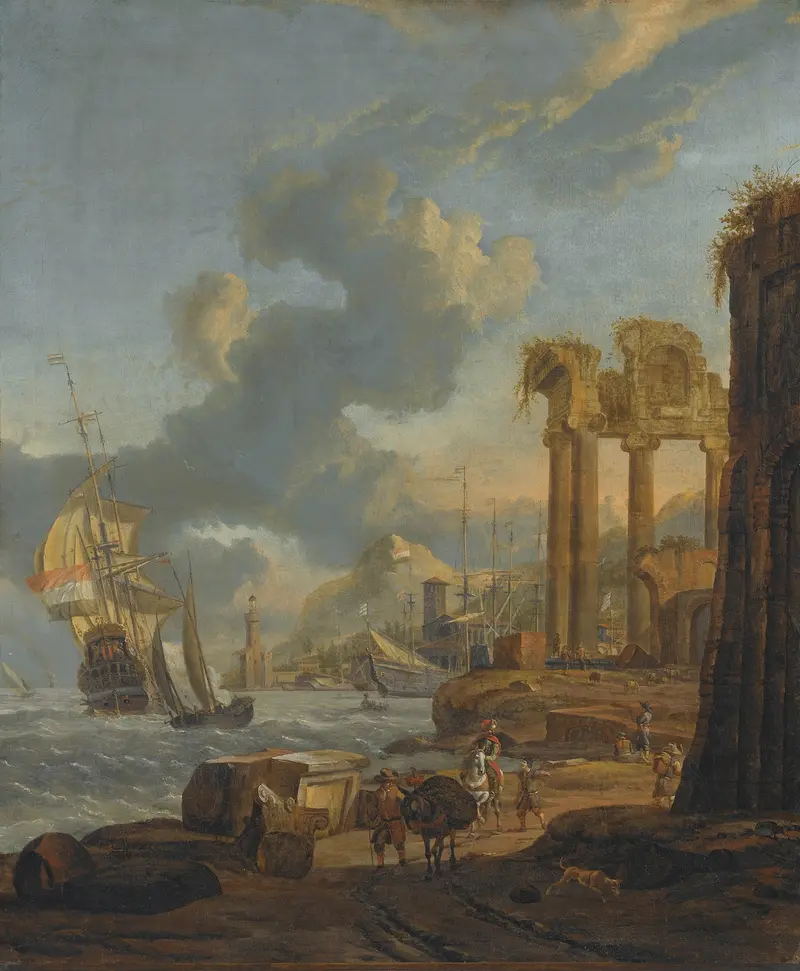
A Mediterranean Harbour Scene With Travellers On The Shore, A Dutch Man-Of-War On The Left
Abraham Storck
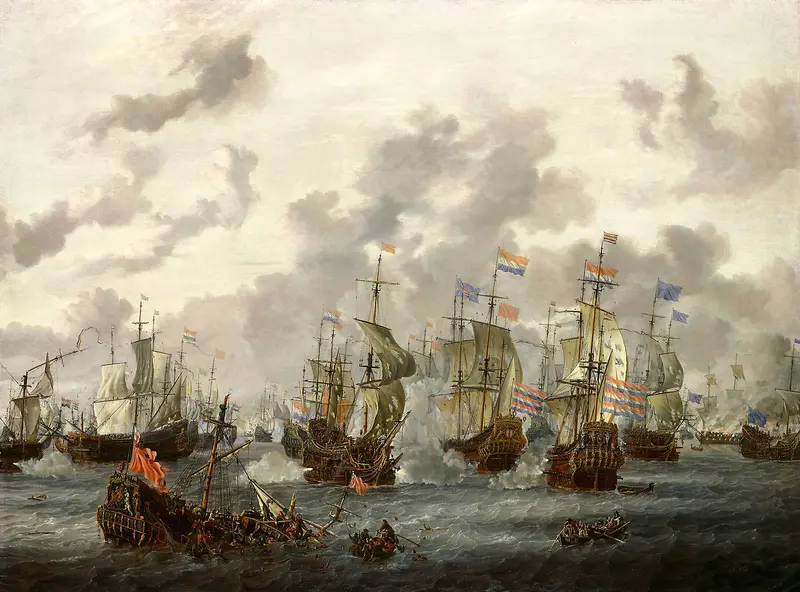
The Four Days’ Battle
Abraham Storck
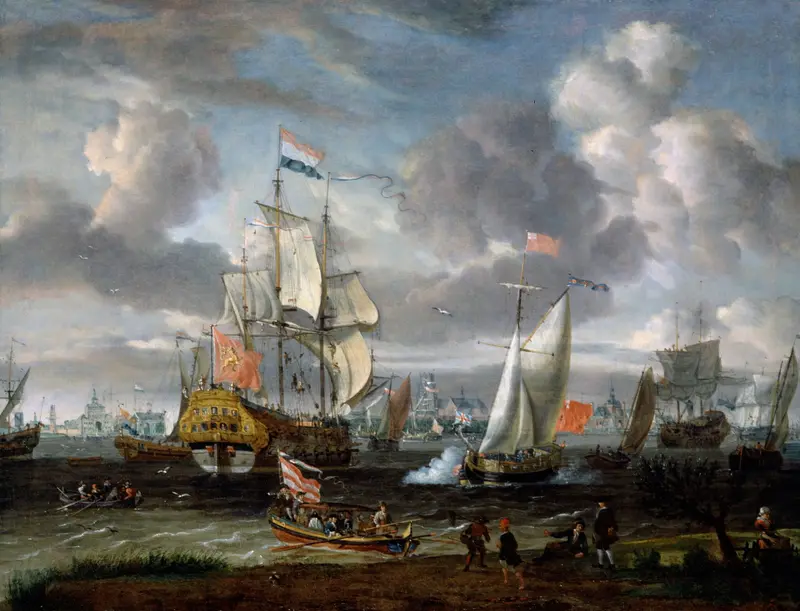
An English Yacht saluting a Dutch Man-of-War in the port of Rotterdam
Abraham Storck
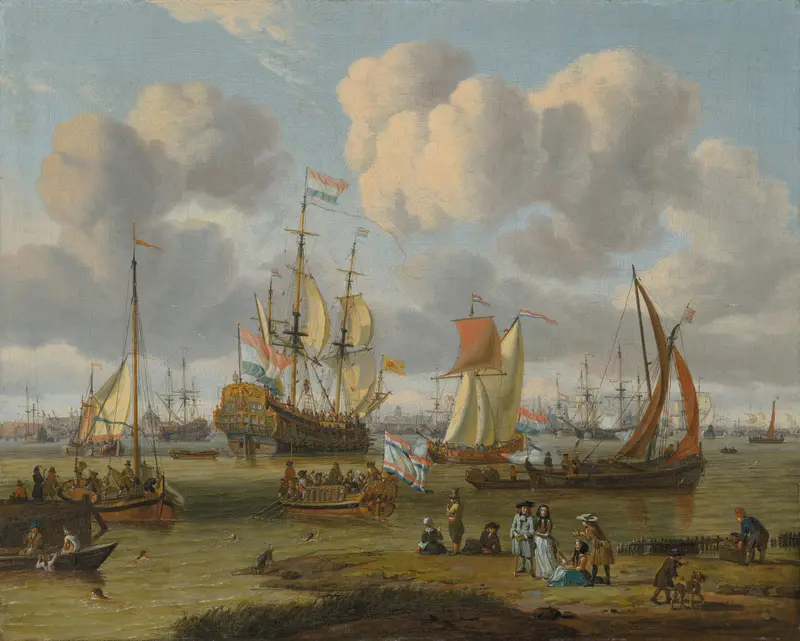
Shipping off Amsterdam with figures on a quay
Abraham Storck
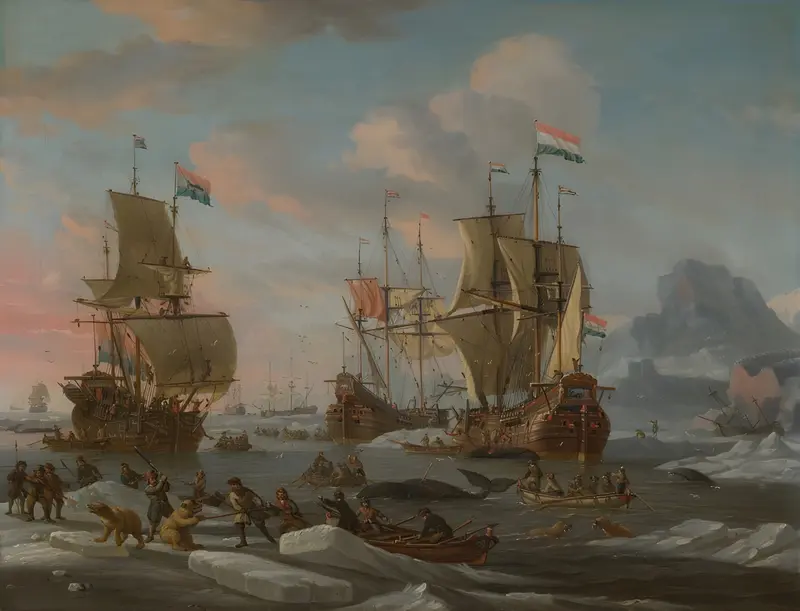
The Dutch Whaling Fleet
Abraham Storck
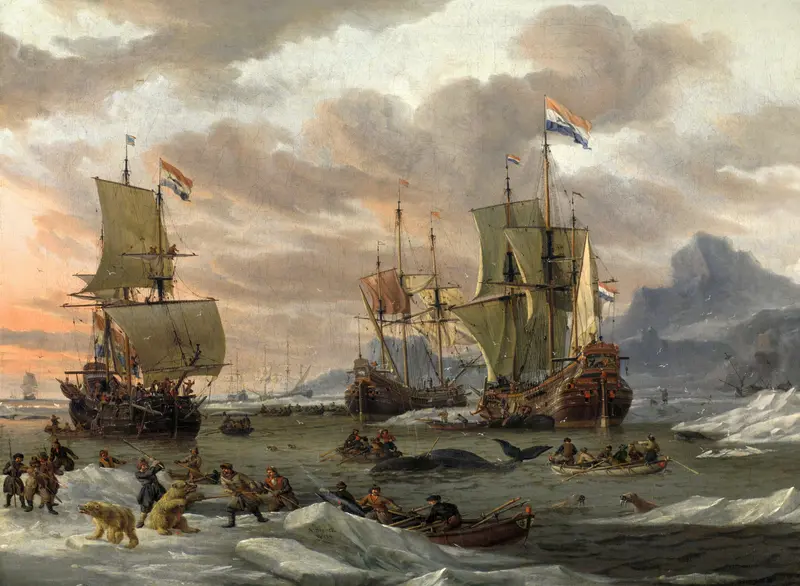
Whaling Grounds in the Arctic Ocean
Abraham Storck
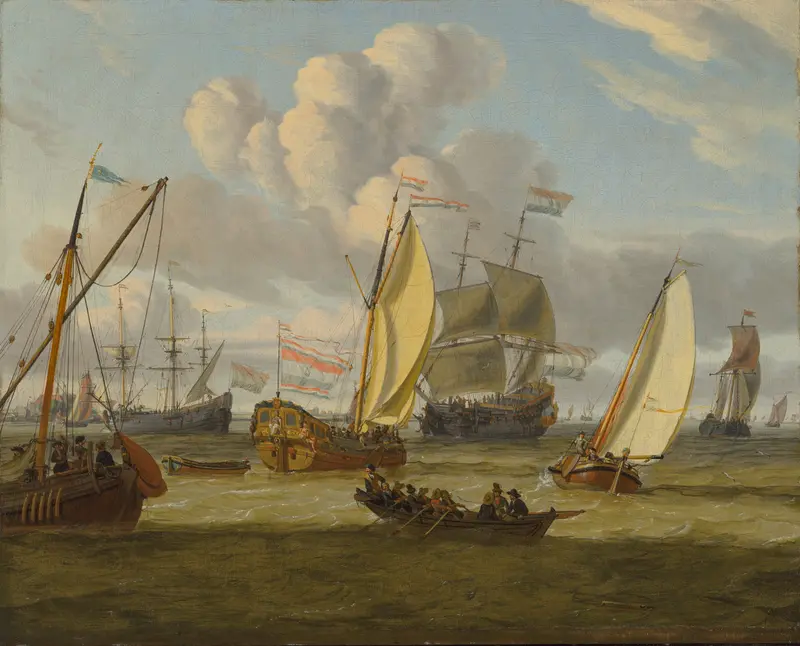
Shipping in an estuary
Abraham Storck
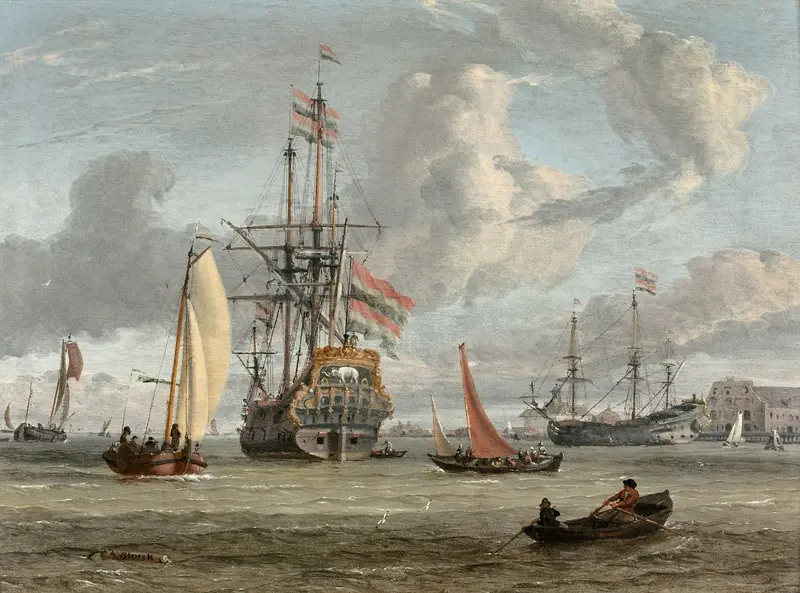
Grand navire de la couronne du Danemark près d’un littoral
Abraham Storck
More Landscape Art

The Starry Night
Vincent van Gogh

View of Delft
Johannes Vermeer

Water Lilies
Claude Monet

The Grand Canal, Venice, looking north-west from the Ca' Corner to the Ca' Contarini degli Scrigni, with the campanile of Santa Maria della Carità
Canaletto

Windsor Castle
Canaletto

The Grand Canal looking North-East from the Palazzo Dolfin-Manin to the Rialto Bridge
Canaletto