
View of Glacier Park — History & Facts
The first thing to catch the eye in View of Glacier Park is the way the mountain’s golden crown rises, almost ablaze, from the shadowed valley below. The painter, Albert Bierstadt, sets the drama with a sharp contrast: the foreground is a deep, mysterious green, nearly black, while the distant peak glows with the last or first touch of sunlight. The viewer’s gaze is pulled upward and inward, funneled through the dark silhouettes of the valley walls, until it rests on the illuminated summit.
The effect is both an invitation and a challenge—nature’s grandeur revealed, but only at a distance, and only for a moment. This painting belongs unmistakably to the nineteenth century, when American artists like Bierstadt made their names by capturing the vast, unspoiled landscapes of the West. Such works were more than decoration; they were arguments in paint, celebrating the continent’s natural wonders at a time when the idea of national parks was just beginning to take hold. View of Glacier Park now resides in the Whitney Gallery of Western Art, a fitting home for a vision shaped by the era’s fascination with exploration and discovery.
In a world where so much has changed, this painting invites us to linger on the threshold between shadow and light, and to imagine what lies beyond the mountains.
More Artworks by Albert Bierstadt

A Storm in the Rocky Mountains, Mt. Rosalie
Albert Bierstadt
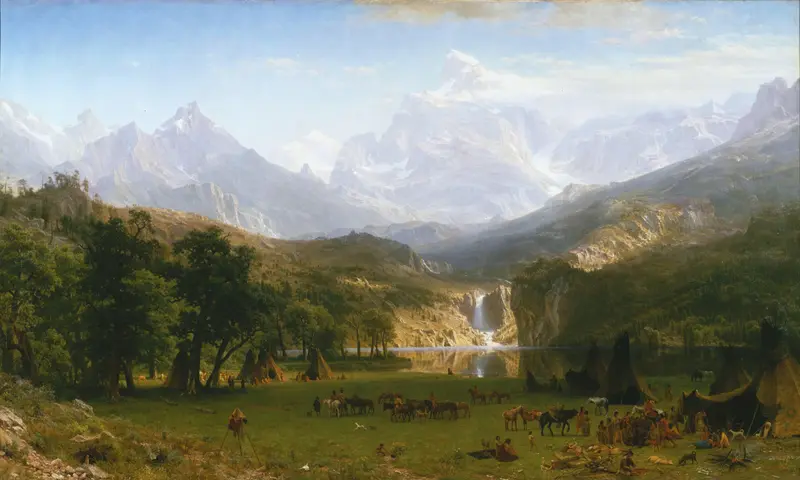
The Rocky Mountains, Lander's Peak
Albert Bierstadt
Niagara from the American Side
Albert Bierstadt
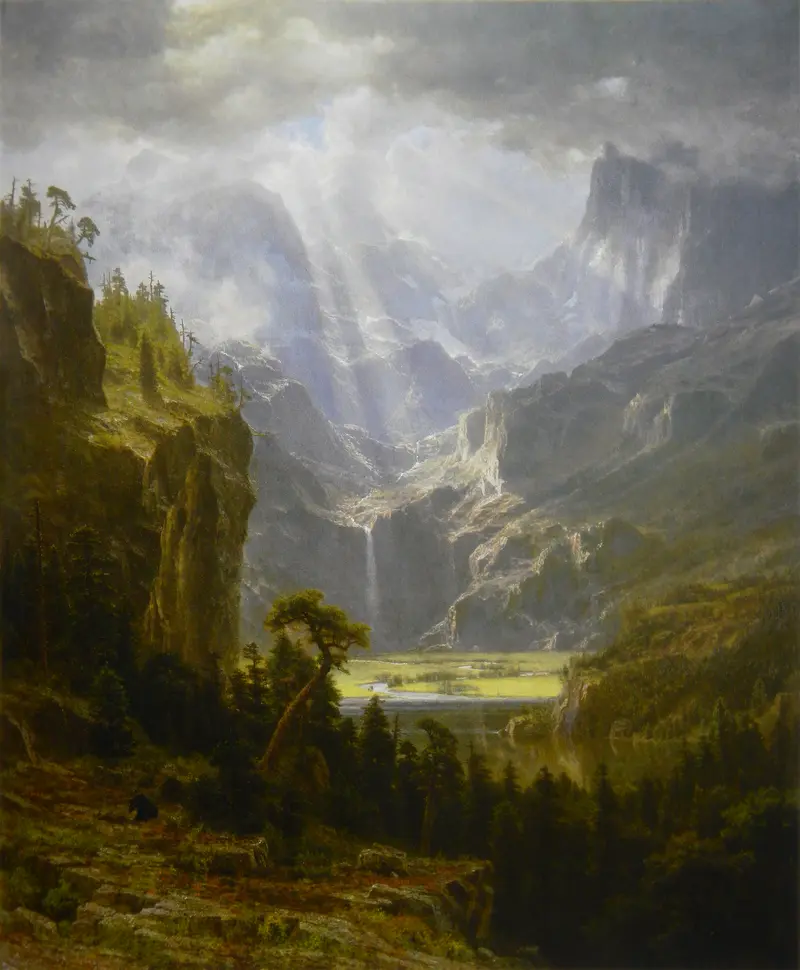
Rocky Mountains, Lander’s Peak
Albert Bierstadt

Valley of the Yosemite
Albert Bierstadt
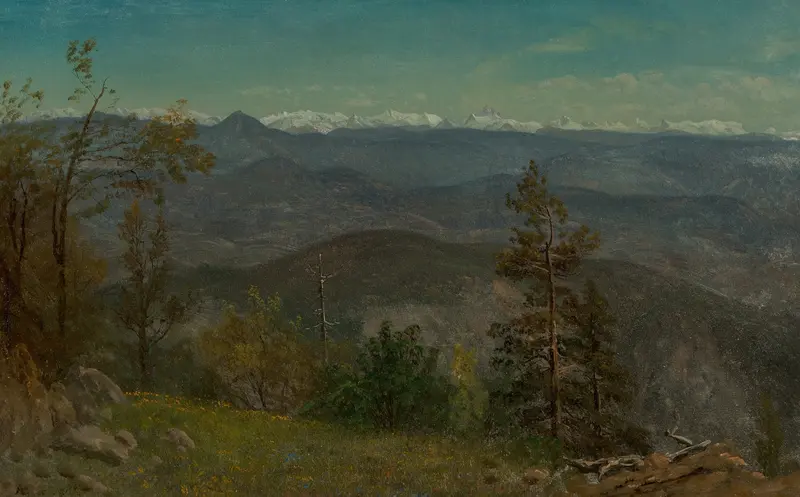
Yosemite Valley, California
Albert Bierstadt
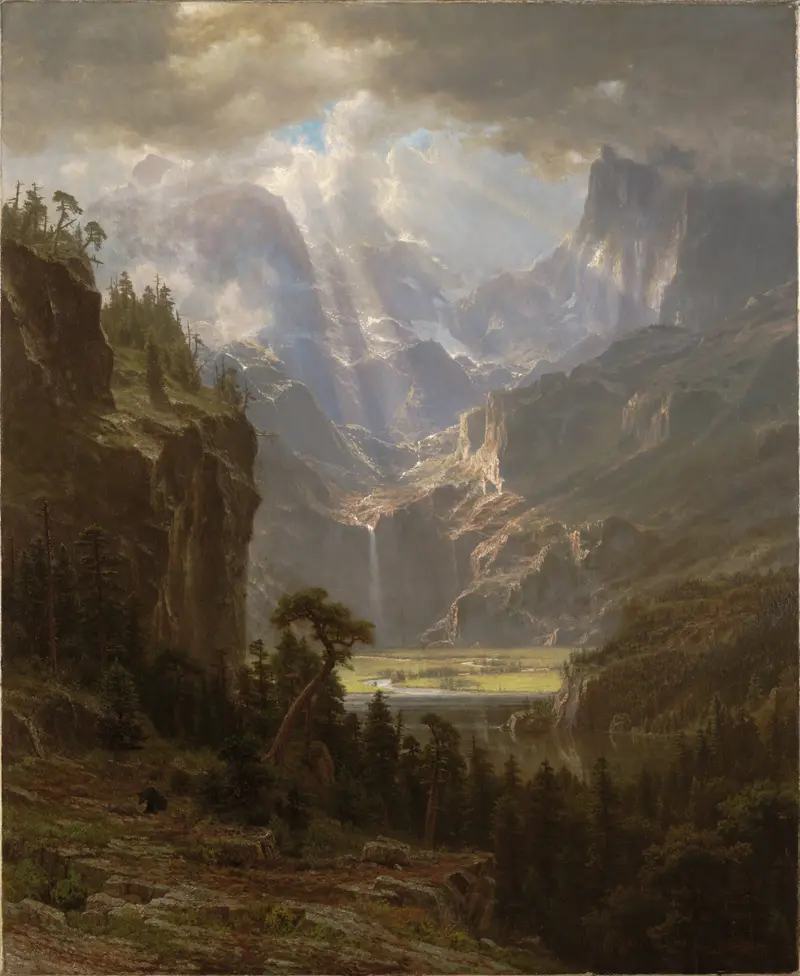
Rocky Mountains, "Lander's Peak"
Albert Bierstadt

Laramie Peak
Albert Bierstadt
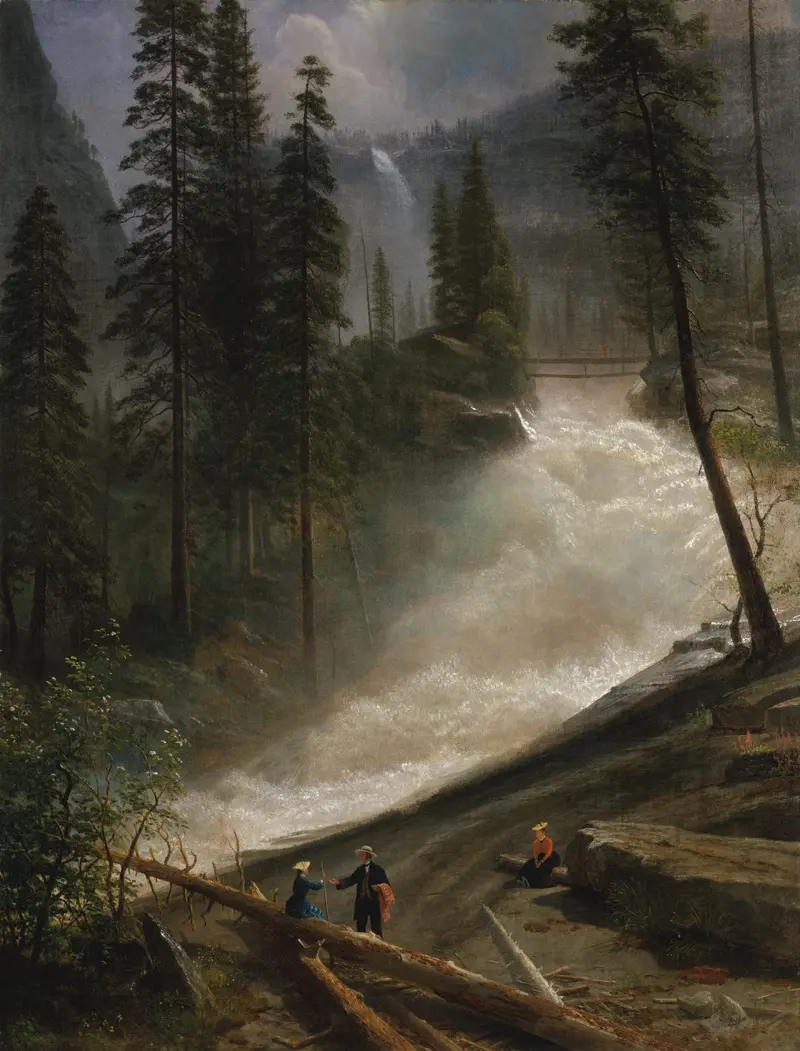
Nevada Falls, Yosemite
Albert Bierstadt
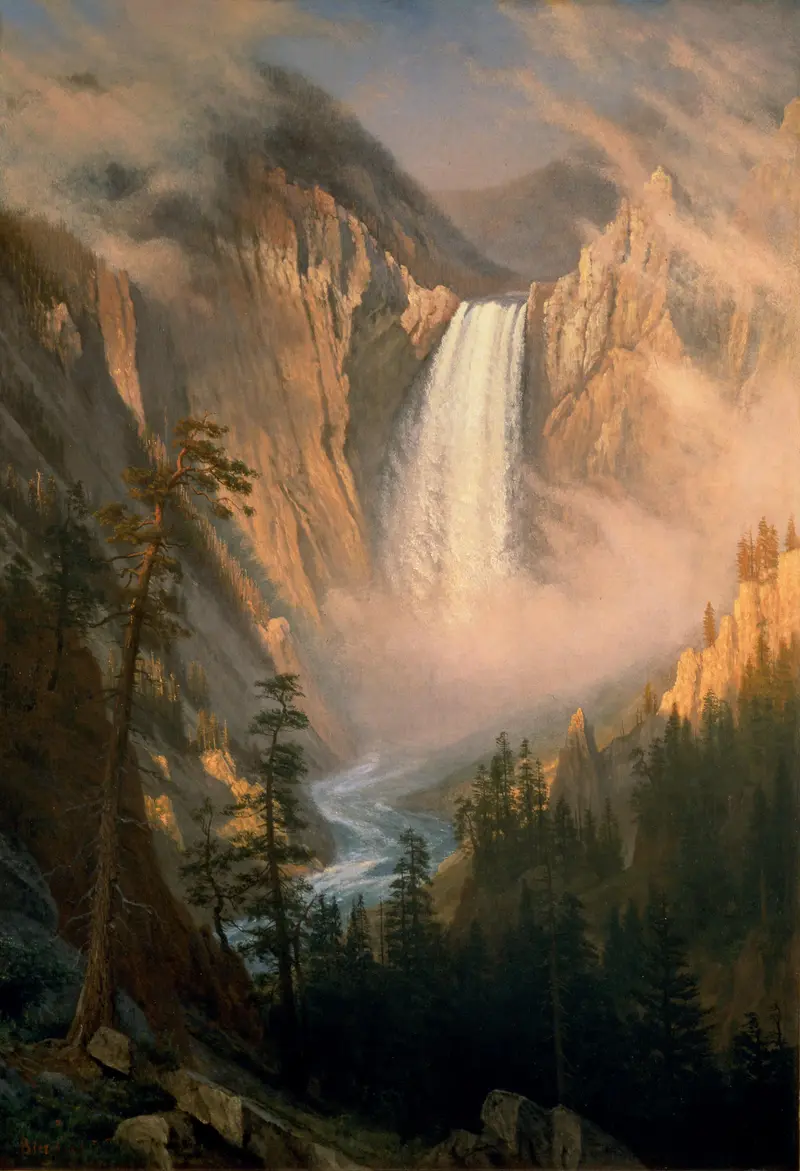
Yellowstone Falls
Albert Bierstadt
More Landscape Art

The Starry Night
Vincent van Gogh

View of Delft
Johannes Vermeer

Water Lilies
Claude Monet

The Grand Canal, Venice, looking north-west from the Ca' Corner to the Ca' Contarini degli Scrigni, with the campanile of Santa Maria della Carità
Canaletto

Windsor Castle
Canaletto

The Grand Canal looking North-East from the Palazzo Dolfin-Manin to the Rialto Bridge
Canaletto