
View of Pont-du-Chateau — History & Facts
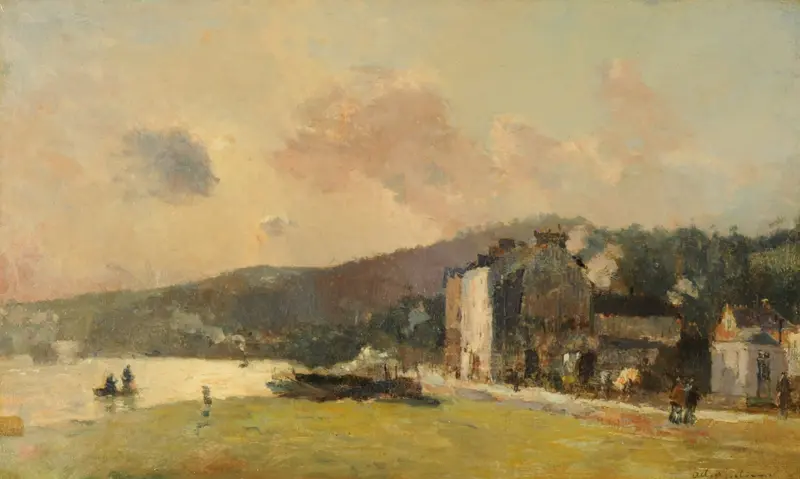
What first catches the eye in View of Pont-du-Chateau is the sweep of the river, its pale, shifting surface guiding us through the heart of a town that seems to emerge from the landscape itself. The old bridge anchors the composition, its arches mirrored in the water, while the brushwork dissolves the edges of buildings and banks into a haze of muted blues and ochres. There is no single focal point; instead, the viewer is drawn along the embankment, across rooftops, and out toward the vast, cloud-heavy sky, which dominates the upper half of the canvas and sets the mood—quiet, contemplative, almost suspended in time.
Lebourg’s loose handling of paint invites us to linger, to notice how the town’s geometry softens into atmosphere, how the river becomes both boundary and lifeline. Painted in 1885, this work belongs to a period when artists across France were reimagining the landscape, not as a backdrop for grand events but as a living subject in its own right. The Impressionist movement had already opened the door to scenes like this, where the play of light and weather became as important as the architecture or the people. Little is recorded about this specific painting’s journey, and its medium is not documented, but its presence in an online collection today is a testament to the enduring appeal of such views.
The town of Pont-du-Chateau may be modest, yet in Lebourg’s hands it becomes a place to pause and look again—at the changing sky, the winding river, and the quiet persistence of everyday life.
More Artworks by Albert Charles Lebourg

Le Jardin du Docteur Viau
Albert Charles Lebourg
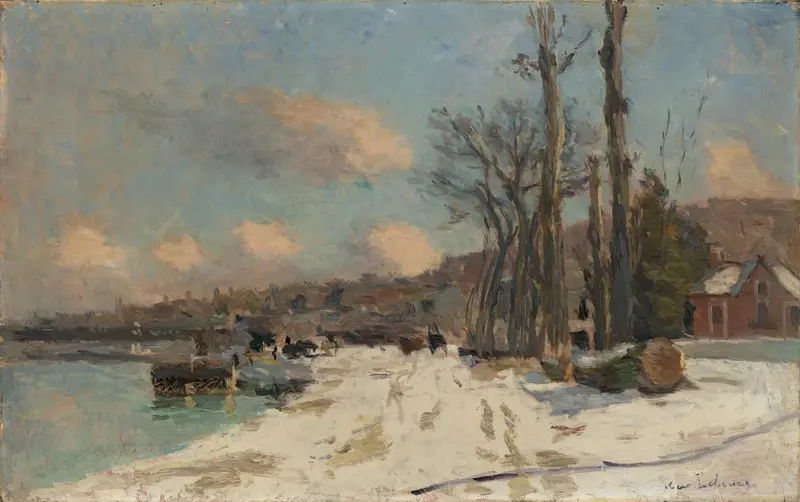
Snow Scene at Bougival
Albert Charles Lebourg
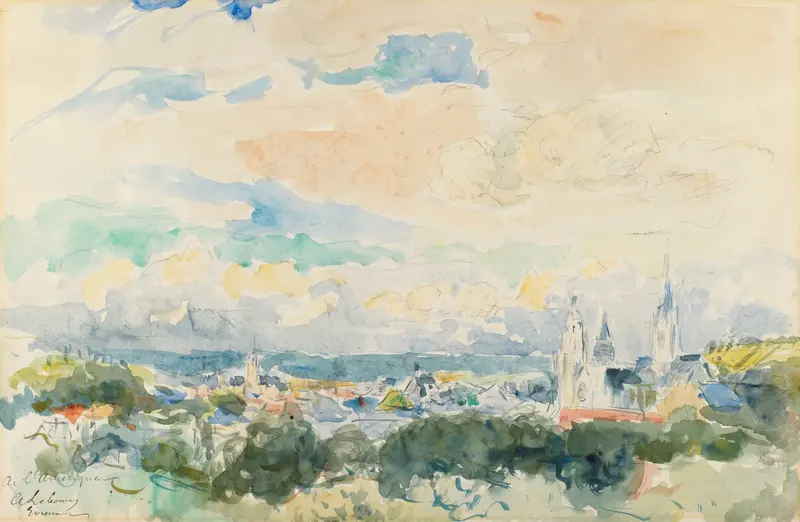
Sketch of a Village
Albert Charles Lebourg
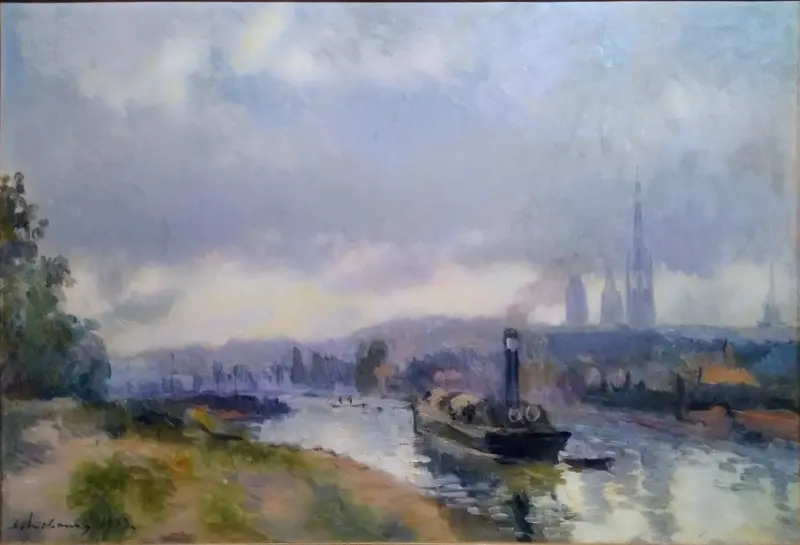
Remorqueurs à Rouen
Albert Charles Lebourg
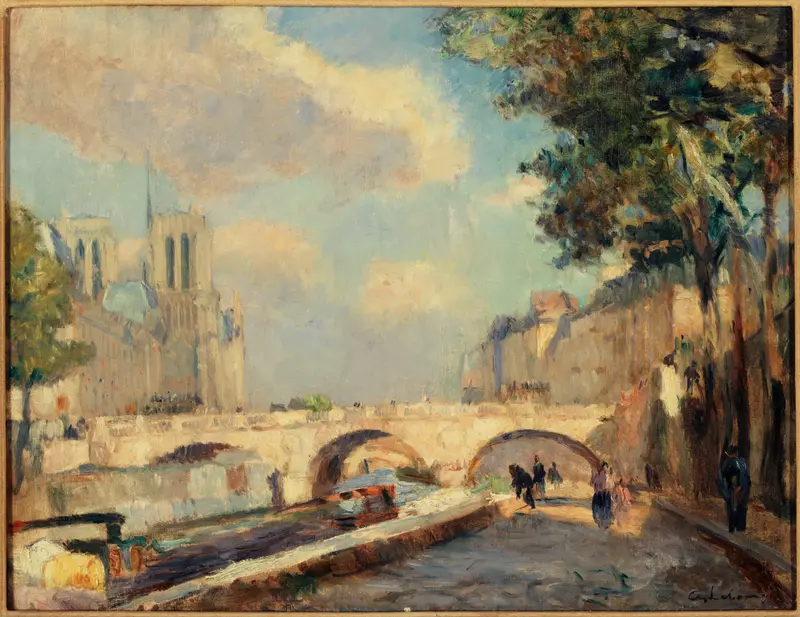
Le pont Saint Michel et Notre Dame, vus du quai des Grands Augustins P459 Musée Carnavalet
Albert Charles Lebourg
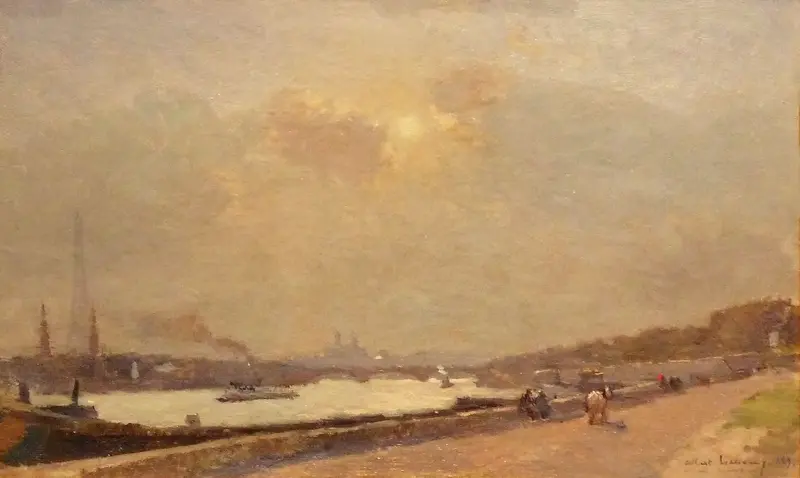
Banks of the Seine, Cours La Reine
Albert Charles Lebourg
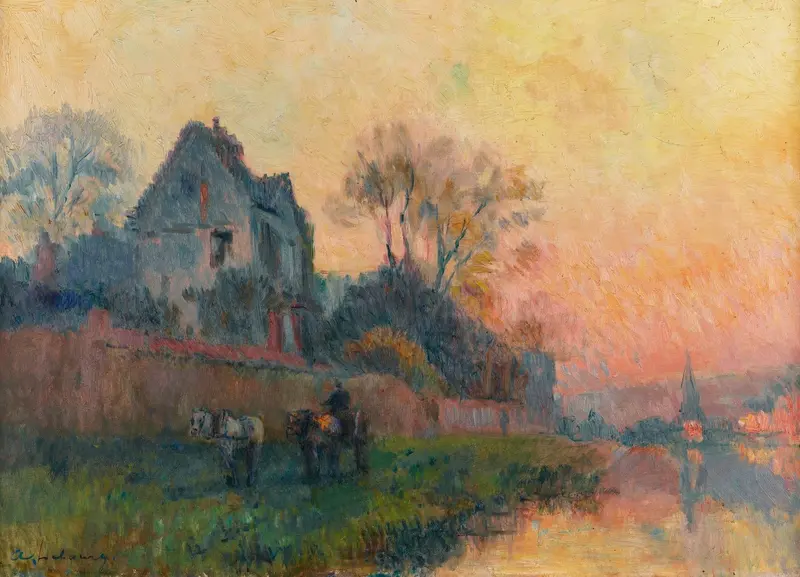
Bords de Seine à Chatou, oil on canvas, 46.4 by 65.1cm, 18.25 by 25.6 in
Albert Charles Lebourg
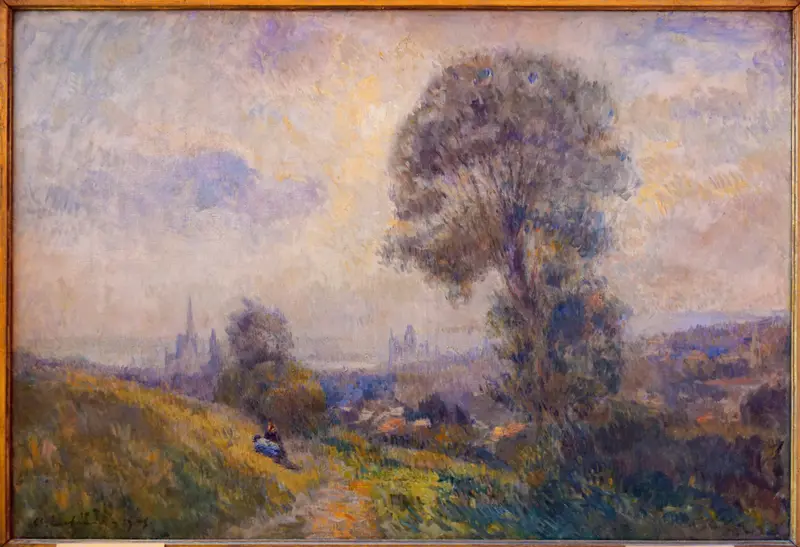
Camaret. The Harbor During a Thunderstorm
Albert Charles Lebourg
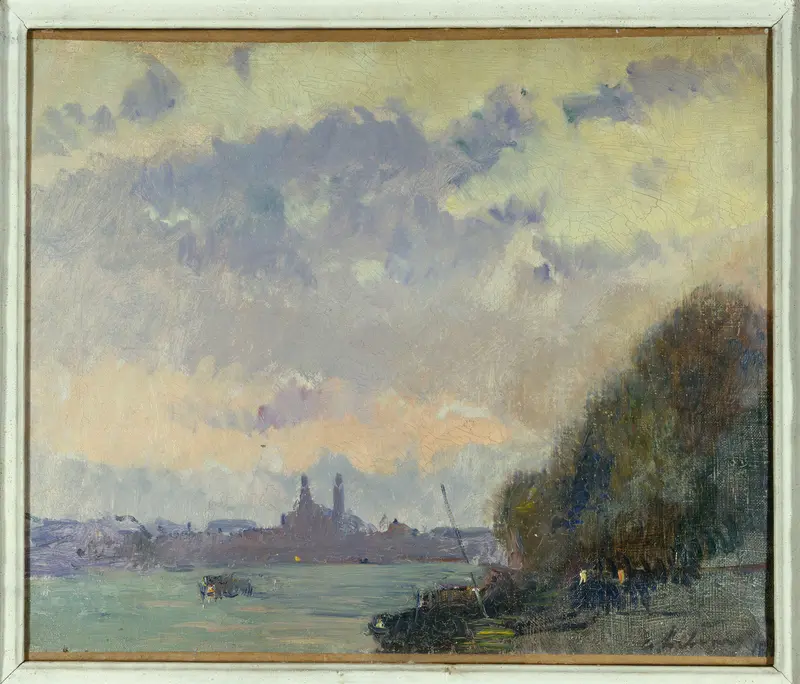
La Seine et l'ancien Trocadéro P2269 Musée Carnavalet
Albert Charles Lebourg
La Seine à Croisset, près de Rouen
Albert Charles Lebourg
More Landscape Art

The Starry Night
Vincent van Gogh

View of Delft
Johannes Vermeer

Water Lilies
Claude Monet

The Grand Canal, Venice, looking north-west from the Ca' Corner to the Ca' Contarini degli Scrigni, with the campanile of Santa Maria della Carità
Canaletto

Windsor Castle
Canaletto

The Grand Canal looking North-East from the Palazzo Dolfin-Manin to the Rialto Bridge
Canaletto