
View of Santiago de Cuba — History & Facts
In the stillness of Winslow Homer’s View of Santiago de Cuba, the vastness of the landscape speaks to a profound sense of emptiness, inviting contemplation of what lies beyond the frame. Look to the left at the striking cerulean waters, where the ocean meets the horizon in a gentle embrace. The sun bathes the scene in warm, golden light, casting delicate shadows across the lush greenery and highlighting the rugged cliffs that stand sentinel over the bay. The composition balances the vibrant blues and greens with earthy tones, guiding your eye through this serene panorama, encouraging a moment of pause and reflection. The fleeting presence of humanity is implied rather than depicted; a solitary sailboat anchors the viewer’s gaze, suggesting the tension between isolation and connection.
The juxtaposition of the tranquil sea against the looming cliffs evokes a sense of longing, a void felt in the absence of figures. This subtle play of elements emphasizes the vastness of the landscape, inviting the viewer to ponder their own relationship to this sprawling, untouched beauty. In 1885, Winslow Homer was in a period of artistic maturation, immersed in his exploration of the American landscape. Having traveled extensively, he was influenced by the natural beauty of his surroundings, seeking to capture the emotional resonance of place.
At this time, the art world was witnessing a shift towards realism and impressionism, yet Homer remained dedicated to the purity of his vision, grounding his work in the honest expression of nature’s splendor.
More Artworks by Winslow Homer
Browse all →
The Gulf Stream
Winslow Homer
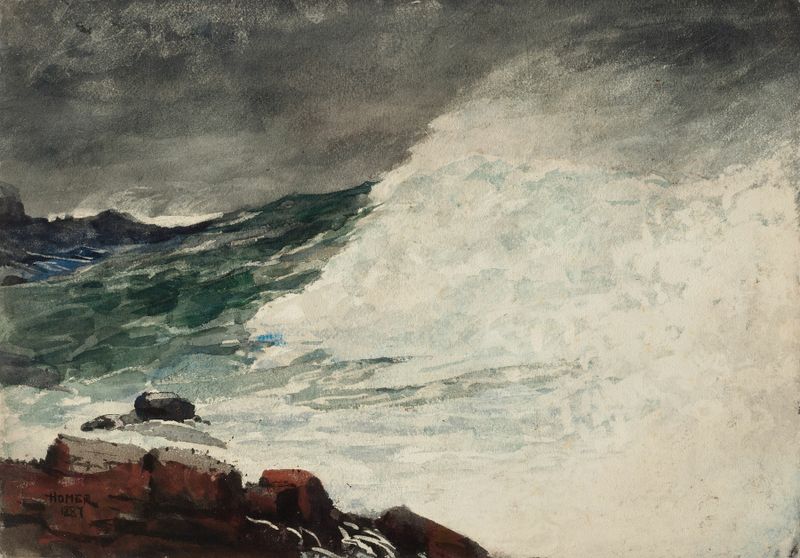
Prout’s Neck, Breaking Wave
Winslow Homer
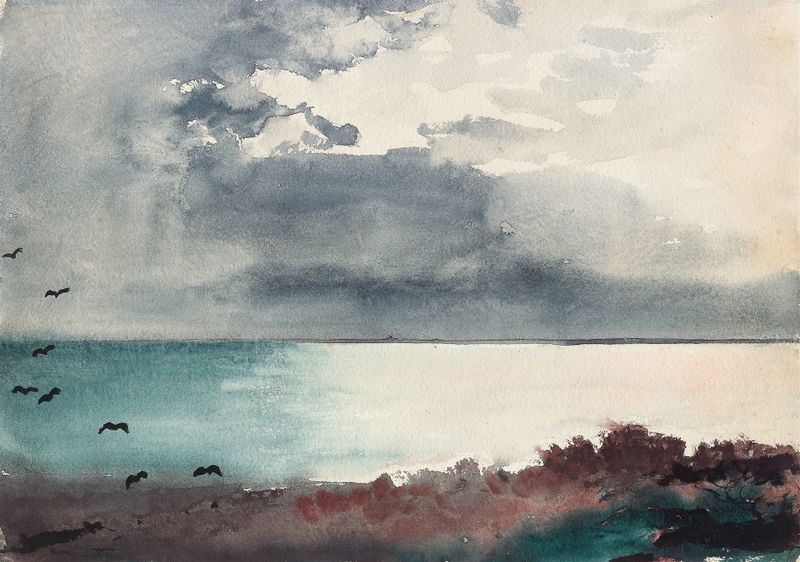
Breaking Storm, Coast of Maine
Winslow Homer
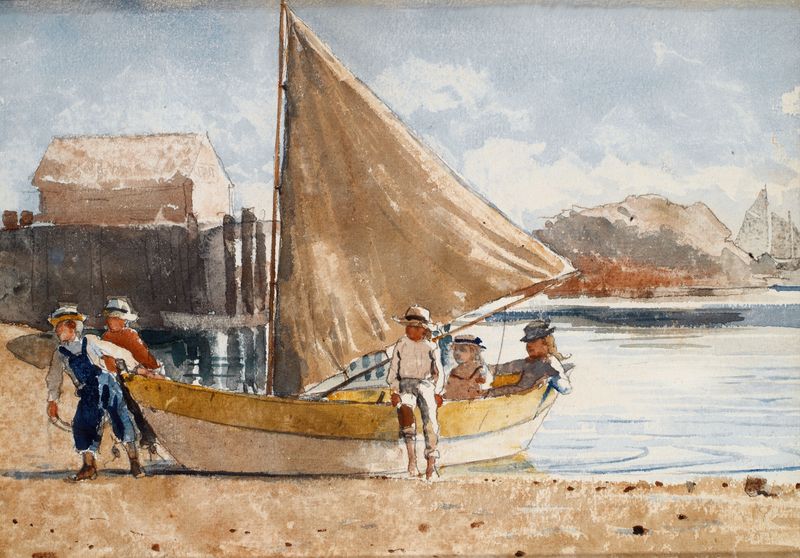
Summertime
Winslow Homer
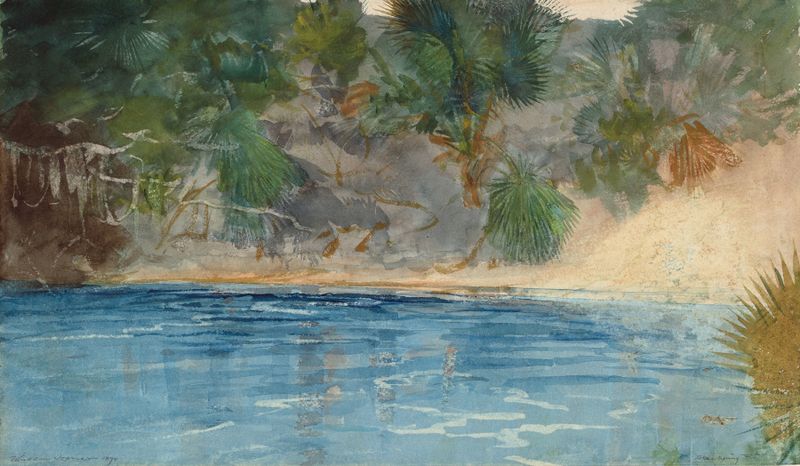
Blue Spring, Florida
Winslow Homer
The Herring Net
Winslow Homer
Sunshine and Shadow, Prout’s Neck
Winslow Homer
Moonlight, Wood Island Light
Winslow Homer
Coast of Maine
Winslow Homer
Bass Fishing – Florida
Winslow Homer





