View of Washington, D.C., looking northwest from southeast of the U.S. Capitol — History & Analysis
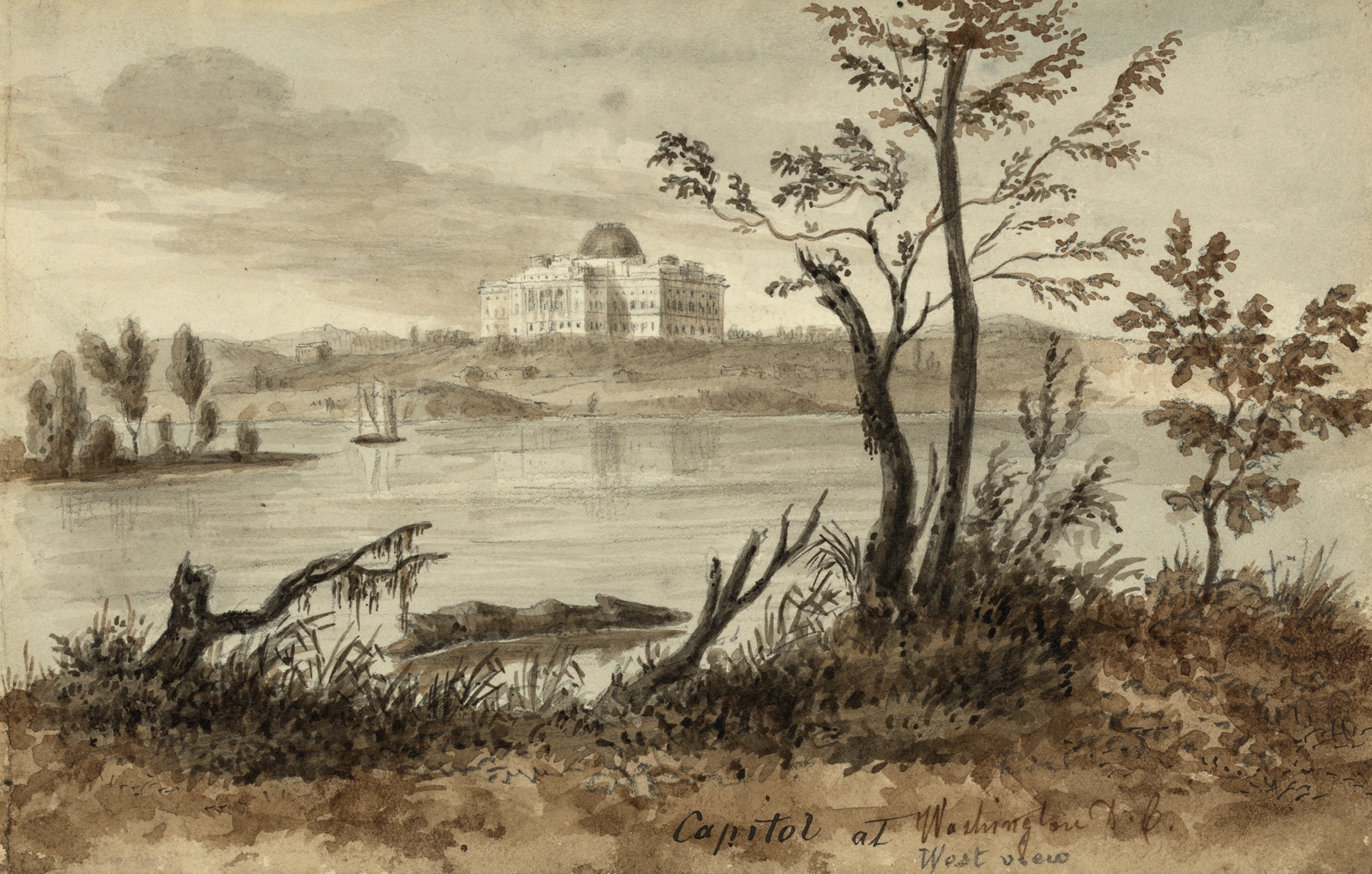
When did color learn to lie? In this haunting landscape, hues of soft blue and muted green dance around a somber truth, whispering stories of a nation still finding its way. Through the veil of tranquil beauty lies a deeper, melancholic pulse—one that resonates with the weight of history. Focus on the expansive sky, where wisps of clouds swirl delicately, framing the majestic Capitol building in the distance.
The artist’s careful brushwork captures the serenity of the scene, while the delicate gradations of color evoke the quietly shifting tides of time. Notice how the light bathes the foreground, illuminating the subtle details of trees and pathways, inviting the viewer to linger in this moment that feels both timeless and transient. Yet beneath this picturesque veneer lies a tension between progress and nostalgia. The Capitol, a symbol of democracy and ambition, rises nobly, yet its imposing presence casts a shadow over the surrounding landscape, suggesting the burdens of governance.
The quiet, almost melancholic undertones find resonance in the stillness of the water and the muted colors, reflecting the paradox of a burgeoning nation grappling with its identity. Augustus Köllner painted this piece between 1846 and 1855, during a time when the United States was undergoing significant transformation. Living in Washington, D.C., he witnessed first-hand the political and social changes shaping the nation. This artwork, amidst a period of rapid expansion and strife, encapsulates both the aspirational spirit and the underlying anxieties of a young country navigating its place in the world.