
View of Wetterhorn from the Valley of Grindelwald — History & Facts
The first thing to catch the eye is how the mountain itself seems to rise out of the clouds, a pale, jagged peak catching the last golden light. The painter draws you upward, from the shaded green of the valley floor, through a layered world of trees and meadows, past a tiny white church and scattered houses, until you are lost in the immensity of rock and mist. Notice how the path at the bottom left, barely more than a suggestion, invites you to imagine walking into the scene, your gaze pulled forward by the gentle slope and then up, always up, toward the distant snow.
The clouds are not just background—they are actors, veiling and revealing the mountain, making the landscape feel alive and shifting. The palette moves from the deep, earthy greens of the foreground to the cool, blue-grey shadows of the heights, setting a mood that is both tranquil and charged with the promise of change. Painted around 1869, this View of Wetterhorn from the Valley of Grindelwald belongs to a moment when artists—especially those with American roots like Albert Bierstadt—sought out the wildest places in Europe to capture on canvas. Such landscapes were prized by collectors eager to bring the drama of the Alps into their salons, and the rise of tourism made these vistas newly accessible.
While history has kept few traces of this particular painting’s journey, its presence in a private collection today is a reminder of how these grand scenes were once tokens of travel, ambition, and the search for awe in nature. Look again at the tiny figure near the bottom: in a world so vast, the human presence is humble, almost lost, yet still moving forward.
More Artworks by Albert Bierstadt

A Storm in the Rocky Mountains, Mt. Rosalie
Albert Bierstadt
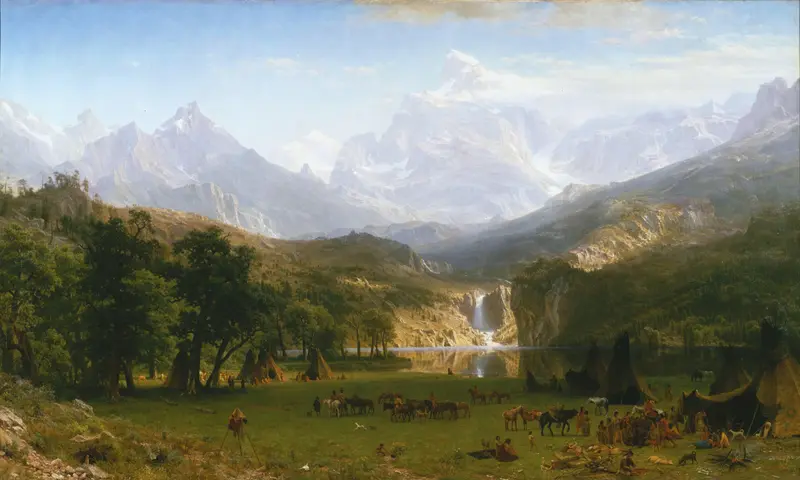
The Rocky Mountains, Lander's Peak
Albert Bierstadt
Niagara from the American Side
Albert Bierstadt
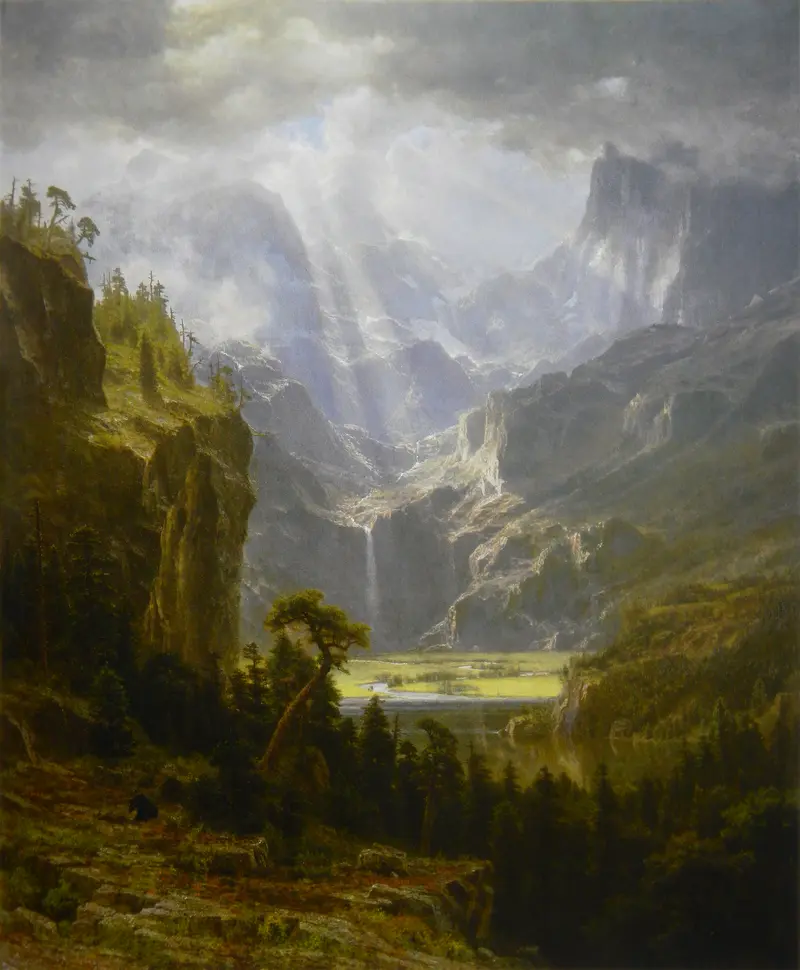
Rocky Mountains, Lander’s Peak
Albert Bierstadt

Valley of the Yosemite
Albert Bierstadt
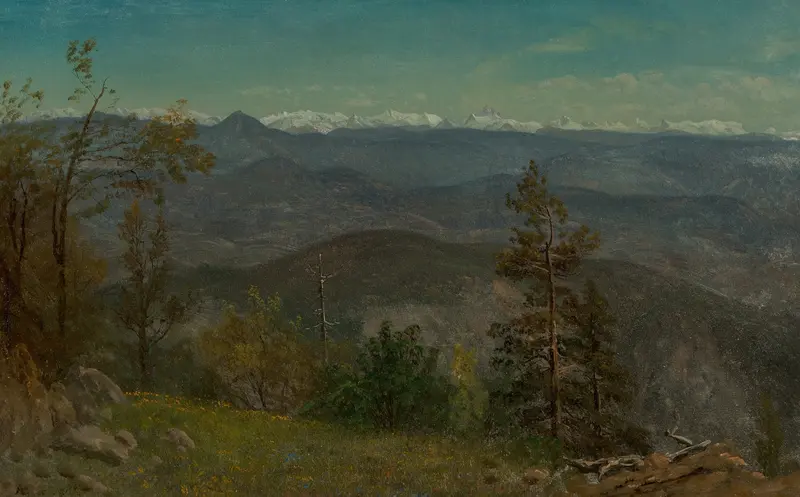
Yosemite Valley, California
Albert Bierstadt
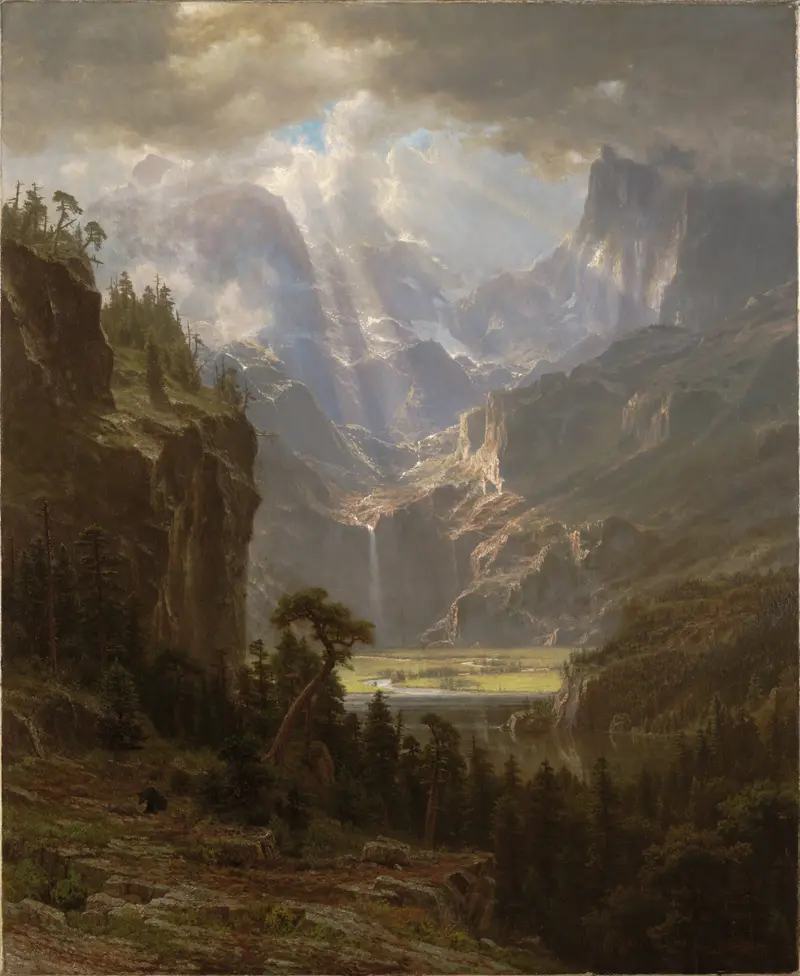
Rocky Mountains, "Lander's Peak"
Albert Bierstadt

Laramie Peak
Albert Bierstadt
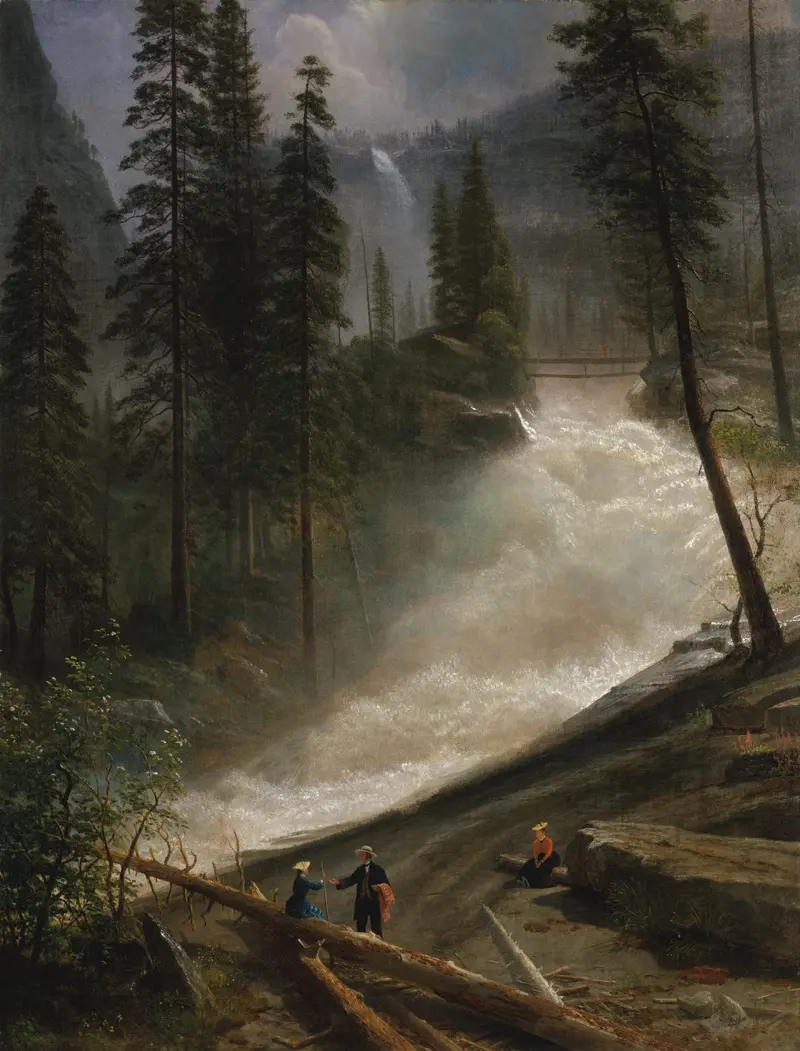
Nevada Falls, Yosemite
Albert Bierstadt
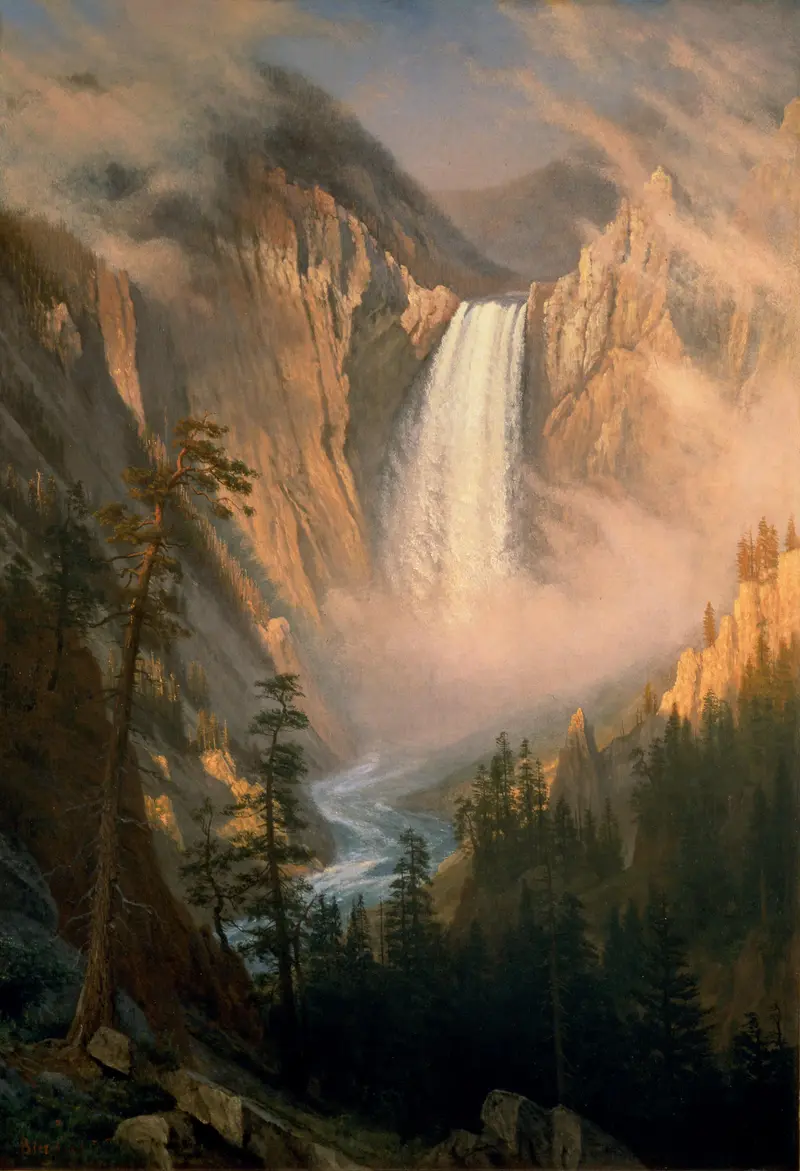
Yellowstone Falls
Albert Bierstadt
More Landscape Art

The Starry Night
Vincent van Gogh

View of Delft
Johannes Vermeer

Water Lilies
Claude Monet

The Grand Canal, Venice, looking north-west from the Ca' Corner to the Ca' Contarini degli Scrigni, with the campanile of Santa Maria della Carità
Canaletto

Windsor Castle
Canaletto

The Grand Canal looking North-East from the Palazzo Dolfin-Manin to the Rialto Bridge
Canaletto