Discover insights about this artwork
Vignette; Amaryllis — History & Facts
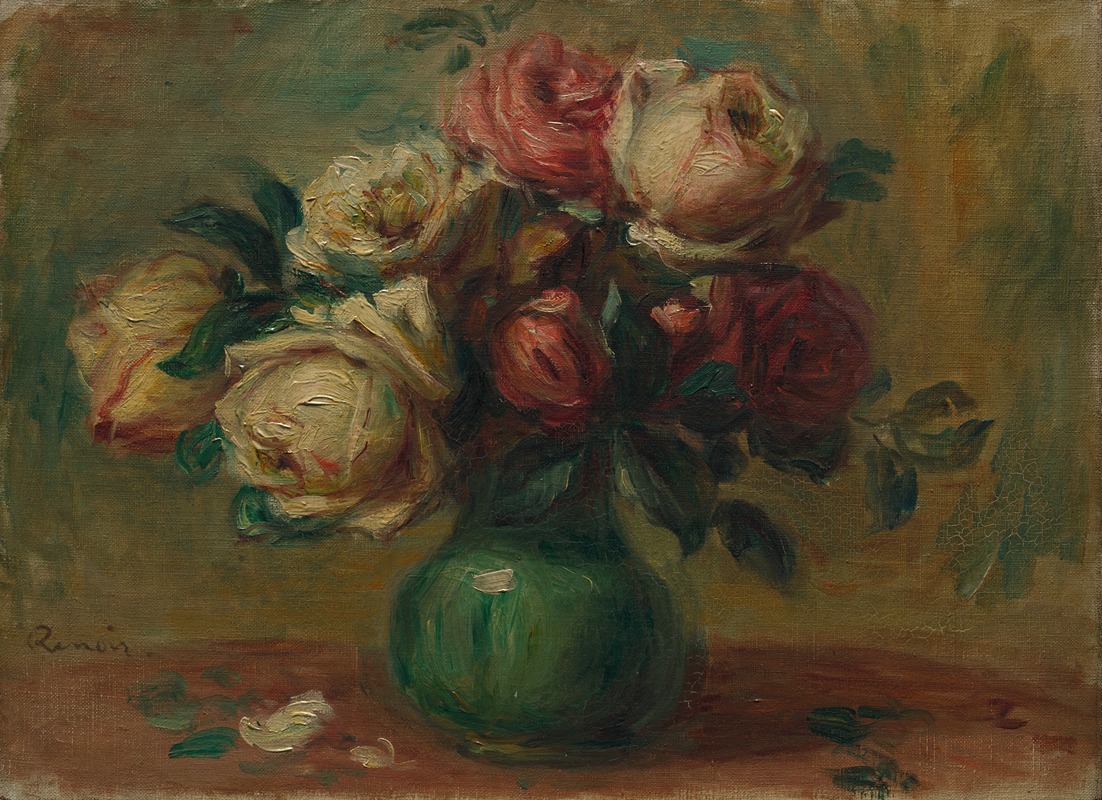
In Vignette; Amaryllis, Edvard Munch presents a striking floral composition. The painting features vibrant reds and greens, creating a lively atmosphere. The amaryllis blooms are depicted with intricate detail, drawing the viewer's eye.
The background is softly blurred, enhancing the focus on the flowers. The painting is created using oil on canvas, a medium that allows for rich color saturation. Munch's brushwork is expressive, with visible strokes that add texture to the petals. The dimensions are approximately 60 x 80 cm, making it a medium-sized work.
The composition reflects Munch's Symbolist style, emphasizing emotional resonance. Edvard Munch, known for his exploration of psychological themes, painted Vignette; Amaryllis during a period of personal turmoil. This work showcases his ability to convey emotion through botanical subjects. Interestingly, Munch often used flowers as symbols of deeper feelings, making this piece a reflection of his inner world.
The painting exemplifies the Symbolist movement's focus on personal experience and emotion.