
Village by a River — History & Facts
In Village by a River, the artist invites us to ponder the duality of existence—serenity shrouded in an undercurrent of turmoil. Focus on the shimmering river that weaves through the scene, drawing your eye toward the delicate landscapes flanking its banks. Notice how the dappled sunlight plays on the water's surface, each glint a momentary spark of joy against the heavier hues of earth and sky. The brushwork is both fluid and frenetic, capturing a fleeting moment while hinting at the restlessness of life beneath this picturesque facade. Yet, there’s an unsettling undertone lurking behind the tranquil waters.
The village appears idyllic, yet the dark, brooding clouds overhead suggest a storm on the horizon—one that may not just bring rain but upheaval. The contrast between the gentle ripples of the river and the ominous sky evokes a tension where beauty and violence coexist, reminding the viewer that tranquility can often conceal strife. What lies beneath the surface, both in nature and human experience, becomes a poignant conversation that engages the heart and mind. In 1867, Eugène Boudin painted this piece in the picturesque setting of Normandy, a time when Impressionism was beginning to take shape.
The artist was emerging as a pivotal figure in this movement, blending traditional subject matter with a modern approach to light and color. This work reflects his ongoing exploration of the relationship between man and nature amidst a rapidly changing world, capturing an era where the quietude of rural life could soon be disrupted by industrialization and societal change.
More Artworks by Eugène Boudin
Browse all →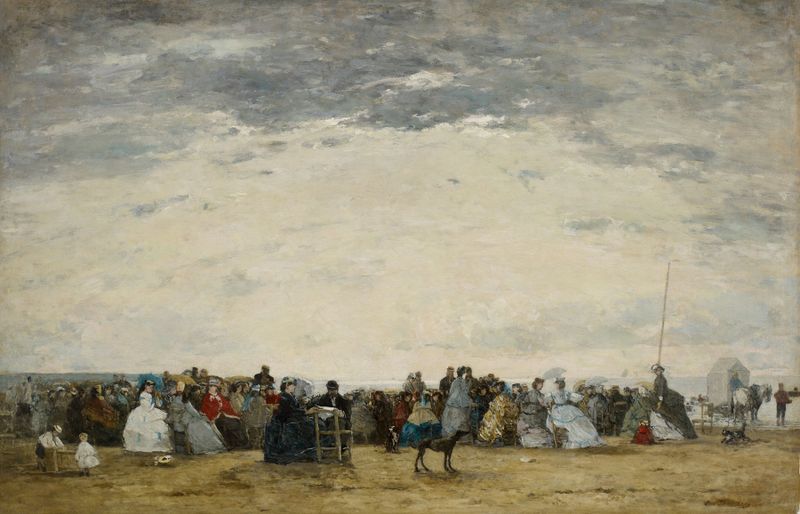
Vacationers on the Beach at Trouville
Eugène Boudin

Washerwoman near Trouville
Eugène Boudin
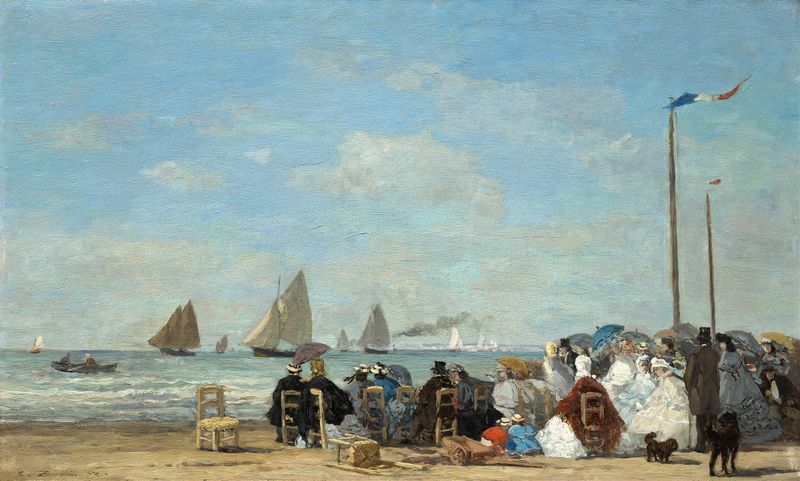
Beach Scene at Trouville
Eugène Boudin

Port aux environs d’Honfleur
Eugène Boudin

Le Faou, un coin du village
Eugène Boudin
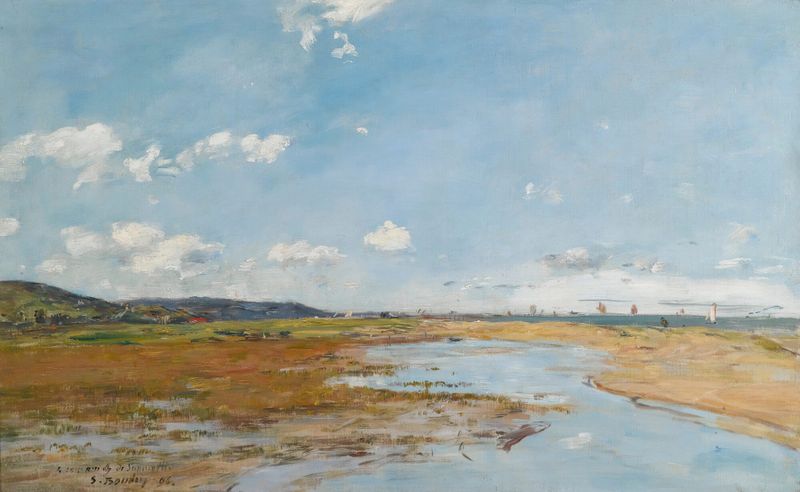
Deauville. Le Rivage
Eugène Boudin
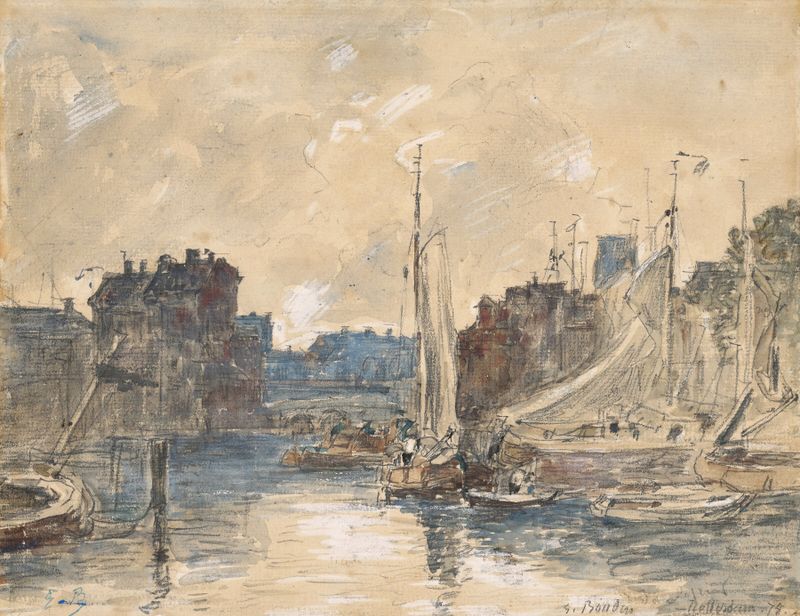
Port de Rotterdam
Eugène Boudin

View of Bordeaux, from the Quai des Chartrons
Eugène Boudin

Trouville, Scène De Plage
Eugène Boudin

Trouville, Le Port
Eugène Boudin





