
Village Scene — History & Facts
Can beauty exist without sorrow? In the village scene depicted, the charm of daily life intertwines with an underlying tension that evokes a poignant reflection on human experience. Look to the left at the rustic wooden cottages, their thatched roofs catching the late afternoon light, casting a warm glow that softens the rough edges of laborious life. Focus on the figures bustling about, their postures animated yet weary, as they engage in essential tasks, while the subtle play of shadows hints at the weight of their endeavors. The palette, rich in earthy tones, draws you into their world, where the vivid strokes celebrate both the simplicity and complexity of rural existence. Upon closer inspection, notice the contrast between the idyllic setting and the hints of struggle—perhaps the half-empty basket on the doorstep or the furrowed brow of a woman lost in thought.
These details invite contemplation about the fragility of joy amidst toil, serving as a reminder that beauty often flourishes in the shadows of sorrow. The slight disarray of the scene amplifies the emotional undercurrents, suggesting that paradise is never without its burdens. In 1637, the artist created this work while living in the Netherlands, amidst a flourishing of genre painting that celebrated everyday life. Droochsloot's focus on village scenes reflects the socio-economic changes of the time, as rural communities adapted to the shifting landscape of a rapidly modernizing world.
His approach captures not just the idyllic surface of peasant life, but also the resonant complexities that define the human condition.
More Artworks by Joost Cornelisz Droochsloot
Browse all →
The Disbanding of the ‘Waardgelders’ (Mercenaries in the Pay of the Town Government) by Prince Maurits in Utrecht, 31 July 1618
Joost Cornelisz Droochsloot

A Village Kermesse With Numerous Peasants Feasting
Joost Cornelisz Droochsloot

Village Street
Joost Cornelisz Droochsloot
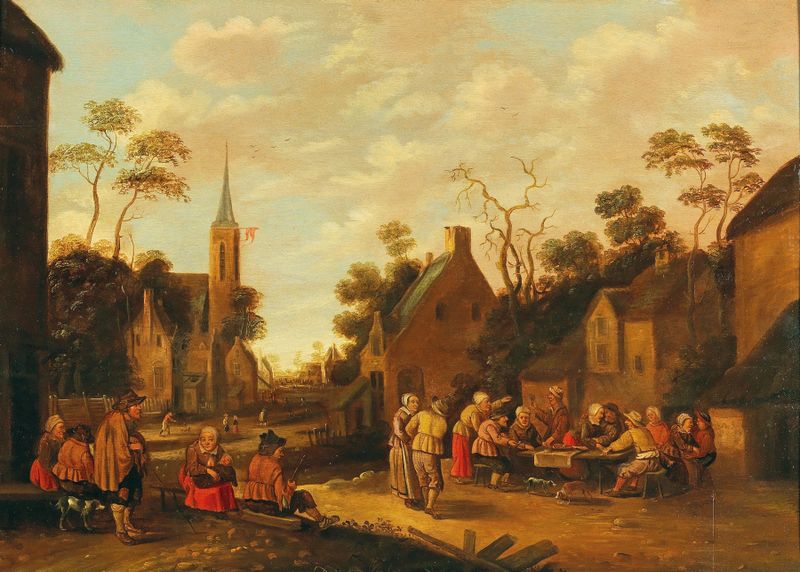
Village scene with peasant festivities
Joost Cornelisz Droochsloot

A Village Festival
Joost Cornelisz Droochsloot

River View
Joost Cornelisz Droochsloot
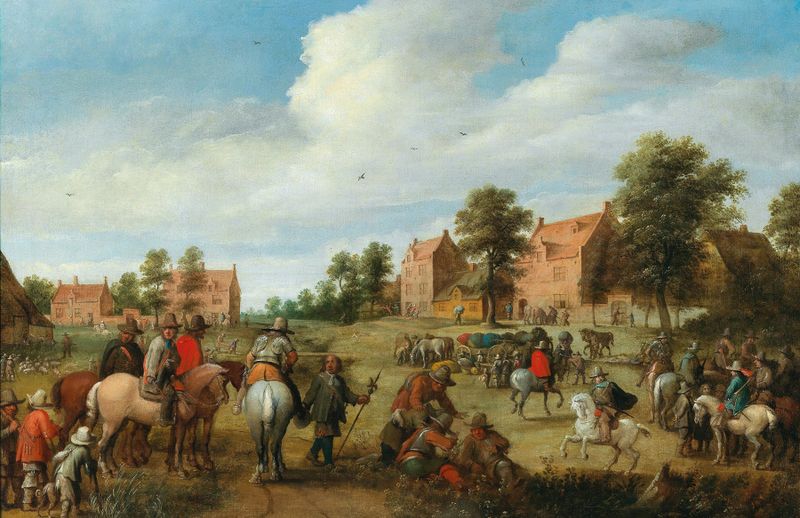
A cavalry unit halting near a village
Joost Cornelisz Droochsloot
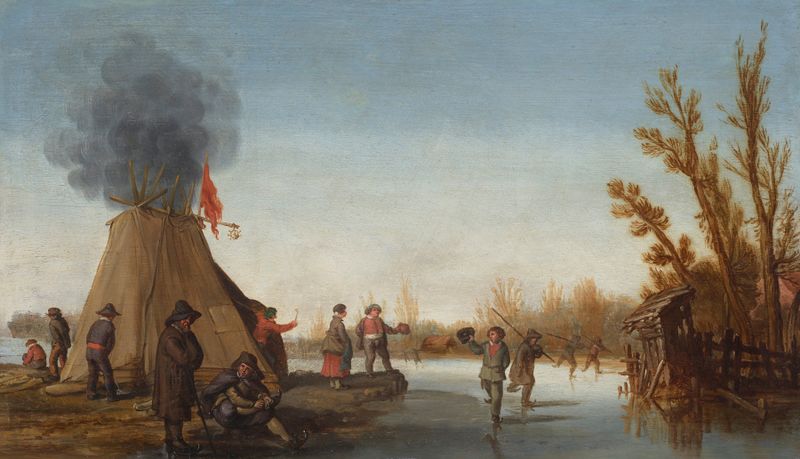
Skaters on a frozen canal with a koek-en-zopie tent
Joost Cornelisz Droochsloot

Village Fair
Joost Cornelisz Droochsloot

Village Scene With Peasants
Joost Cornelisz Droochsloot





