
Villagers Dancing — History & Facts
What if silence could speak through light? In Villagers Dancing, the soft glow of dusk frames a moment where time seems to hold its breath, inviting a longing that transcends the canvas. Look to the center where villagers, caught in rhythmic motion, exude an infectious joy. The warm golden hues of the setting sun spill across their figures, accentuating the flow of their garments as they entwine in celebration. Notice how the delicate interplay of light and shadow imbues the scene with a sense of intimacy, as if the viewer is a silent participant in their revelry.
The composition draws your gaze along the gentle curve of the hill, leading to the horizon where the tranquil sky meets the earth. Yet beneath this vibrant surface lies a poignant contrast. The villagers' laughter, vivid and bright, stands in stark relief to the encroaching shadows of evening, hinting at the fleeting nature of joy. The absence of a clear background suggests a world beyond their celebration — an unvoiced longing for permanence in a life that is often transient.
Each gesture and smile encapsulates a desire for connection and continuity, evoking an emotional resonance that lingers long after the scene fades. During the 1630s, Claude Lorrain created Villagers Dancing amidst a burgeoning interest in pastoral themes and idealized landscapes in baroque art. Living in Italy, the artist was influenced by the works of contemporaries who explored the balance of nature and humanity. This piece reflects not only his mastery of light but also the cultural shift towards appreciating the simplicity and beauty of rural life, providing solace in a rapidly changing world.
More Artworks by Claude Lorrain
Browse all →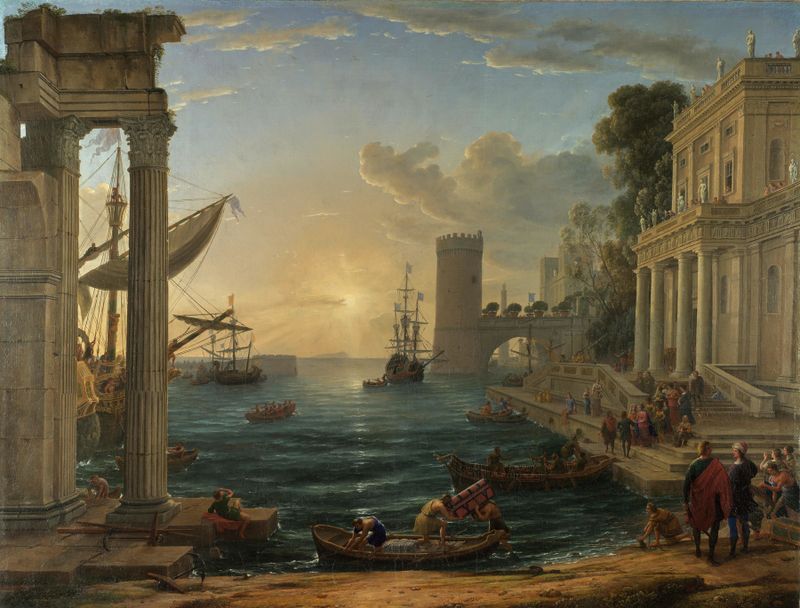
The Embarkation of the Queen of Sheba
Claude Lorrain
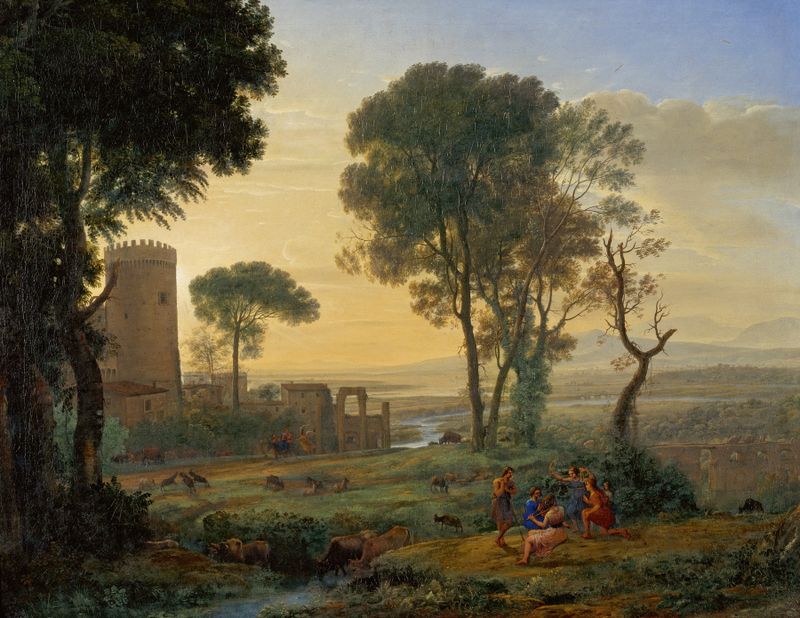
Landscape with the Flight into Egypt
Claude Lorrain
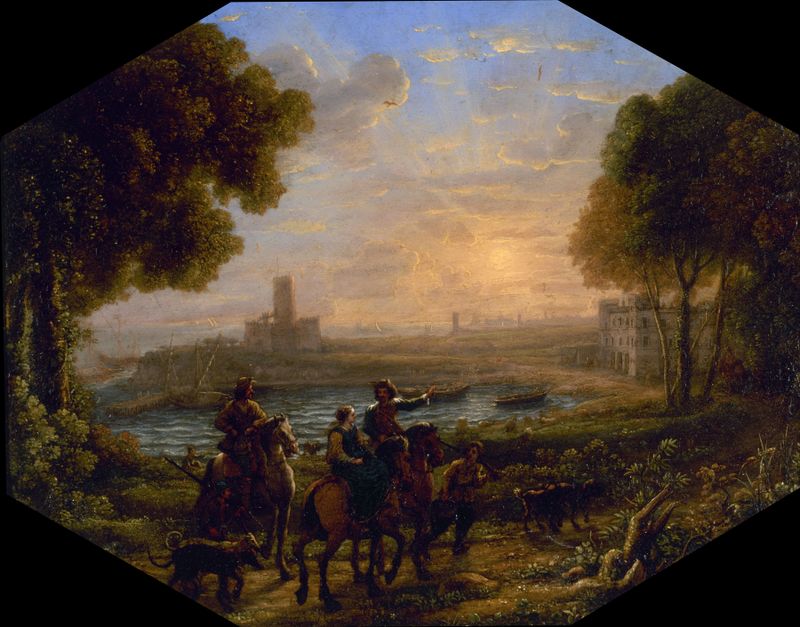
Paysage avec le port de Santa Marinella
Claude Lorrain
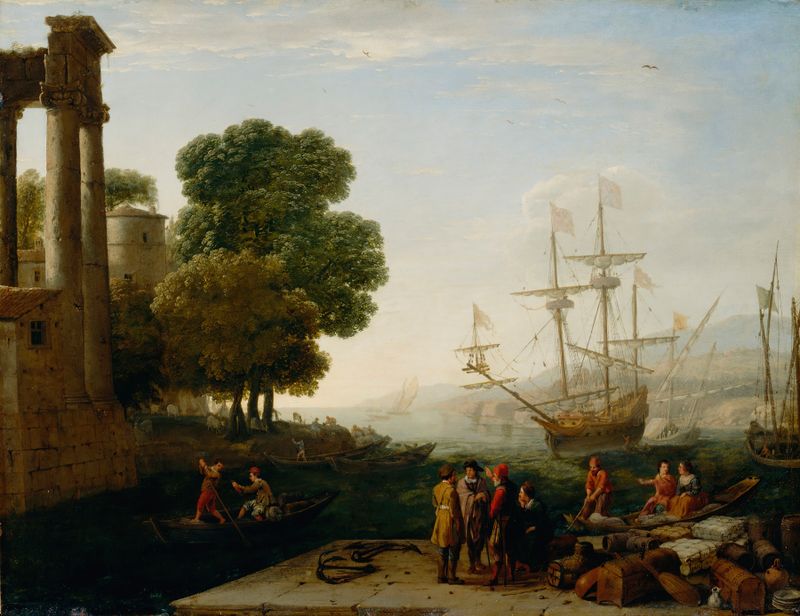
A Seaport at Sunset
Claude Lorrain
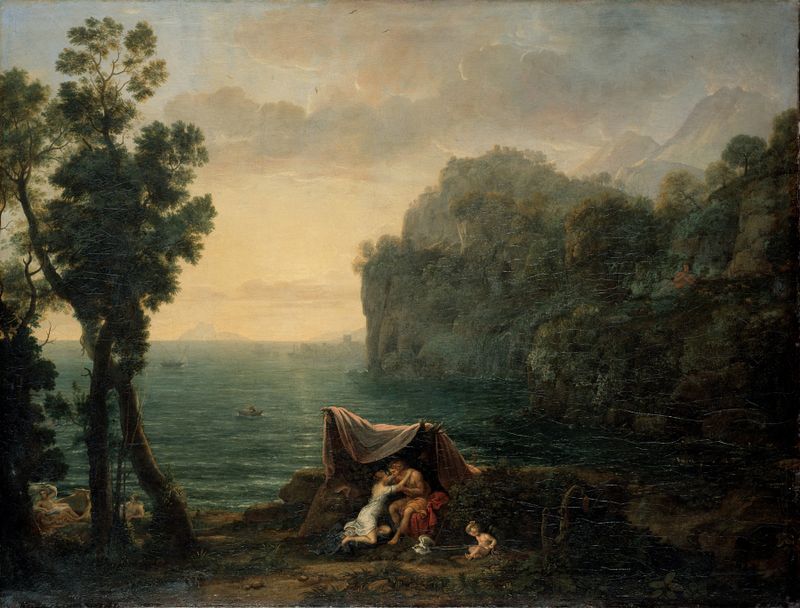
Landscape with Acis and Galatea
Claude Lorrain
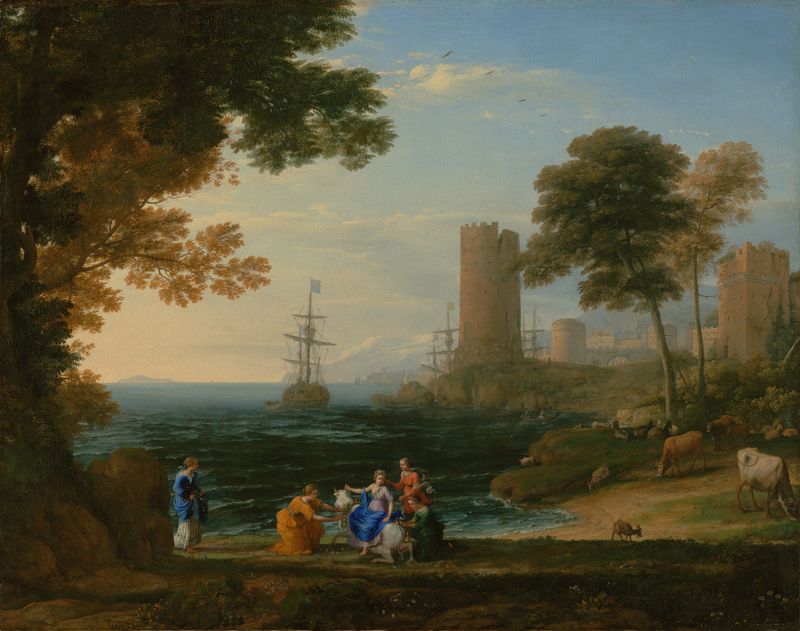
Coast View with the Abduction of Europa
Claude Lorrain
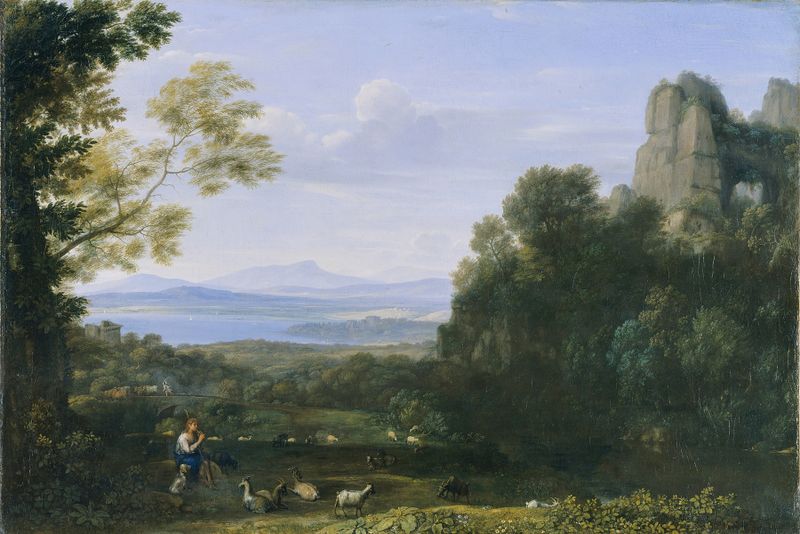
Landscape with Apollo and Mercury
Claude Lorrain
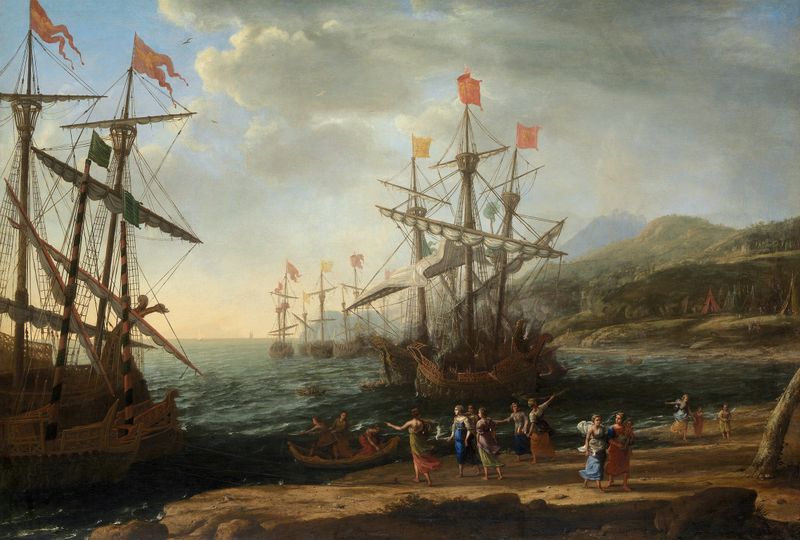
The Trojan Women Setting Fire to Their Fleet
Claude Lorrain
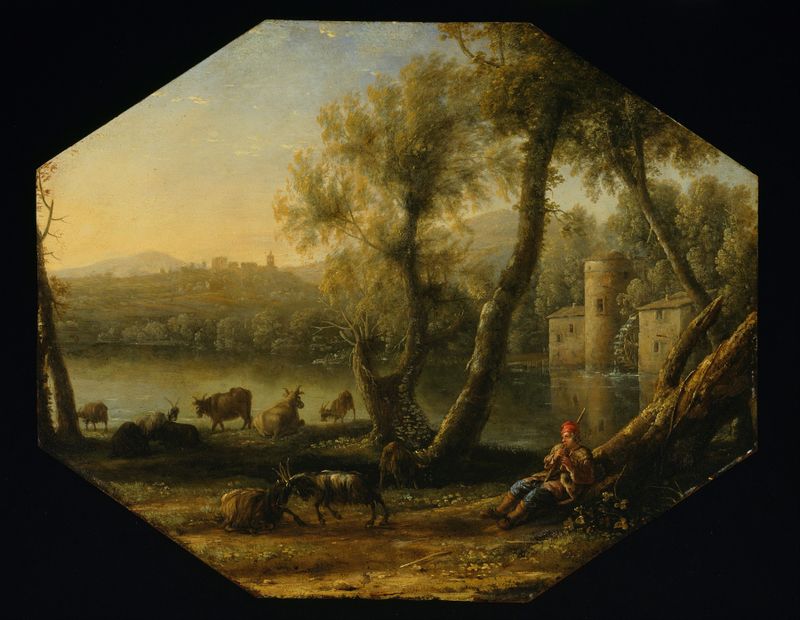
Pastoral landscape
Claude Lorrain
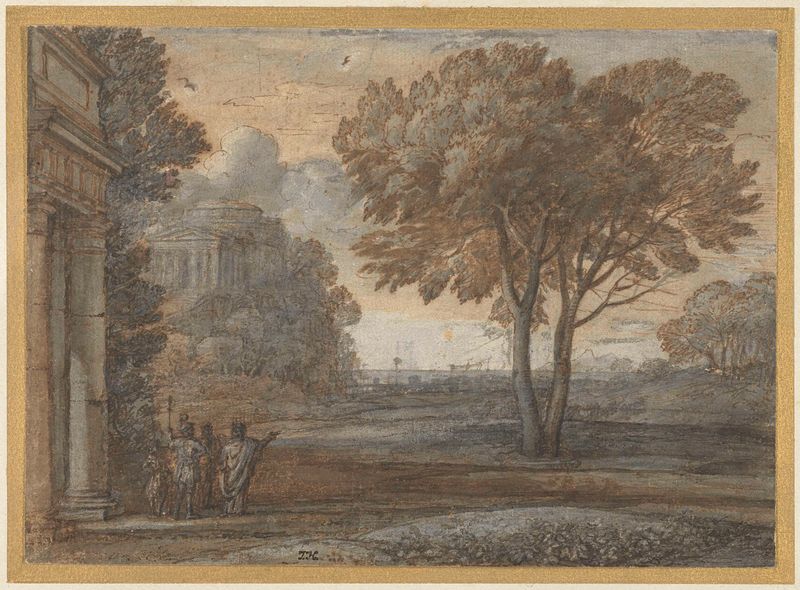
Aeneas op Delos
Claude Lorrain





