
Virgin and Child with Young Saint John the Baptist — History & Facts
No fewer than a dozen versions of Virgin and Child with Young Saint John the Baptist are attributed to Raphael and his workshop, a testament to the popularity of this intimate subject in Renaissance Italy. The repetition of this composition—sometimes with subtle variations—reflects both the artist’s own fascination and the demands of patrons eager to own a piece of Raphael’s vision. The proliferation of copies and variants has fueled scholarly debates for centuries: which hands touched which canvas, and which, if any, is the original? At the heart of the image, the infant Christ and his cousin, the young John the Baptist, are caught in a moment of gentle play under the watchful gaze of the Virgin Mary.
Christ reaches for a delicate cross-shaped staff held by John, a gesture that foreshadows his future sacrifice, while Mary’s arms encircle both children, uniting them in a tender triangle. The soft light caresses the children’s faces, drawing the eye to their innocence and the quiet gravity of their destinies. Unlike Leonardo da Vinci’s more enigmatic Madonnas, Raphael chooses clarity and warmth, inviting the viewer into the familial bond.
The landscape behind them, serene and balanced, hints at the harmony of divine order. The precise origins of this particular version remain uncertain, as do its early travels and patrons—a common fate for works so often replicated in the artist’s circle. What is clear is that by the early 16th century, Raphael had perfected this type of composition, influencing countless artists across Europe. Today, versions of Virgin and Child with Young Saint John the Baptist are held in major museums, each with its own claims to authenticity and precedence.
The painting endures as a touchstone of Raphael’s ability to blend grace, narrative, and psychological depth, even as scholars continue to puzzle over the tangled web of its creation.
More Artworks by Raphael

Madonna of the Goldfinch
Raphael

Madonna with the Fish
Raphael
Madonna and Child (Madonna della Seggiola)
Raphael
Seated Madonna and Child
Raphael
Portrait of a Young Man
Raphael
The Marriage of the Virgin
Raphael
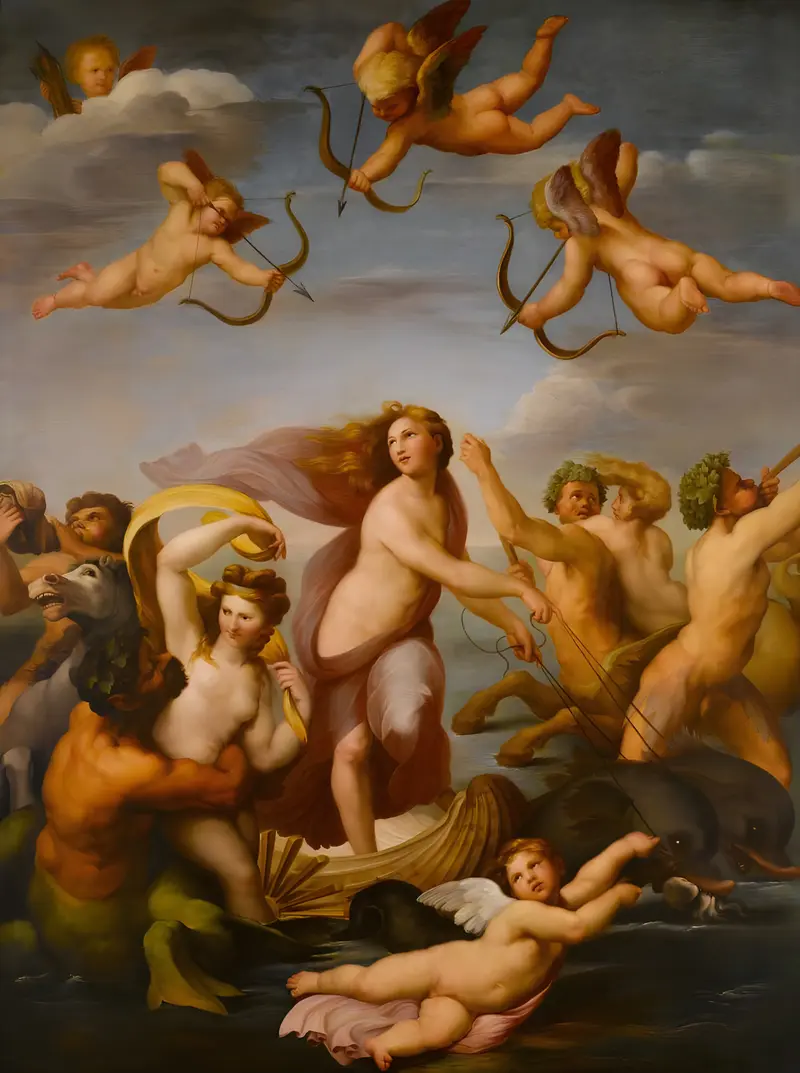
The Triumph of Galatea (copy after Raphael)
Raphael
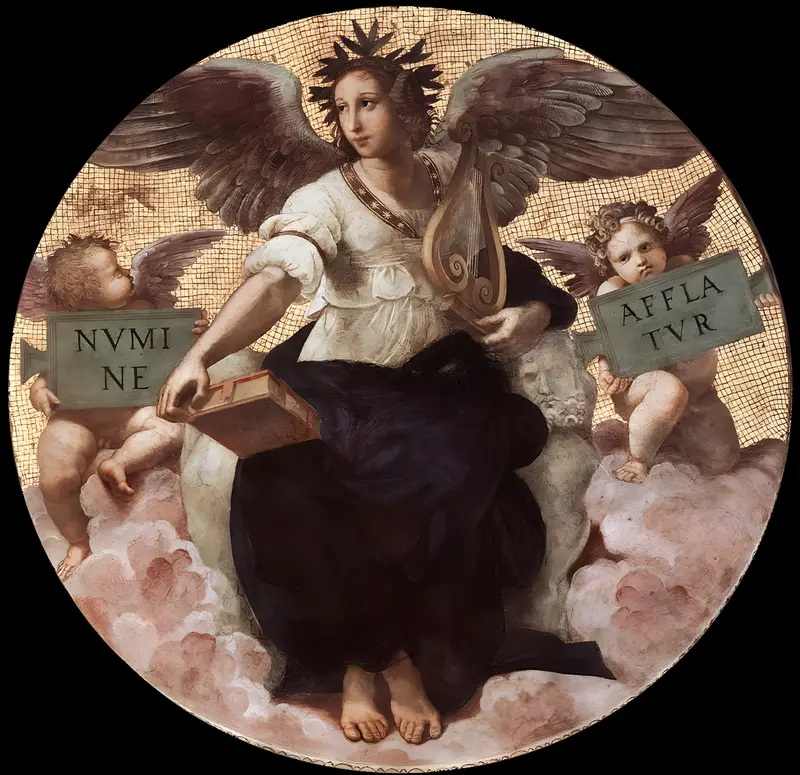
Poetry
Raphael
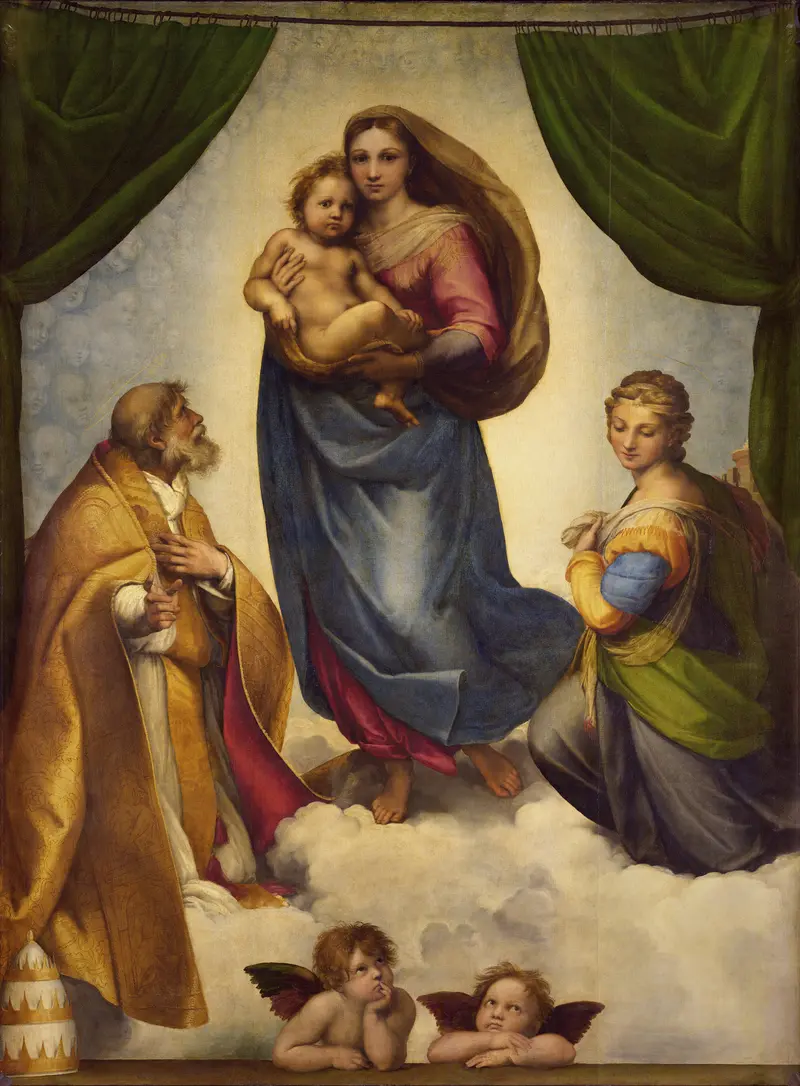
Sistine Madonna
Raphael
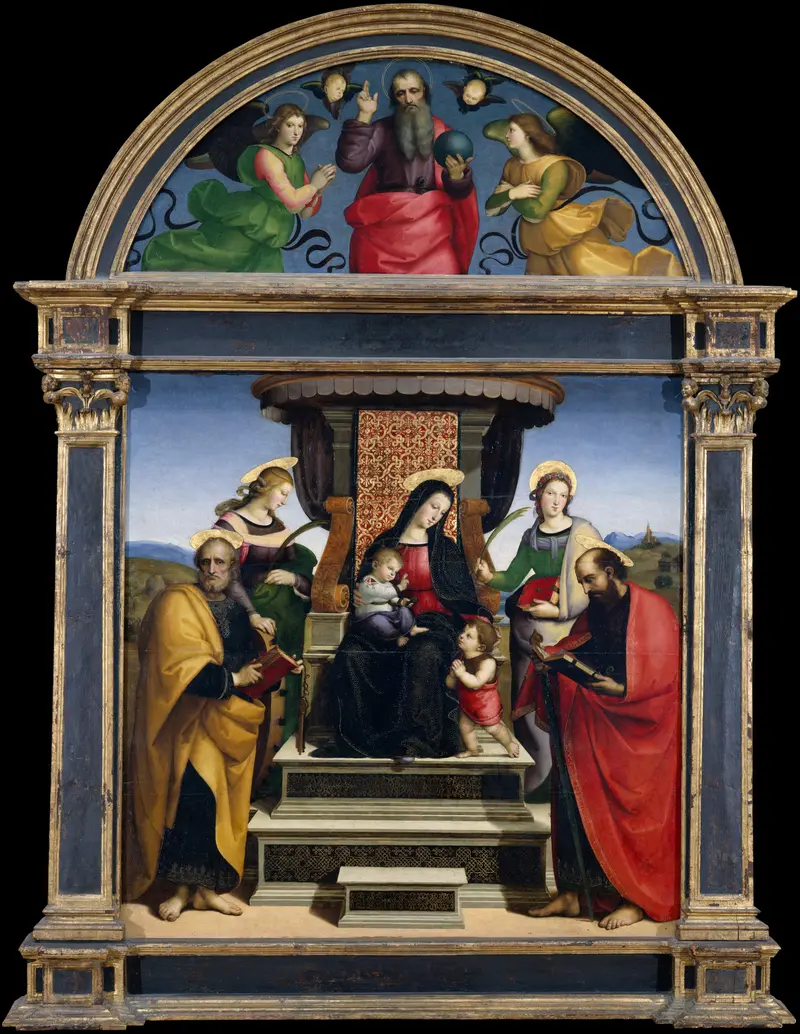
Madonna and Child Enthroned with Saints
Raphael




