
Virgin of the Sea — History & Facts
No written record survives to tell us who first gazed upon Virgin of the Sea by Sandro Botticelli in 1470, but the painting’s greatest intrigue lies in its uncertain origins. Unlike Botticelli’s celebrated commissions for the Medici, this early work has no surviving documentation of patron or purpose, leaving scholars to debate whether it was intended for private devotion or a chapel altar. The medium itself remains a mystery—unusual for a painting of this period, as technical analysis has yet to yield a definitive answer.
This air of anonymity has only heightened the painting’s allure, making it a touchstone for discussions about the artist’s formative years. At the center of Virgin of the Sea, the Madonna stands upon a shell, her robes billowing as though caught by a sea breeze, echoing the mythic birth of Venus but recast in sacred terms. The Christ Child rests serenely in her arms, while the gentle undulation of the waves at her feet suggests both the perils and the promise of the world. Pearls woven into her mantle allude to purity, while the faint golden halo signals her divine status.
Unlike Botticelli’s later The Birth of Venus, where the goddess emerges from the sea as a symbol of beauty, here the sea becomes a metaphor for Mary’s role as the guiding star for Christians navigating life’s uncertainties. The painting’s physical history remains as enigmatic as its subject. With no early inventories or records, it is believed to have remained in private hands for centuries, surfacing only in the late nineteenth century when interest in Botticelli’s work revived. Its attribution has been largely uncontested, thanks to the characteristic linear grace and delicate features that mark Botticelli’s style in the 1470s.
Today, Virgin of the Sea stands as a rare example of the artist’s early religious imagination, offering a glimpse into the devotional art of Renaissance Florence before Botticelli’s mythological masterpieces brought him lasting fame.
More Artworks by Sandro Botticelli
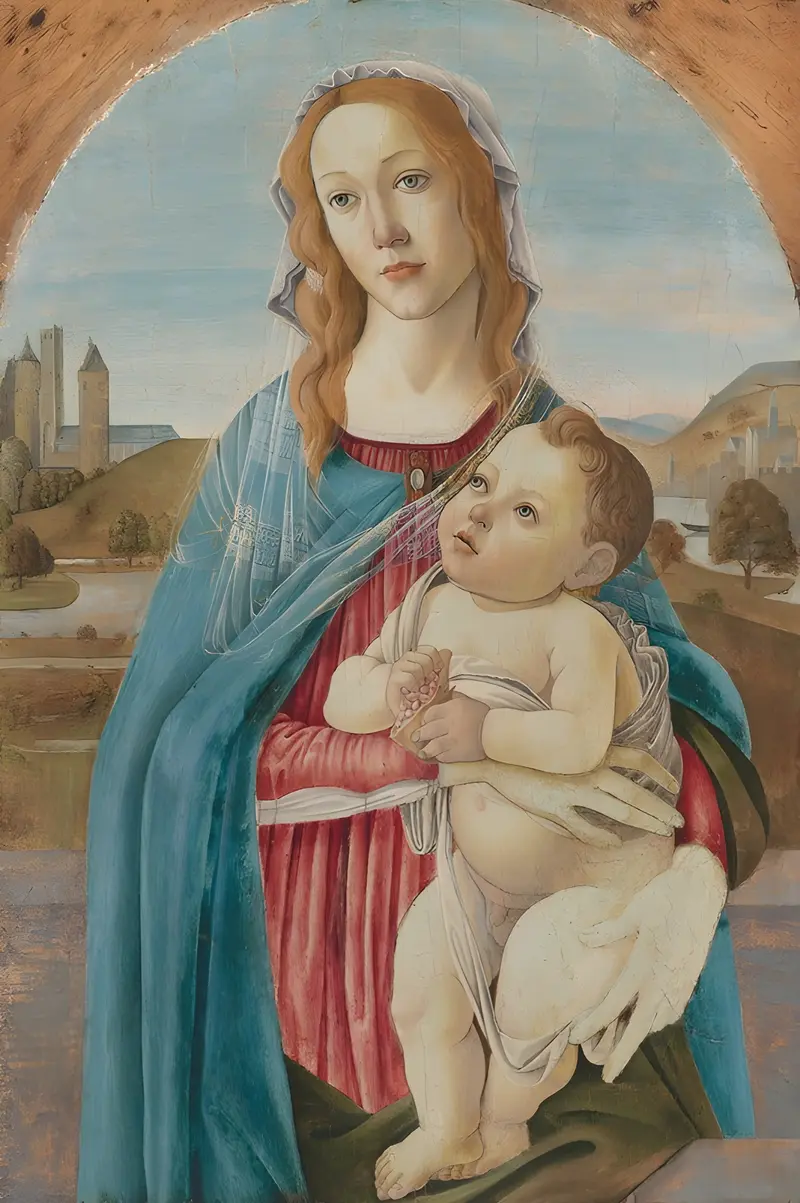
Virgin and Child
Sandro Botticelli
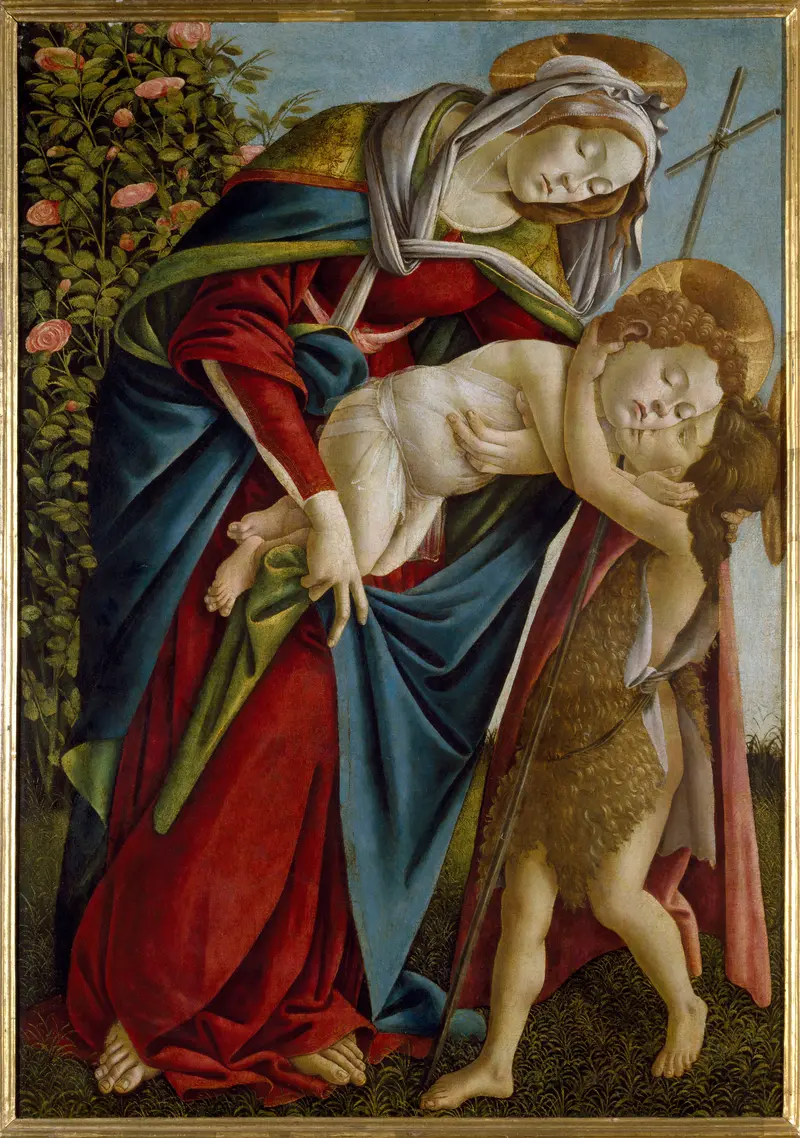
Madonna and Child and the Young St John the Baptist
Sandro Botticelli
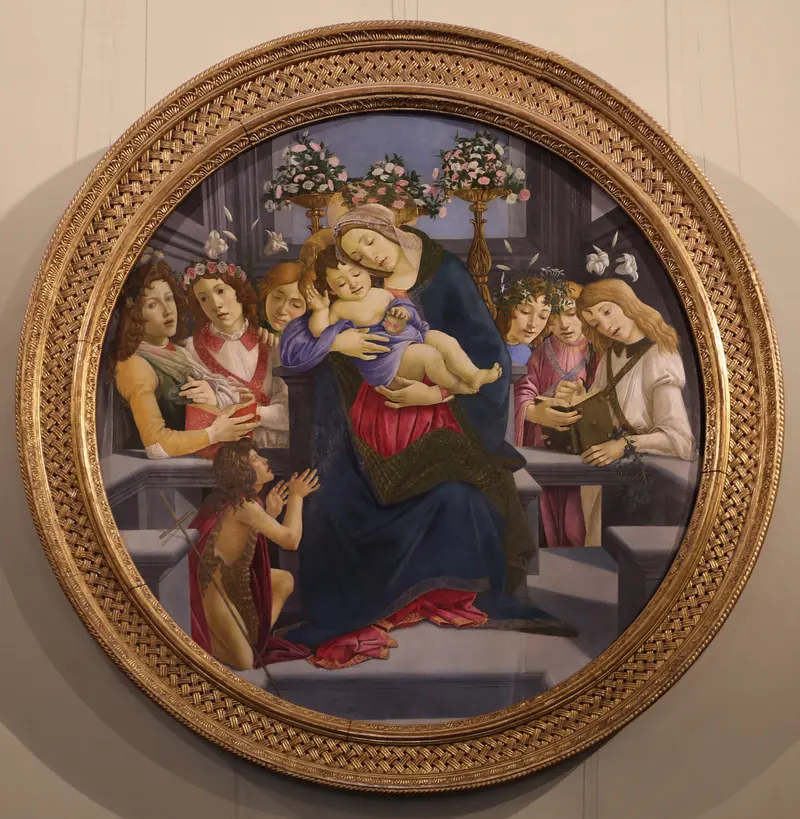
Madonna and Child with six angels and Saint John the Baptist as Child
Sandro Botticelli
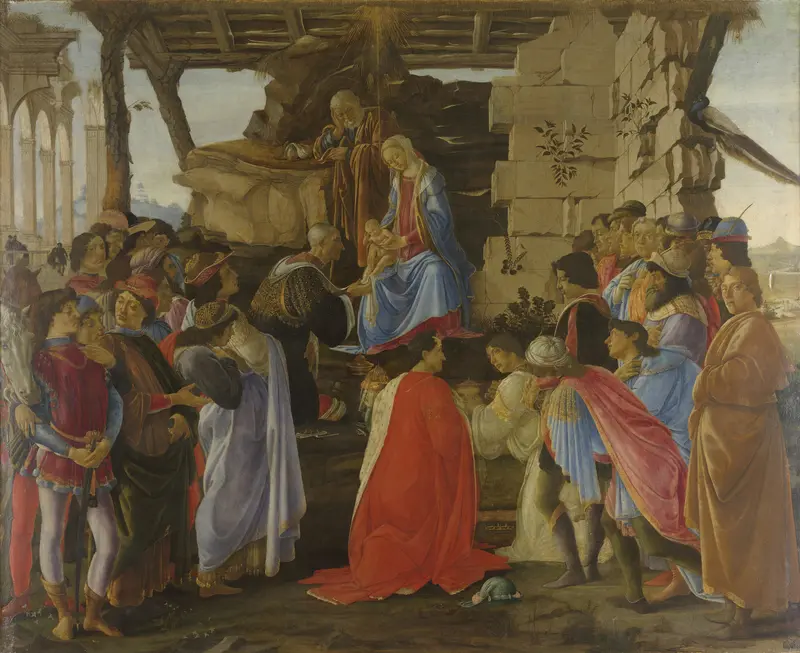
Adoration of the Magi
Sandro Botticelli

Virgin and Child with the Young Saint John the Baptist
Sandro Botticelli
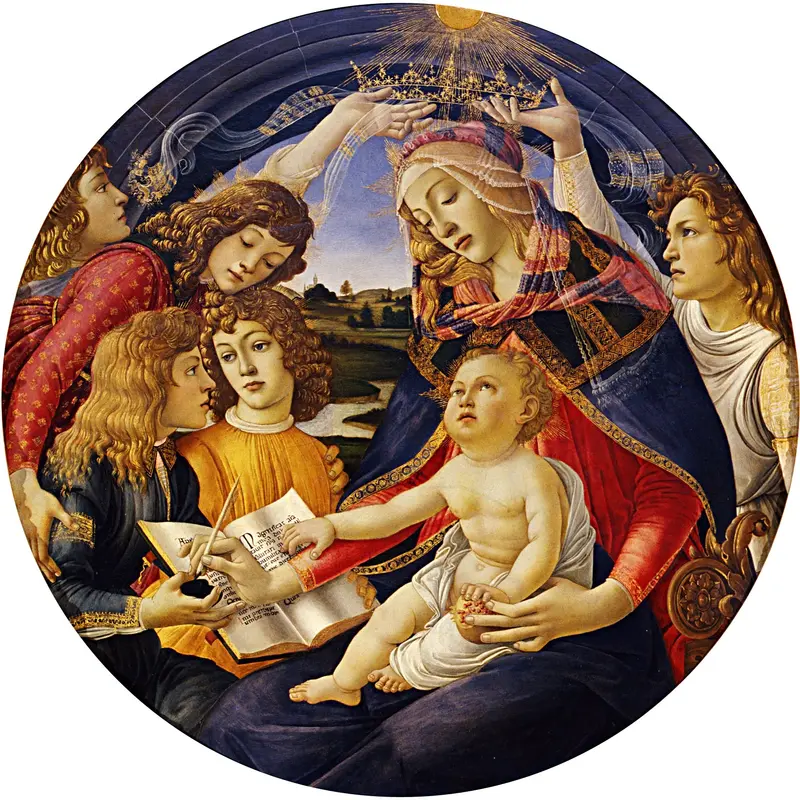
Madonna of the Magnificat
Sandro Botticelli
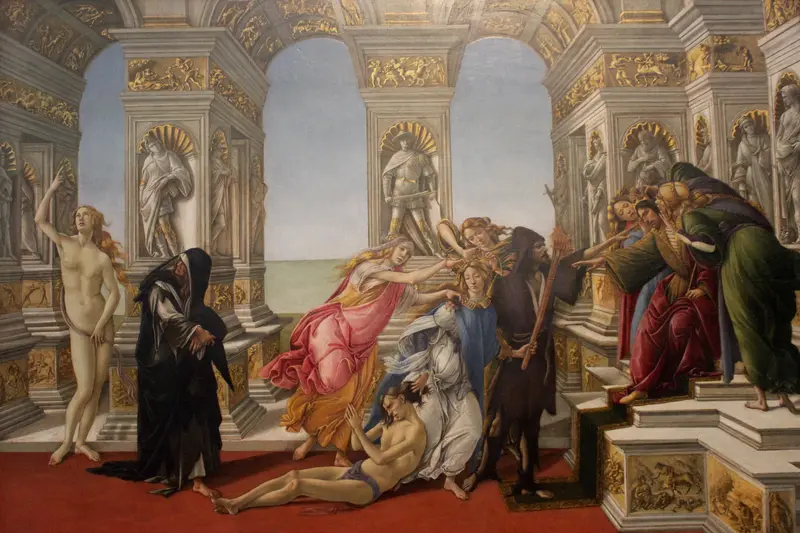
Calumny of Apelles
Sandro Botticelli
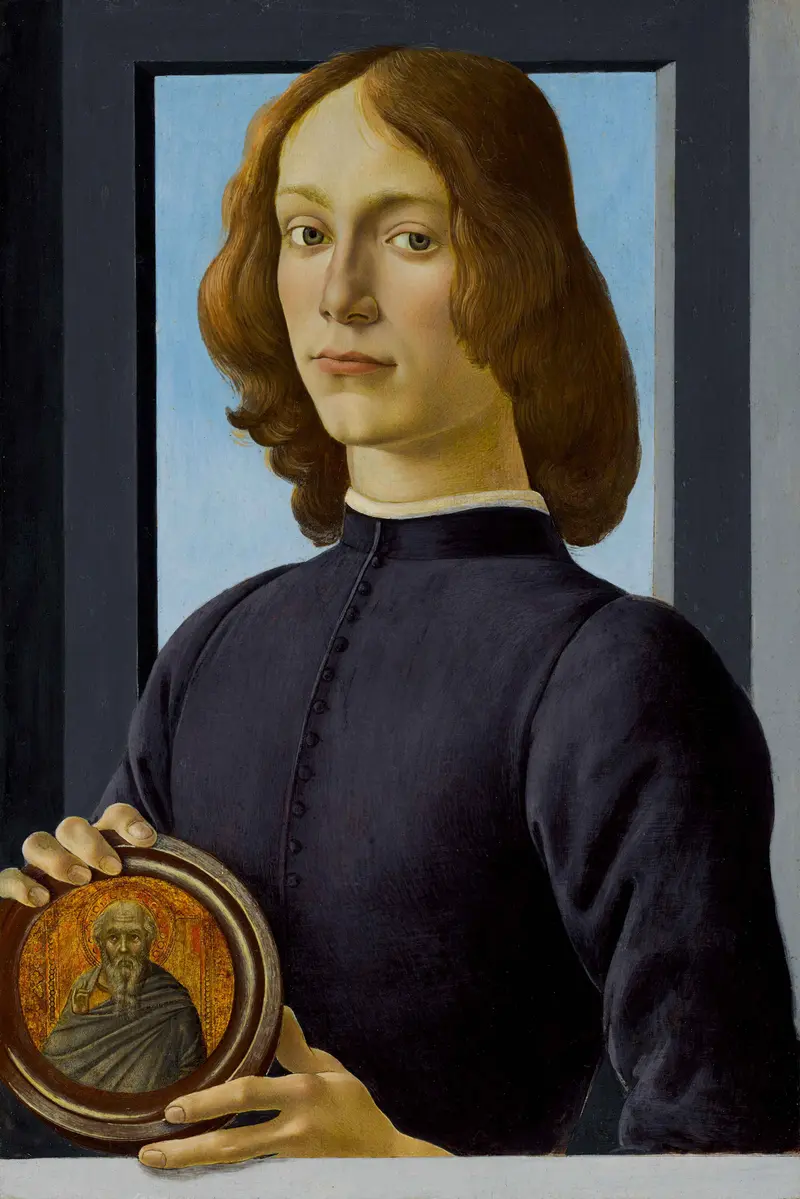
Portrait of a young man holding a roundel
Sandro Botticelli

The Trinity with Saint Mary Magdalene and Saint John the Baptist, the Archangel Raphael and Tobias
Sandro Botticelli
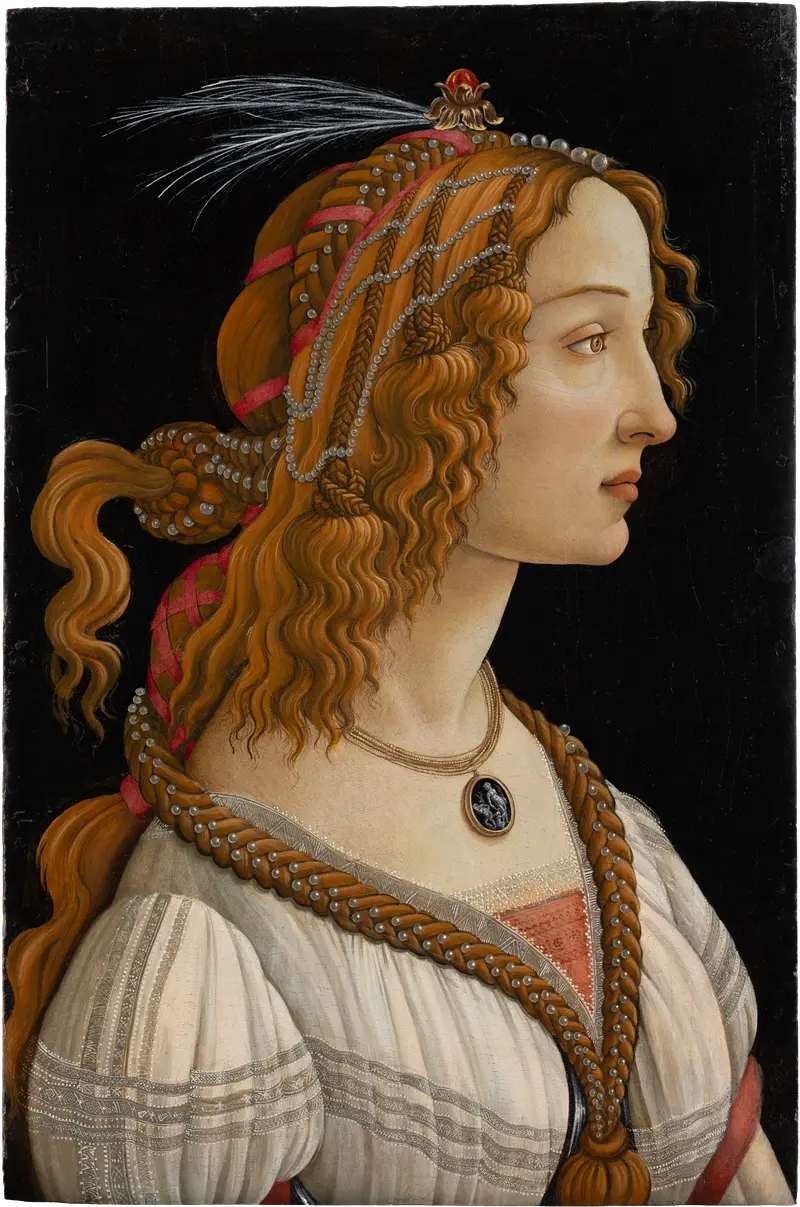
Idealized Portrait of a Lady (Portrait of Simonetta Vespucci as Nymph)
Sandro Botticelli





