Vogels in een boom — History & Analysis
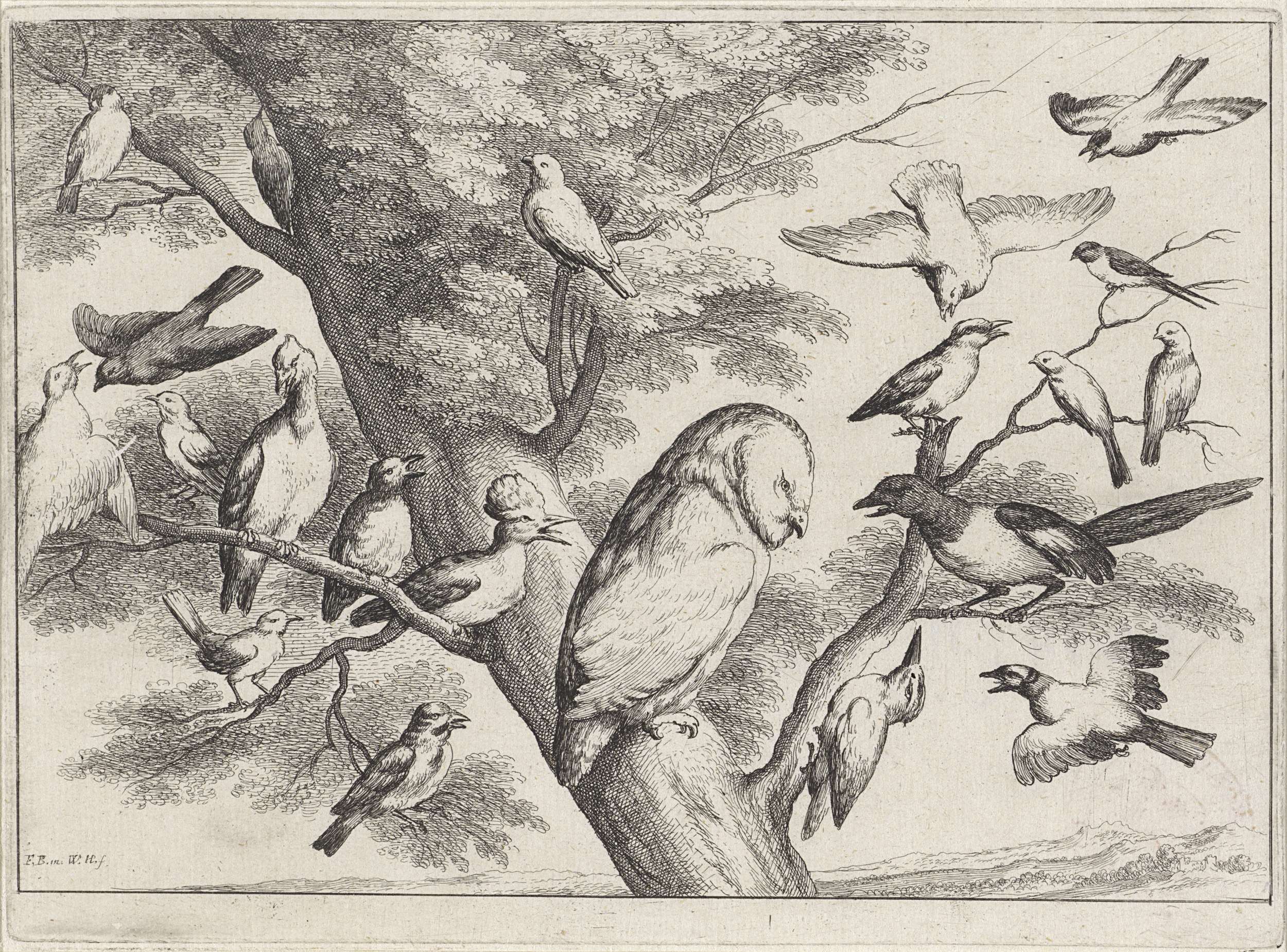
What secret hides in the quiet of the canvas? The delicate whispers of nature conceal narratives of loyalty and betrayal, suspended in time among the branches. Focus on the verdant foliage that envelops the composition, drawing your eye to the intricate detailing of leaves and twigs. Notice how Hollar's meticulous line work creates a sense of depth, making the scene breathe with life.
The subtle gradations of green and brown evoke the season’s change, while the birds, poised on their perches, become symbols of fleeting trust, each stroke reflecting an intimate bond with their surroundings. Yet, within this tranquil setting lies an undercurrent of tension. The juxtaposition of the vibrant avian life against the stark, intricate branches hints at vulnerability, suggesting a world where beauty is laced with potential treachery. Each bird's posture conveys the fragility of their relationships, while the shadows cast by the leaves may represent the unseen consequences of their existence among the trees—an act of betrayal lurking just beneath the surface.
In 1654, Hollar was immersed in the Baroque art scene in England after fleeing his native Prague due to political unrest. This period marked a significant evolution in his work, where the contrast between nature and the human experience became a focal point. As he navigated a world rife with conflict, the themes of loyalty and secrecy began to resonate in his art, as evidenced in this serene yet poignant depiction of birds entwined with the complexities of their environment.