
Vorfrühling In H. (Early Spring In H.) — History & Facts
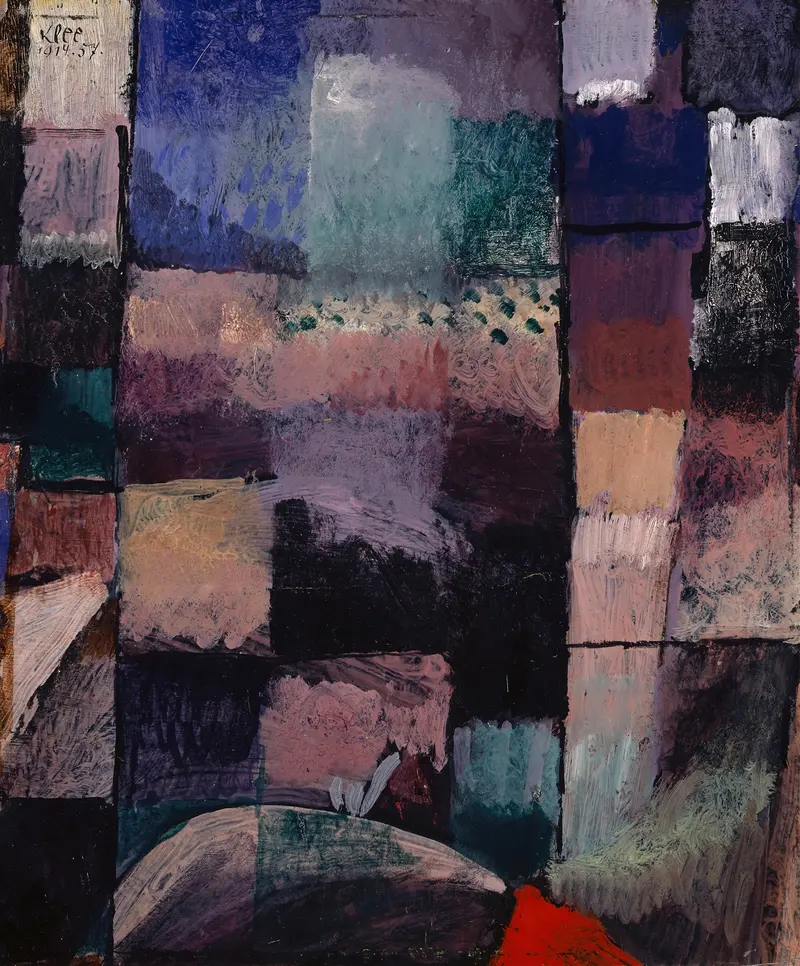
In Vorfrühling In H., Paul Klee presents a landscape filled with vibrant colors that suggest the arrival of spring. The painting features abstract forms that may represent trees, flowers, and the sky, blending harmoniously. The color palette includes soft greens, yellows, and blues, creating a lively atmosphere.
Klee's unique style invites viewers to experience the joy of nature awakening after winter. The painting is characterized by Klee's use of simple shapes and bold colors, typical of his expressionist approach. The brushwork appears spontaneous, contributing to the overall sense of movement and life. Klee often employed a technique of layering colors to achieve depth, which is evident in this work.
The composition balances abstraction and representation, allowing for multiple interpretations. Paul Klee was a Swiss painter associated with the Expressionist movement and a key figure in the development of modern art. Vorfrühling In H. reflects his fascination with nature and the emotional responses it evokes. An interesting fact about this work is that it was created during a time when Klee was exploring the relationship between color and form, which would become a hallmark of his later works.
Klee's playful approach to art continues to inspire artists today.
More Artworks by Paul Klee

More Landscape Art

The Starry Night
Vincent van Gogh

View of Delft
Johannes Vermeer

Water Lilies
Claude Monet

The Grand Canal, Venice, looking north-west from the Ca' Corner to the Ca' Contarini degli Scrigni, with the campanile of Santa Maria della Carità
Canaletto

Windsor Castle
Canaletto

The Grand Canal looking North-East from the Palazzo Dolfin-Manin to the Rialto Bridge
Canaletto