Vue de Murano, Venise — History & Facts
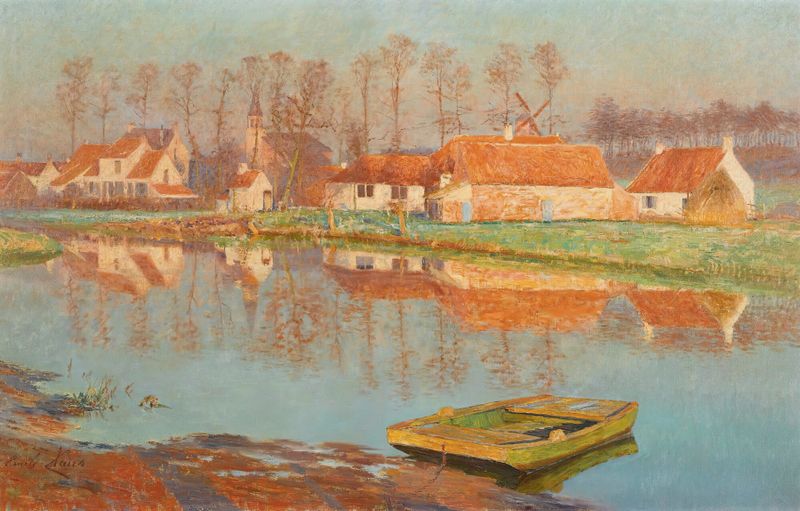
In the delicate interplay of light and shadow, a subtle emptiness emerges, beckoning the viewer to contemplate the spaces left unfilled. Look to the right at the soft azure waters reflecting a gentle sky. The brushstrokes dance lightly across the canvas, merging hues of blue and gold that convey a serene atmosphere. The architecture of Murano is rendered with precision, yet it feels as though it exists in a dream, inviting you to explore the nuances of each element in the distance.
Notice how the light falls upon the buildings, illuminating the intricate details while casting long shadows that hint at the passage of time. Amidst this tranquility lies an emotional tension; the viewer is drawn into the idyllic scene yet senses a profound solitude. The distant figures, mere silhouettes against the vibrant backdrop, evoke a feeling of isolation even in beauty. This contrast between the lively colors and the stillness of the composition reveals a deeper commentary on the relationship between existence and nothingness—an invitation to ponder what remains unsaid in the midst of visual splendor. Created in 1906, the artist captured Vue de Murano, Venise during a period marked by artistic exploration and innovation.
Living in Belgium at the time, Claus was influenced by the Impressionist movement, focusing on light and atmosphere, which became central to his work. The world was shifting, tenderly embracing modernity while still holding dear the beauty of tradition—an essence that resonates deeply within this painting.