Waldweg mit Felshang — History & Facts
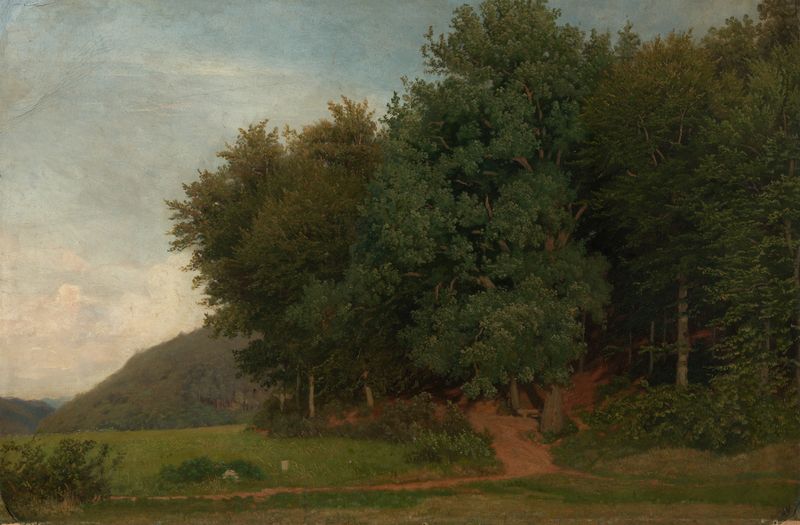
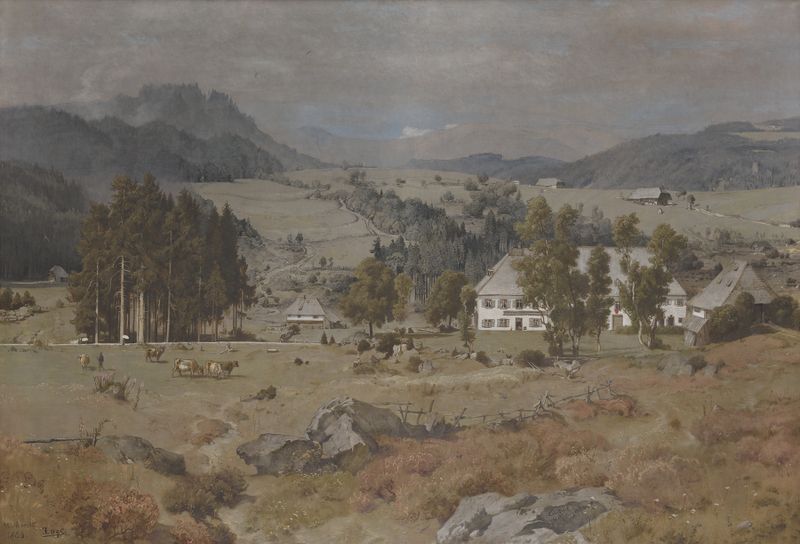
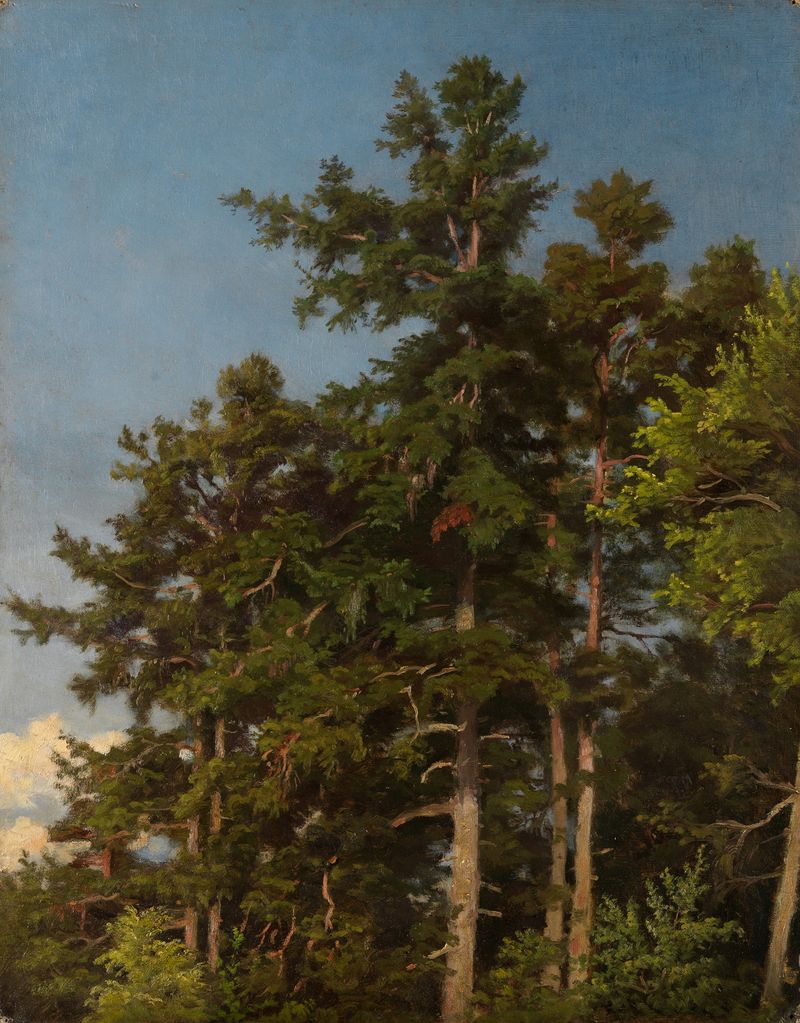
Could beauty survive in a century of chaos? An eternal question lingers, inviting the viewer to pause and reflect upon the delicate balance between nature and turmoil. Look to the left at the rugged outline of the rocky cliff, its texture rendered with careful brushwork that speaks to the artist's reverence for the natural world. The path meanders gently, inviting you into the scene, while soft greens and muted earth tones create a harmonious palette. Notice how the light breaks through the tree canopy overhead, illuminating the ground with dappled warmth, hinting at the promise of tranquility amid the dramatic backdrop. Emil Lugo masterfully juxtaposes the tranquil path against the imposing cliffside, suggesting a dialogue between serenity and strength.
The path represents not just a journey through nature, but perhaps a metaphor for life itself, where beauty often clings to the edges of overwhelming obstacles. The play of light serves as a reminder of hope, while the dark shadows of the rocks hint at the lurking uncertainties that lie ahead. In the early 1860s, Lugo was immersed in the changing tides of the art world, exploring themes of realism against a backdrop of societal upheaval. He painted this piece during a time of great transition, both personally and artistically, as Europe faced political instability and rapid industrialization.
This work reflects his commitment to capturing the profound beauty in nature, a response to the chaos that surrounded him, and stands as a testament to the resilience of art in challenging times.