Waldwiese mit Weg und Wassertümpel — History & Facts
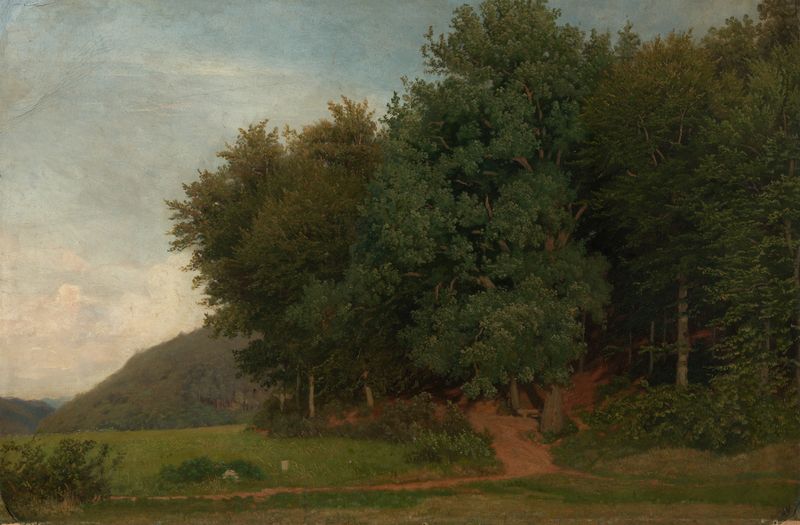
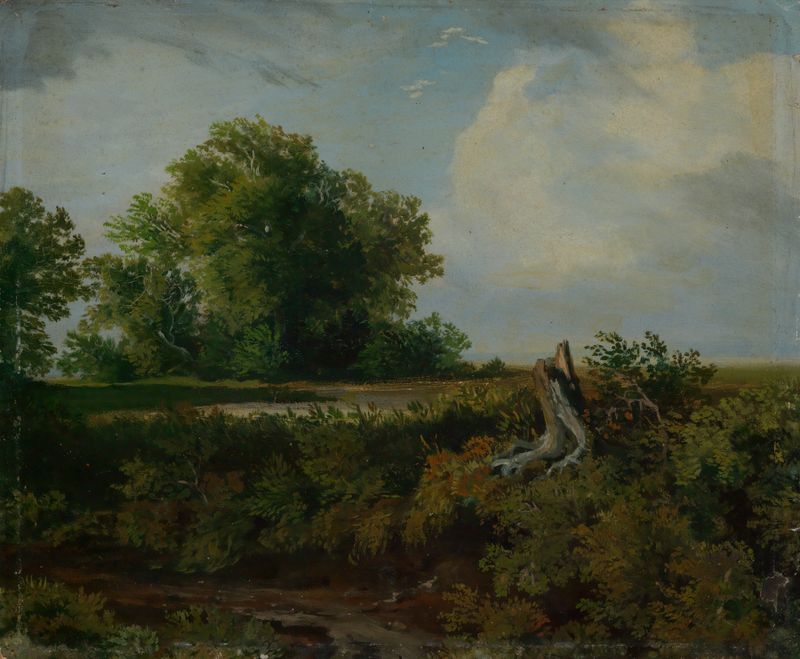
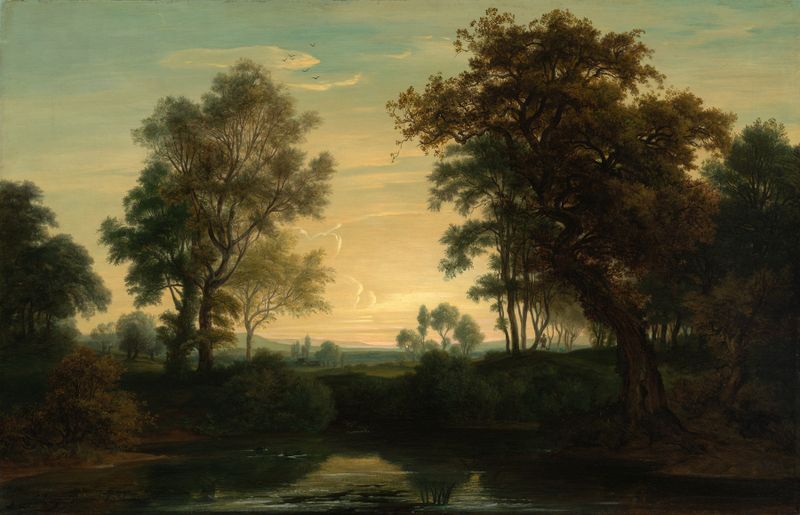
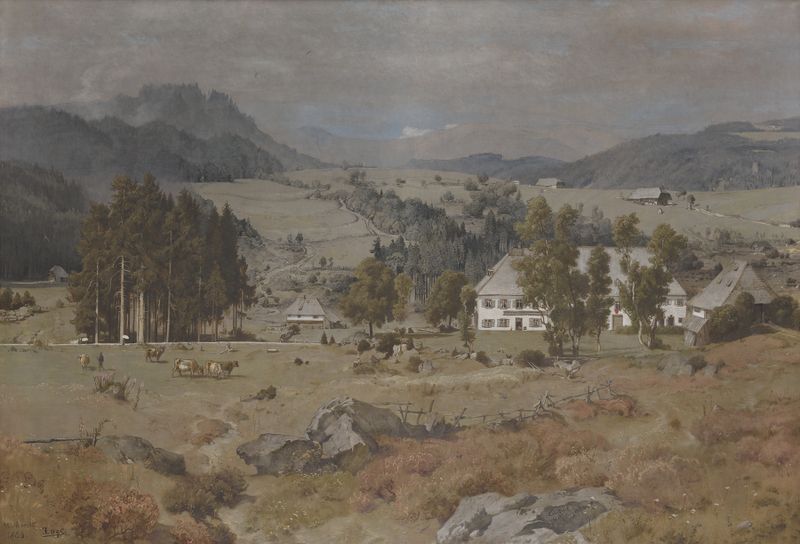
What secret hides in the quiet of the canvas? Here, nature breathes softly, inviting viewers to reflect on the fragile balance of life and death nestled within its serene beauty. Look closely at the foreground, where gentle undulations of grass dance with the breeze, creating a tapestry of verdant greens. Notice how the subtle play of light dapples the scene, illuminating the water’s surface in shimmering ripples. To the left, a small path meanders toward the horizon, beckoning the eye to explore deeper into the lush landscape.
The colors are rich yet muted, evoking a sense of nostalgia, inviting contemplation through their warm, earthy tones. As you delve into the details, consider the juxtaposition of life and stillness. The water reflects not only the surrounding trees but also a sense of transience, as ripples interrupt the mirrored perfection. The tumpel, a symbol of life’s ebbs and flows, suggests the inevitability of change—a quiet reminder of our own mortality.
Each blade of grass seems to whisper ancient secrets about the passage of time, urging us to appreciate the fleeting moments we often take for granted. Emil Lugo painted this work around 1860, during a time of burgeoning Romanticism that celebrated the beauty of nature. Living in Germany, he found inspiration amidst the shifting tides of the art world, where the push against industrialization encouraged reflection on the natural environment. Amidst this backdrop, Waldwiese mit Weg und Wassertümpel encapsulates a moment that resonates with both the artist's inner dialogue and the broader conversation of his era.