Waterloo Bridge, London — History & Facts
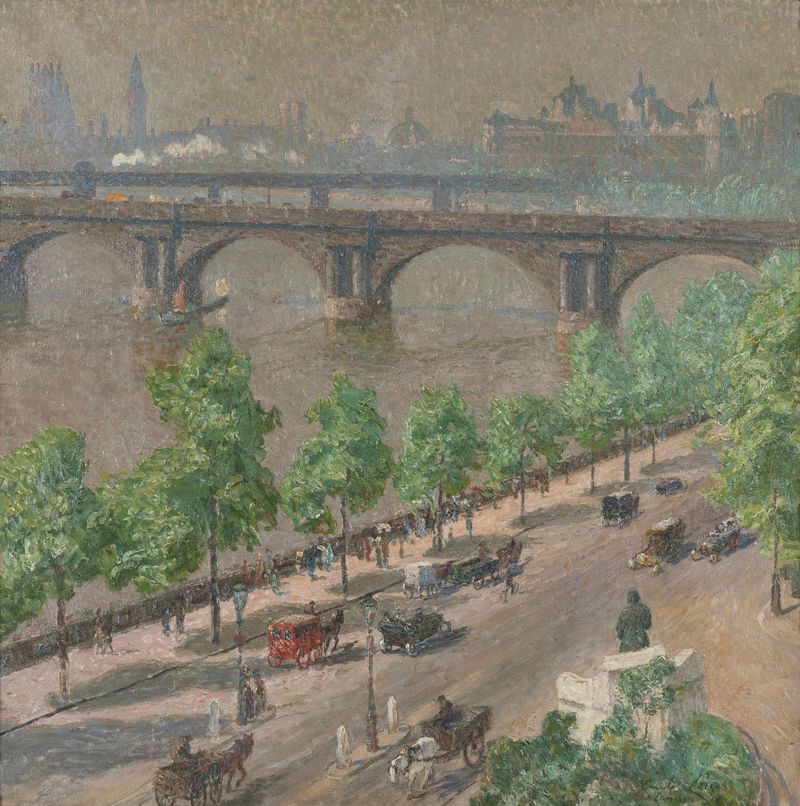
What if silence could speak through light? In Waterloo Bridge, London, the artist captures the haunting beauty of loss, transforming an ordinary scene into a poignant elegy. Focus on the muted blues and grays that blanket the canvas, creating an atmosphere that feels both melancholic and serene. The delicate play of light upon the bridge draws the eye, inviting you to follow the subtle reflections shimmering on the water below. A soft haze envelops the horizon, blurring the boundaries of land and sky, while the figures, though barely discernible, suggest a world quietly moving on. Beneath this serene facade lies a tension between presence and absence.
The indistinct silhouettes hint at lives once lived, evoking a sense of nostalgia and longing. This interplay of light and shadow becomes a visual metaphor for the emotional weight of memory — the bridge stands not only as a physical structure but as a testament to journeys taken and connections lost in the wake of the Great War. Emile Claus painted this work in 1918, a tumultuous time in Europe as the scars of conflict began to heal. Living in Belgium, Claus was influenced by the Impressionist movement, which emphasized atmosphere over detail.
His experiences and observations during this period reflected a world grappling with grief, making Waterloo Bridge a profound meditation on the fragility of life and the enduring power of memory.