
Waterloo Bridge, London, looking east — History & Facts
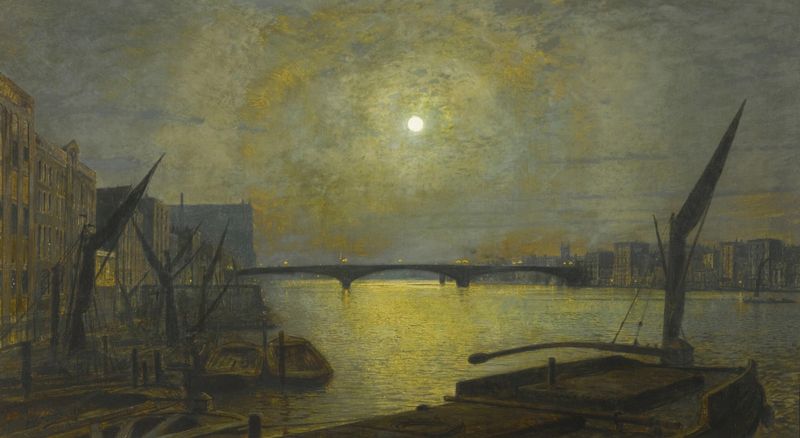
Can paint confess what words never could? In Waterloo Bridge, London, looking east, desire swells within the shimmering twilight, beckoning the viewer to lose themselves in a world where the ordinary transforms into the sublime. Look to the left at the arching silhouette of Waterloo Bridge, its dark outlines gracefully merging with the deepening blue sky. The ethereal glow of gaslights flickers against the backdrop, casting reflections that ripple across the water below. Notice how the delicate strokes of color give life to the evening haze, with soft oranges and yellows bleeding into the dusky blues, evoking a sense of warmth amidst the encroaching night.
This play of light against shadow reveals a moment suspended in time, where movement is replaced by quiet contemplation. As you gaze deeper, the painting unveils layers of emotional complexity. The bridge, often a symbol of connection, seems to hold a tension between separation and union, as figures stand at a distance, hinting at relationships strained by longing. The water, a mirror of both beauty and melancholy, reflects the city's pulse, suggesting the weight of desire that permeates the scene.
Each brushstroke carries a hint of nostalgia, reminding us of moments lost and aspirations unfulfilled. John Atkinson Grimshaw painted this work in 1883 during a period marked by both personal struggles and artistic evolution. Residing in Leeds at the time, he was part of the Victorian art movement, often depicting urban landscapes imbued with mysterious light. This painting reflects his fascination with the interplay of natural and artificial light, as well as his exploration of the emotional resonance found in everyday scenes.
More Artworks by John Atkinson Grimshaw
Browse all →
Under the Silvery Moonbeams
John Atkinson Grimshaw
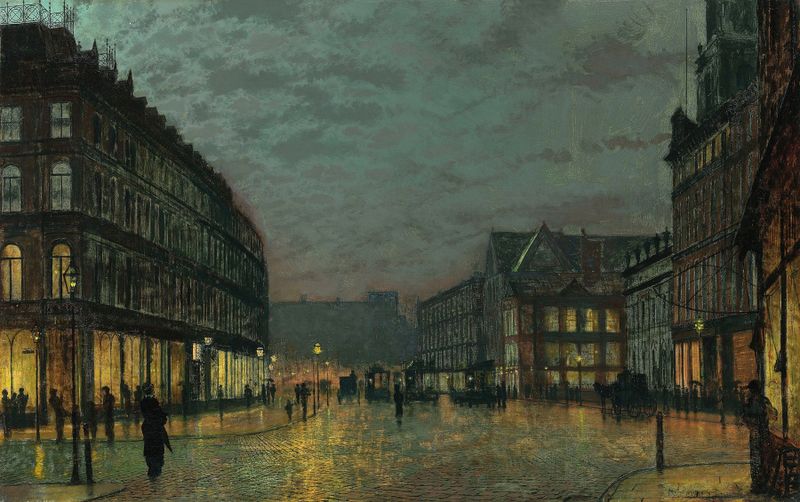
Boar Lane, Leeds by lamplight
John Atkinson Grimshaw
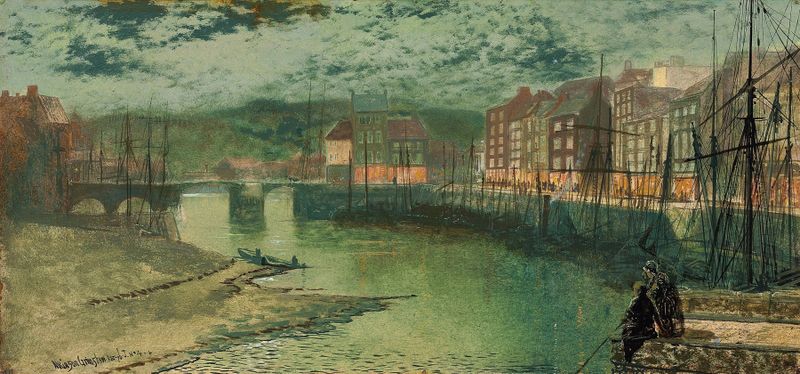
Whitby docks
John Atkinson Grimshaw

Old Chelsea
John Atkinson Grimshaw

Late October
John Atkinson Grimshaw
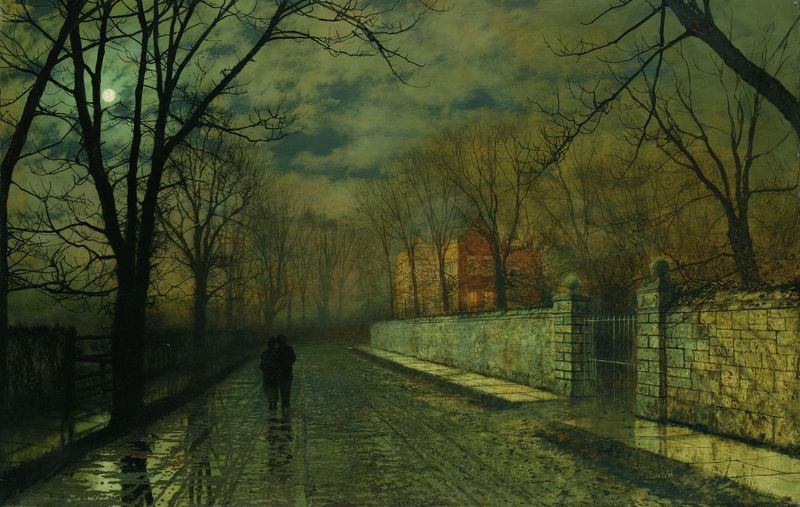
Figures In A Moonlit Lane After Rain
John Atkinson Grimshaw

Liverpool Lights
John Atkinson Grimshaw
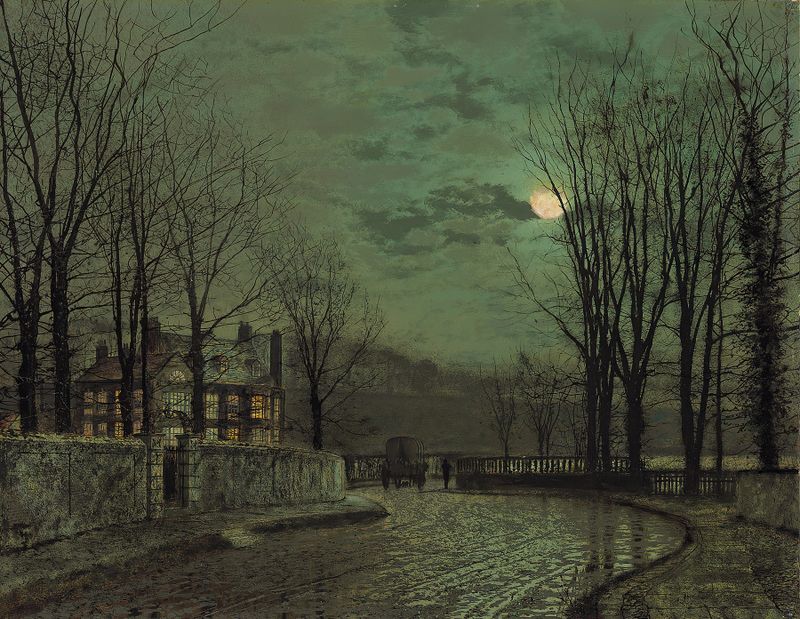
November Moonlight
John Atkinson Grimshaw
Southwark Bridge from Blackfriars by Moonlight
John Atkinson Grimshaw

Whitby From Scotch Head, Moonlight On The Esk
John Atkinson Grimshaw





