
Waterpomp bij een huis in Voorburg — History & Facts
When did color learn to lie? In the interplay of light and hue, we are invited to question the truths that art can convey about the world around us. Look to the left at the vibrant greens of the grass, lush and inviting, drawing your gaze toward the quaint house in the background. Notice how the muted, earthy tones of the building contrast sharply with the lively colors of the surrounding flora, creating a tension between the natural and the constructed. The soft brushstrokes suggest a serene morning, as the light reflects off the water pump, hinting at the labor it once provided, while the careful arrangement of elements invites the viewer to explore the quiet beauty of the scene. Yet beneath this pastoral calm lies an unsettling dichotomy.
The water pump, a symbol of life and sustenance, stands as a reminder of human toil, while the idyllic setting evokes an ecstatic escape from reality. There’s a pulse to the colors; each stroke vibrates with hidden stories of those who inhabited this space, their dreams interwoven with the landscape. The juxtaposition of vitality and stillness creates a whispering tension, urging us to delve deeper into the narrative entwined within this moment. Willem Adrianus Grondhout created this piece in the early 20th century, a time characterized by a shift in the art world towards capturing the essence of everyday moments.
Residing in Voorburg, he embraced the beauty of domestic life while navigating the evolving styles around him. This painting reflects not only his personal journey but also a broader movement towards celebrating the simple joys of existence amidst a rapidly changing society.
More Artworks by Willem Adrianus Grondhout
Browse all →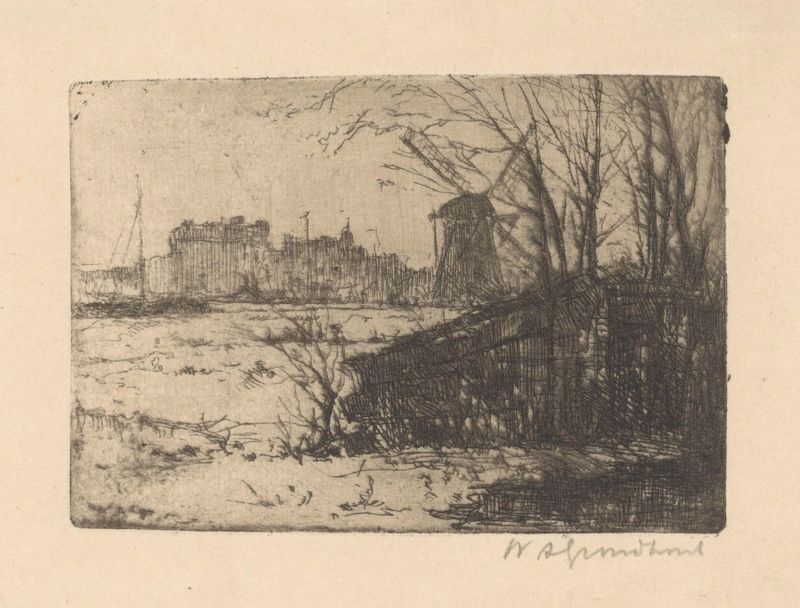
Landschap met molen in de Binckhorst in Den Haag
Willem Adrianus Grondhout
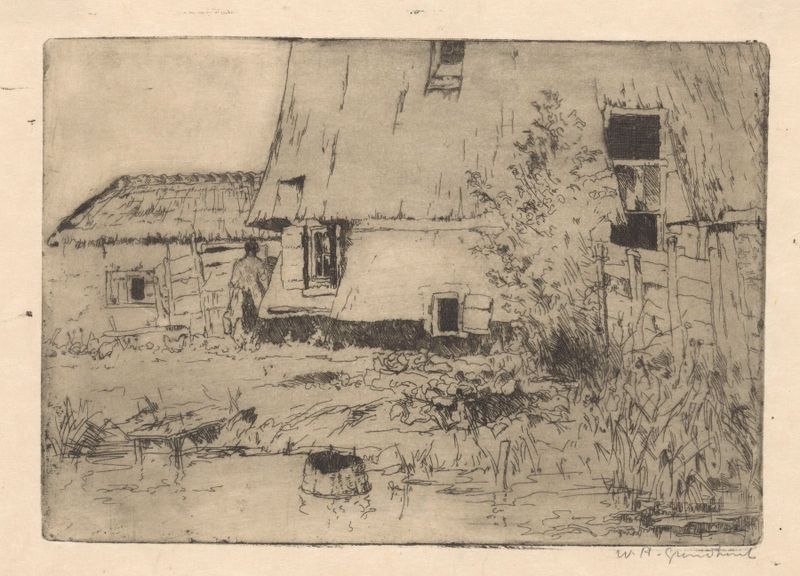
Voet van een molen in Voorburg
Willem Adrianus Grondhout
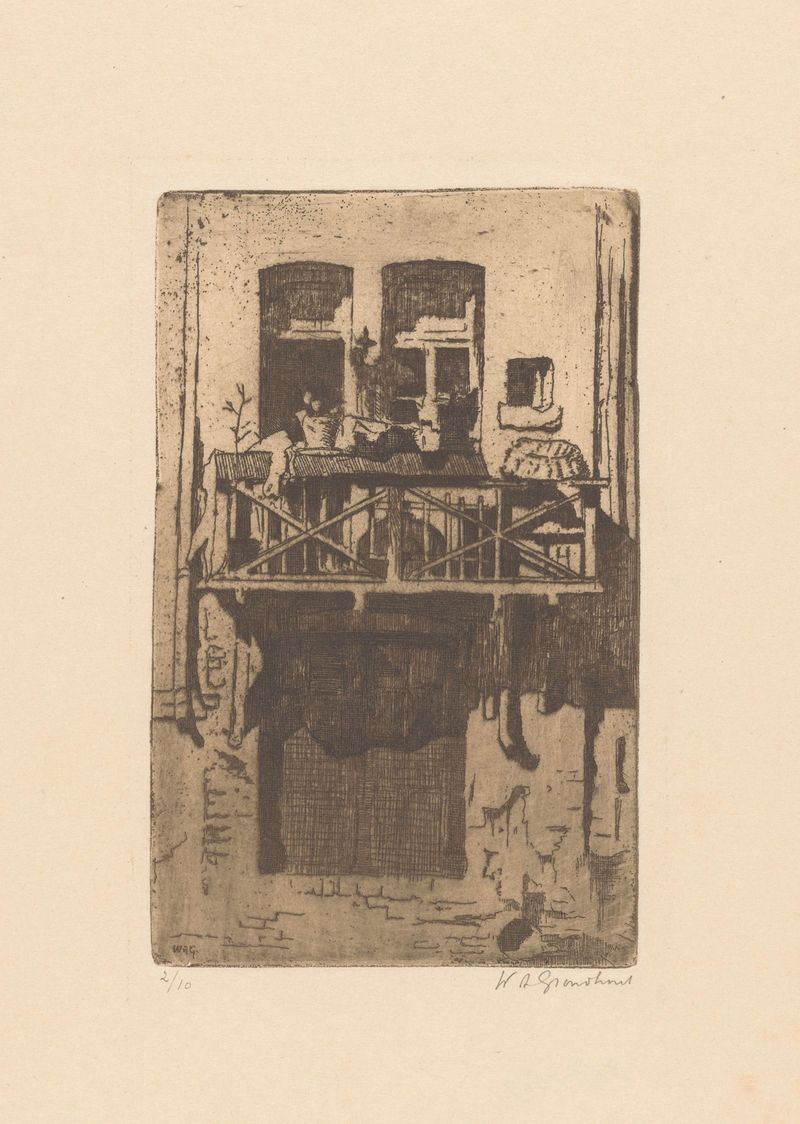
Balkon van een huis aan de Oudezijds Kolk in Amsterdam
Willem Adrianus Grondhout
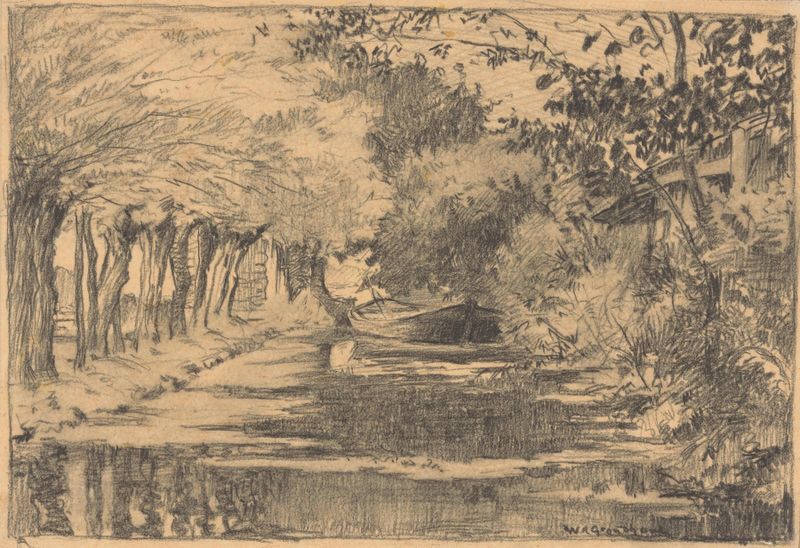
Broeksloot bij Voorburg
Willem Adrianus Grondhout
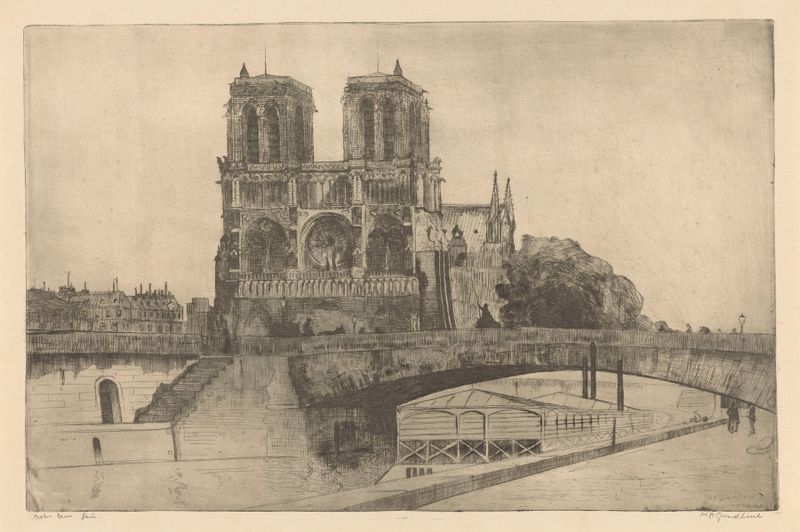
Notre-Dame, Paris
Willem Adrianus Grondhout
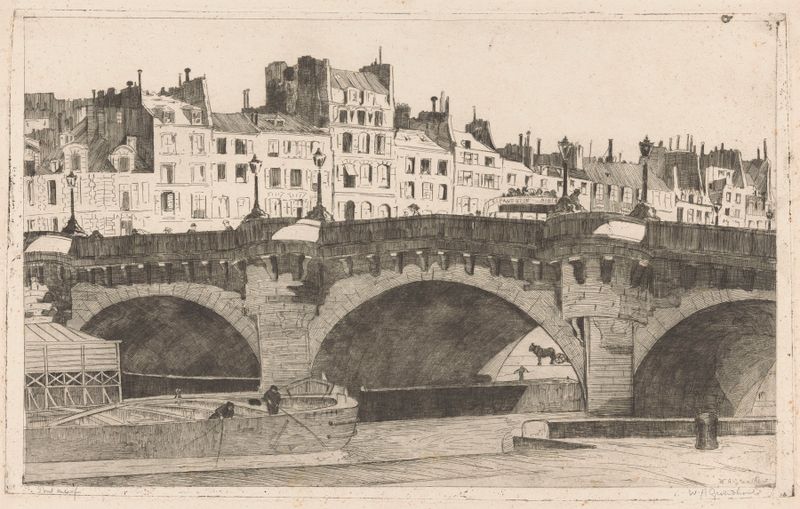
Pont Neuf
Willem Adrianus Grondhout
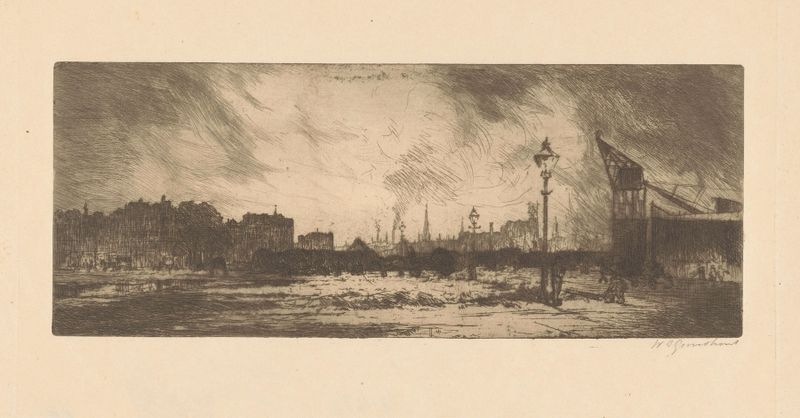
Havenkade met lantaarnpalen in Rotterdam
Willem Adrianus Grondhout
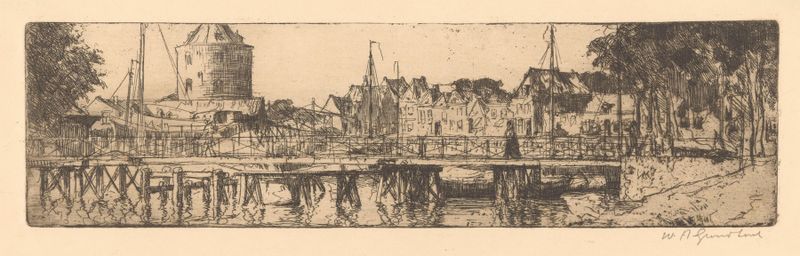
Enkhuizen
Willem Adrianus Grondhout
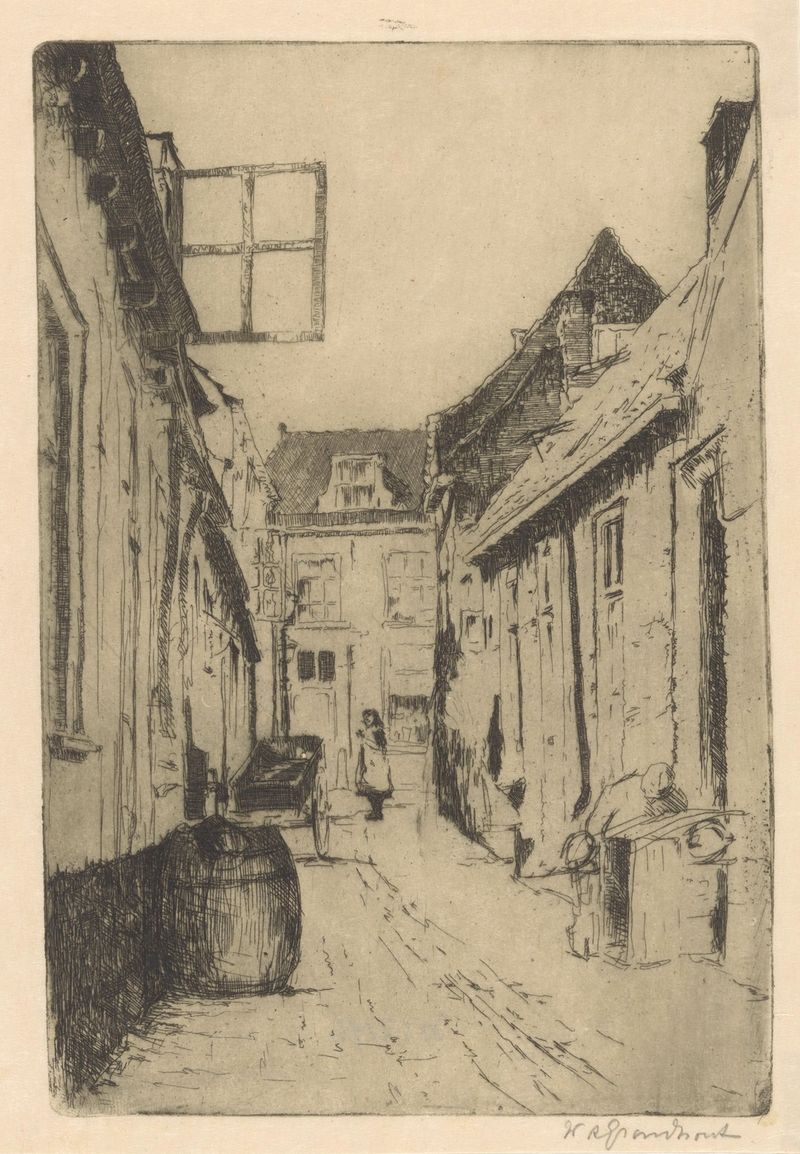
Straatje in Voorburg.
Willem Adrianus Grondhout
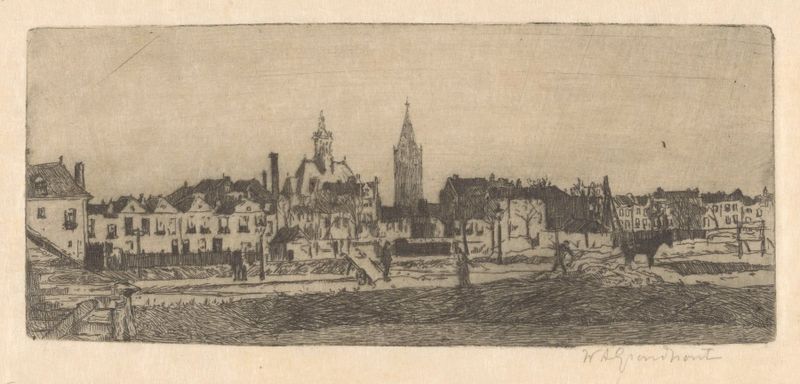
Delft
Willem Adrianus Grondhout





