Waves — History & Facts
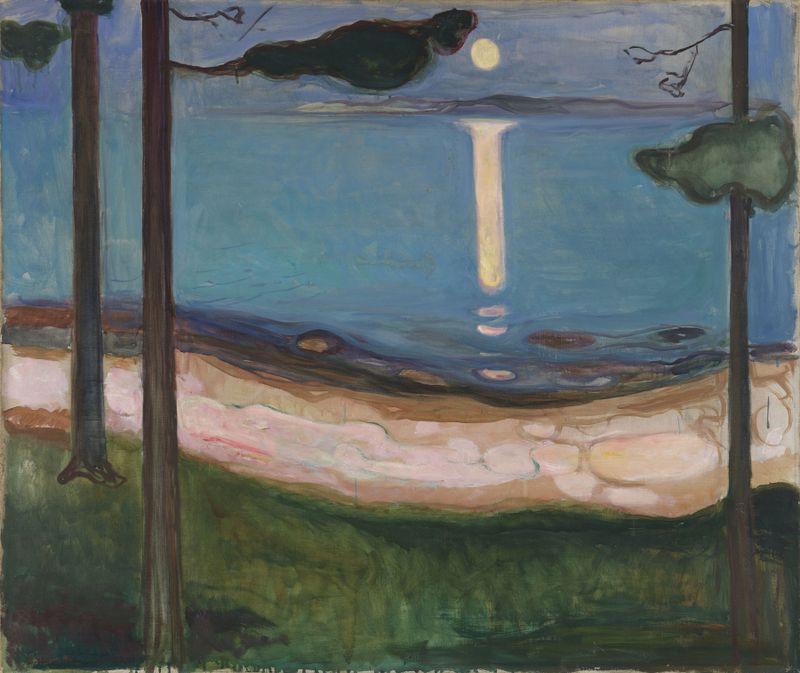
In a world where tumultuous emotions clash against reason, art reveals the hidden revelations of the human soul. Edvard Munch’s Waves encapsulates this paradox, transforming the turmoil of life into a powerful visual symphony. Focus on the sweeping motion of the brushstrokes, where layers of tumultuous blues and greens converge and collide. The waves undulate with a frenetic energy, drawing your gaze to the center where the peaks rise and fall dramatically.
Notice how Munch employs contrasting light and dark hues, imbuing each crest and trough with a sense of urgency, as if the water itself is alive, teeming with unspoken emotions. In this work, the waves symbolize both the chaos of existence and the grounding force of nature. The rhythm of the sea mirrors the complexities of human experience — the violent struggles for balance, the quest for peace amidst turmoil. By marrying these elements, Munch invites viewers to reflect on their own lives, challenging them to find grace within their chaos.
The swirling patterns may also suggest the cyclical nature of emotions, a reminder that every high has its low, and every tempest eventually gives way to calm. Created in 1908, Munch painted Waves during a time of personal and artistic evolution. Living in Norway, he grappling with profound themes of love, anxiety, and existential dread, which permeated the art world as modernism began to take root. This painting emerged amidst his exploration of psychological depth, marking a pivotal moment in his career as he sought to convey the complexities of the human condition through the visceral power of color and form.