Waves Against The Shore — History & Facts
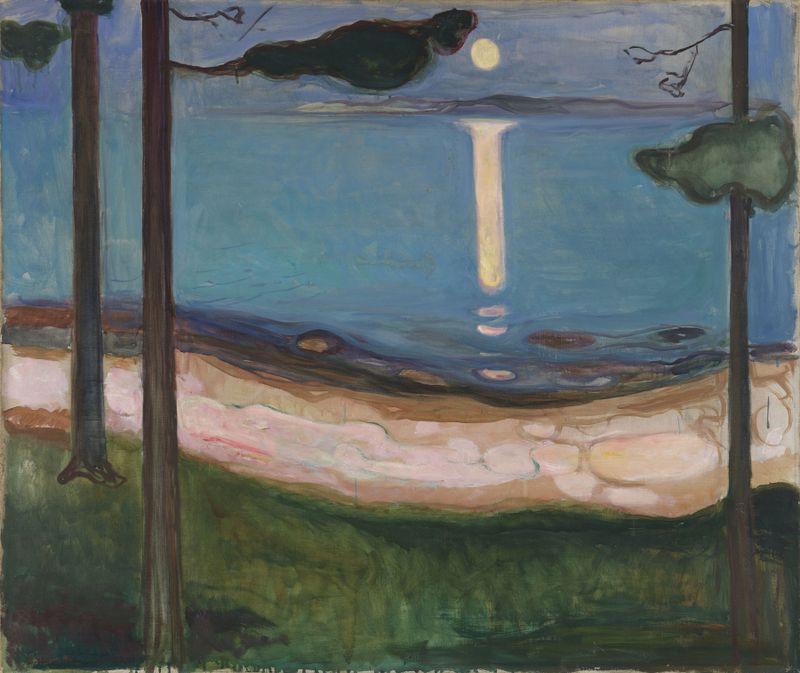
In the silence that hangs over Waves Against The Shore, a longing pulses through the tumultuous waves, stirring an ache for connection that remains just out of reach. Each crest and trough embodies a desire that speaks of nature’s relentless pull, mirroring the depths of human emotion. Look to the left where the waves surge, their vibrant blues contrasting sharply with the muted greys of the shore. The movement of the water, captured through swirling brushstrokes, invites the viewer's gaze into the chaos of the sea, while the shoreline remains stark and still.
Notice how the light dances upon the surface, adding a shimmer that suggests both beauty and danger, as if the sea is both a sanctuary and a siren luring us into its embrace. Delve deeper into the canvas where the foamy edges dissolve into the sand, a reflection of fleeting moments and the passage of time. The physical separation of the land and the water captures a tension between stability and change, evoking the profound contrast between desire and reality. The waves seem to reach for the shore, yet always retreating, embodying a yearning that is both exhilarating and poignant. Created between 1911 and 1912, this work emerged during a transformative period for Edvard Munch, as he grappled with personal turmoil and the exploration of the human psyche.
At this time, he was immersed in the throes of Expressionism, delving into themes of love, loss, and existential yearning. The world around him was also shifting, reflecting broader questions of identity and emotion that would resonate through his art, making this piece a poignant expression of his inner landscape.