
White Horse and Sunset — History & Facts
The first thing that seizes the eye in White Horse and Sunset is the sheer presence of the animal, poised mid-stride against a sky burning with the last embers of daylight. The horse’s pale body stands out with almost sculptural clarity, its contours picked out by the golden light that lingers along its back and flanks. Every muscle and vein is rendered with a precision that suggests both strength and vulnerability, while the lifted foreleg hints at movement—an animal caught between stillness and motion, as if the dusk itself has paused to watch.
The background is nearly swallowed by darkness, yet the horizon glows fiercely, drawing the gaze to the contrast between the living form and the fading day. Painted around 1863, this work emerges from a period when American artists like Albert Bierstadt were captivated by the drama and promise of the West. While Bierstadt is best known for his panoramic landscapes, here he turns his attention to a solitary creature, monumentalizing it against a vast, unsettled sky. The painting belongs to the Whitney Gallery of Western Art, a collection dedicated to capturing the mythic and everyday realities of the nineteenth-century frontier.
In White Horse and Sunset, the animal becomes both subject and symbol—a witness to the changing light and, perhaps, to a changing nation. The more you look, the more the horse seems to ask: what lies beyond the edge of that glowing horizon?
More Artworks by Albert Bierstadt

A Storm in the Rocky Mountains, Mt. Rosalie
Albert Bierstadt
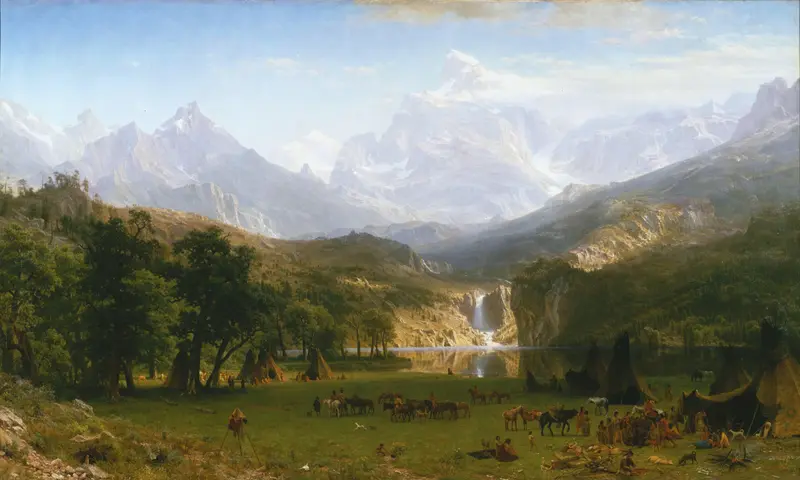
The Rocky Mountains, Lander's Peak
Albert Bierstadt
Niagara from the American Side
Albert Bierstadt
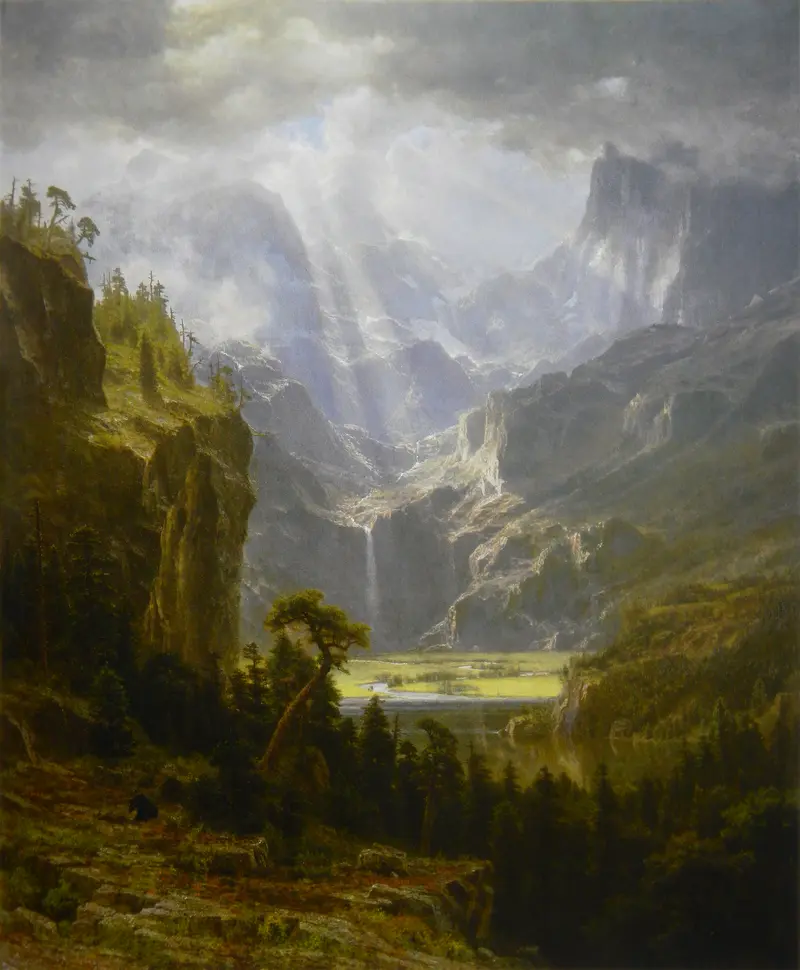
Rocky Mountains, Lander’s Peak
Albert Bierstadt

Valley of the Yosemite
Albert Bierstadt
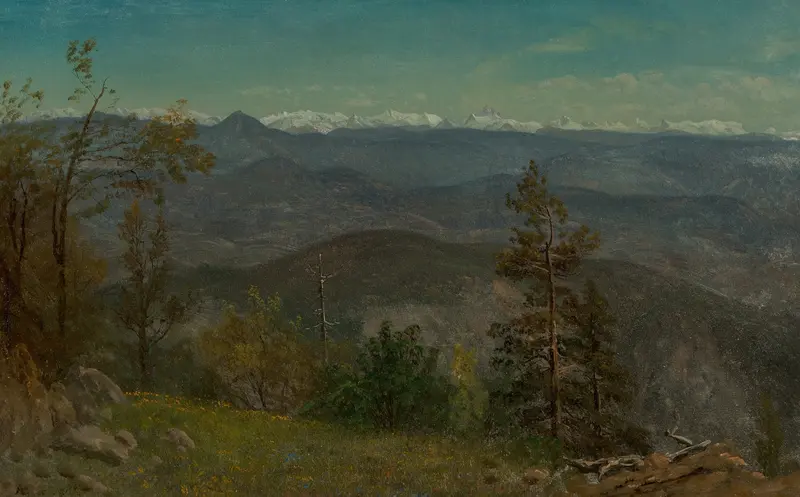
Yosemite Valley, California
Albert Bierstadt
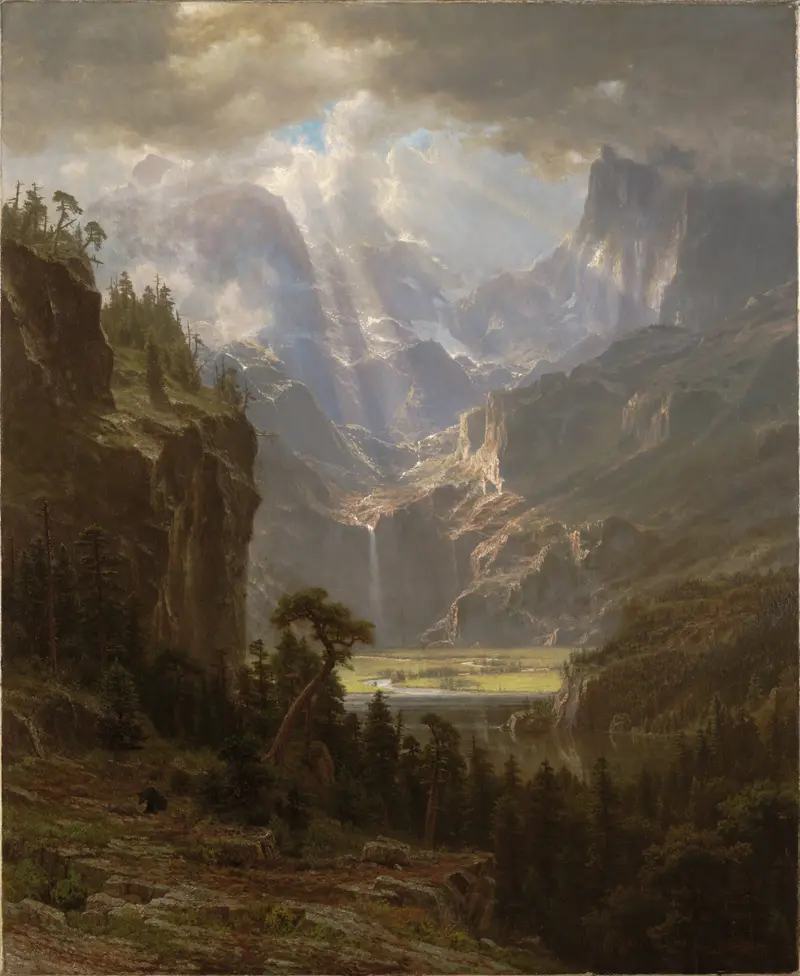
Rocky Mountains, "Lander's Peak"
Albert Bierstadt

Laramie Peak
Albert Bierstadt
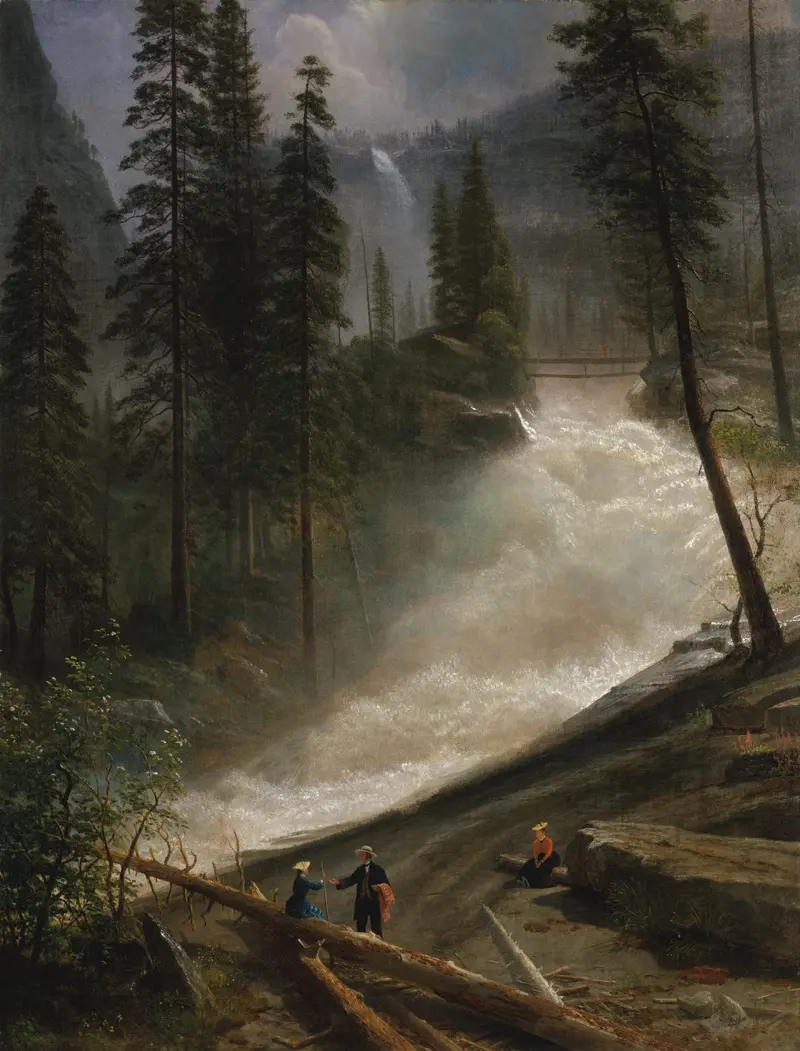
Nevada Falls, Yosemite
Albert Bierstadt
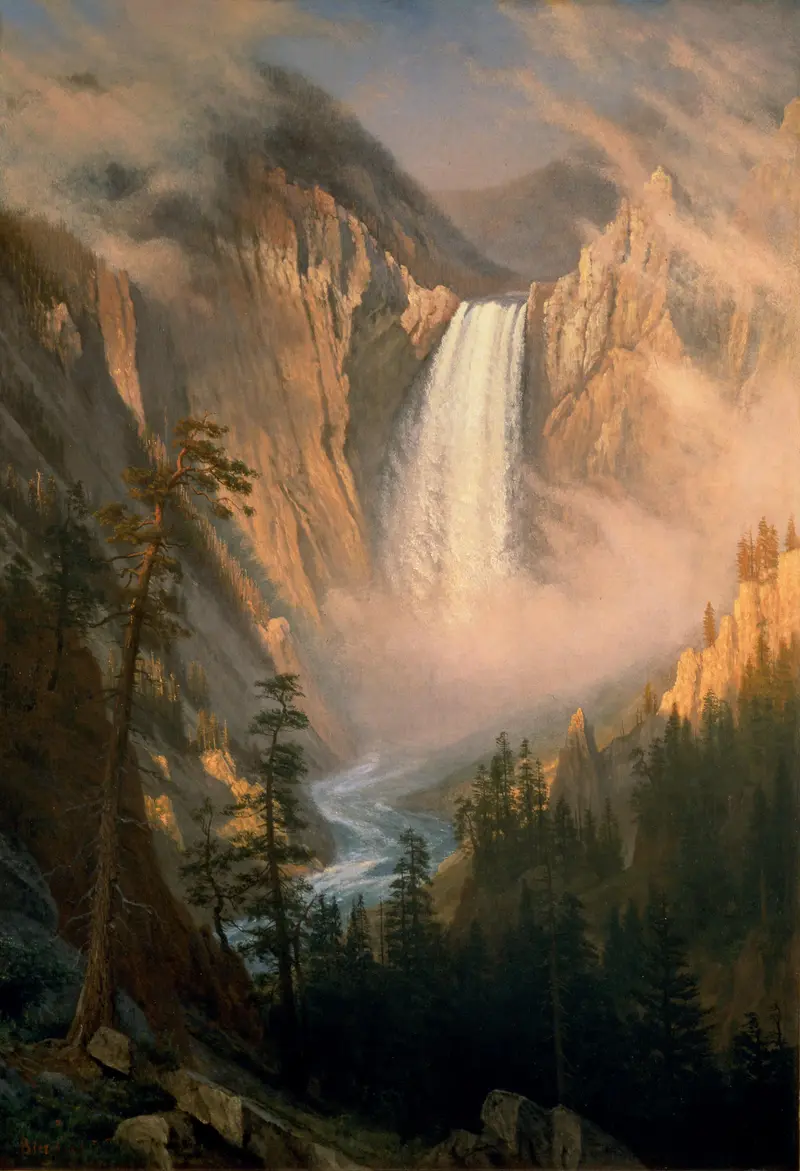
Yellowstone Falls
Albert Bierstadt





